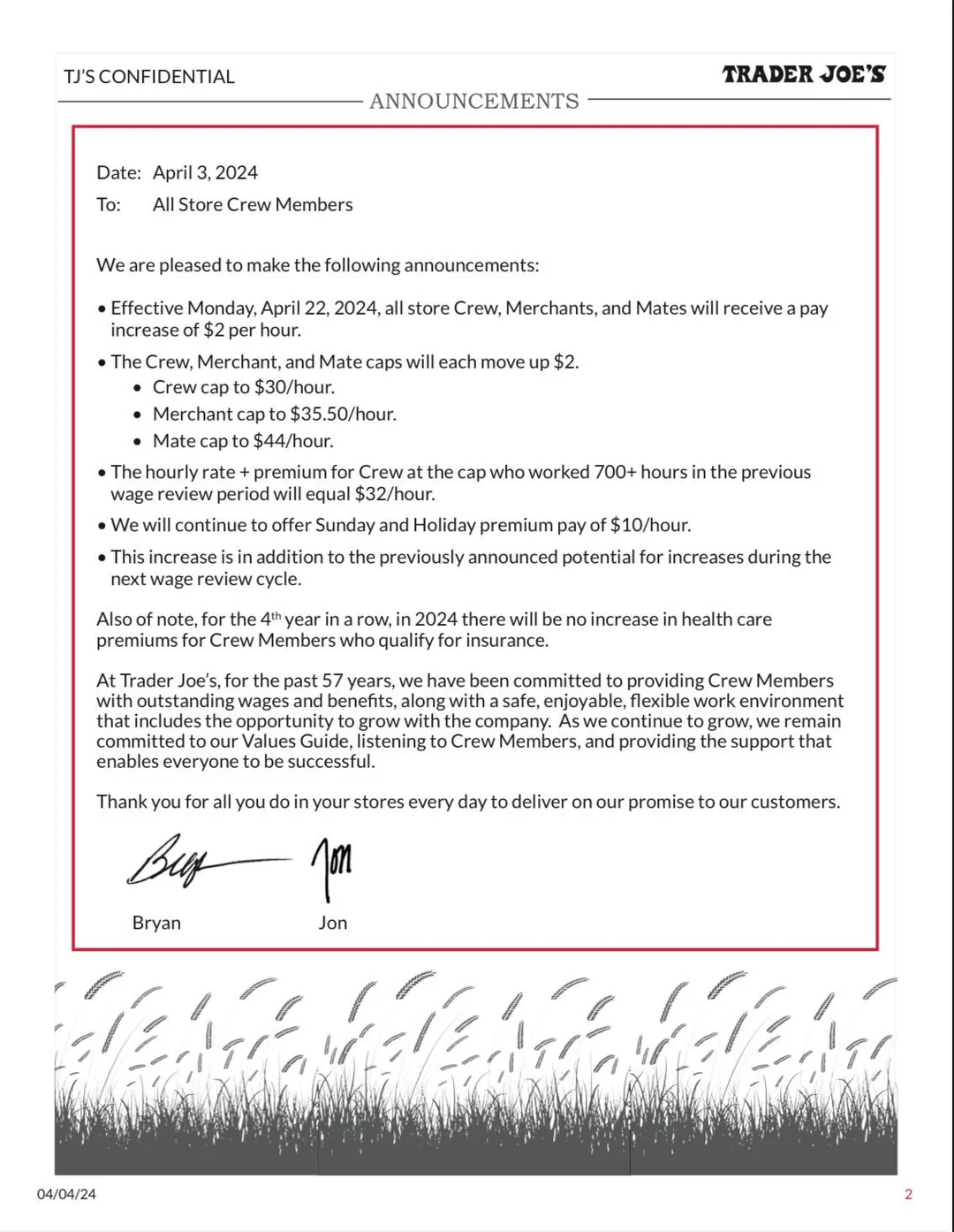
Trader Joe's growth page highlights internal mobility and career paths
Trader Joe’s growth page is useful if you want more than a paycheck: the real test is whether moving up changes your pay, your schedule, and your shot at staying long term.
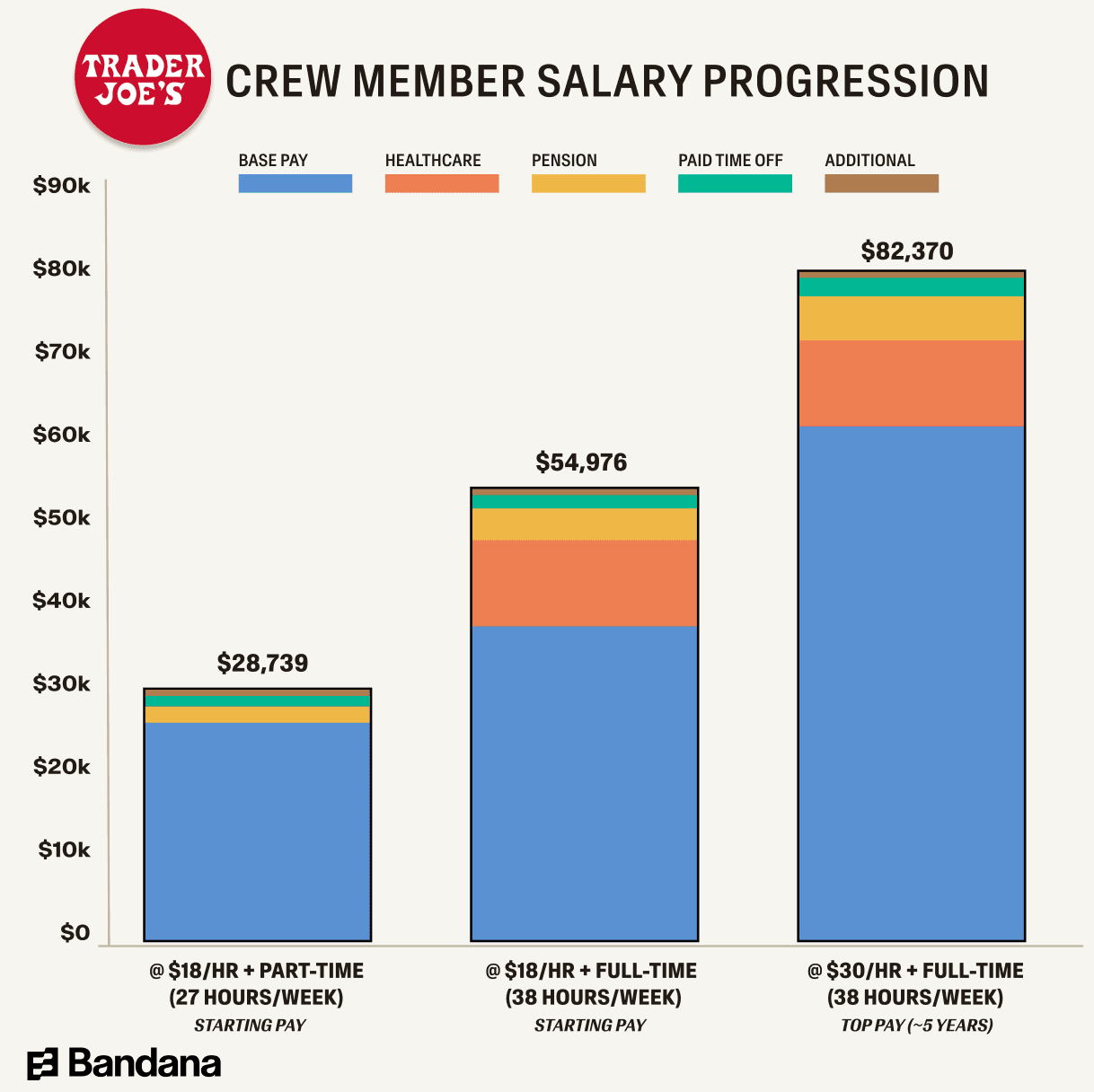
A Trader Joe’s growth page should show whether a crew role can turn into something sturdier: more responsibility, stronger training, and a future that does not require leaving for another employer. That is the lens crew members should use when they read any internal mobility page.
Why internal mobility is the real test
Trader Joe’s has long sold a culture built around energetic, customer-oriented people, and that reputation helps with recruiting. But enthusiasm only goes so far once you are on the floor, stocking, ringing, and handling the pace of a busy specialty grocery store. A growth page is useful because it shows whether the company expects people to learn on the job and then actually move up, or whether “development” is mostly a recruiting phrase.
Trader Joe’s already has an edge with above-market pay and a crew culture people tend to talk about with pride. The open question is whether that pride is backed by a ladder that rewards strong performers with a real internal future.
What a real promotion should change
If a Trader Joe’s path is meaningful, it should change more than your title. A promotion should usually bring a broader set of responsibilities, a clearer role in guiding the store, and a better understanding of how work gets done beyond your own station. For crew members, the practical question is whether the next step means learning skills that make you harder to replace and more likely to stay.
Pay is part of that equation, but it is not the only one. A stronger role can also affect schedule stability, access to more consistent shifts, and the amount of discretion you have in the store. If the move is into mate-level leadership or toward merchant responsibilities, you should expect more judgment calls, more accountability, and more influence over how the team runs day to day.
Visible changes are the test: new tasks, new training, a larger scope, and a path that is not entirely dependent on who happens to know someone in the store.
The markers crew should watch for
A useful growth page gives clues about how promotions work and what Trader Joe’s values most. Look for language that points to actual pathways rather than general encouragement. The most important signs are straightforward:
- Clear mention of internal mobility, not just hiring enthusiasm
- Specific roles or levels, especially mate-level leadership or merchant roles
- Training tied to new responsibilities, not just onboarding
- Mentorship or coaching that helps people prepare for bigger jobs
- Evidence that performance matters in a concrete way
If the page talks about learning new responsibilities over time, that is a better sign than a vague promise of opportunity. If it explains what the company expects from strong performers, that can help crew members judge whether they are on track. If it stays broad and aspirational, the burden shifts back to the store level, where people need to ask direct questions.
What to ask in interviews or performance talks
Crew members who want to know whether a Trader Joe’s job can become a career should ask questions that force specifics. The useful questions are not about slogans. They are about the mechanics of advancement.
Ask how promotions work, what kind of performance matters most, and whether the store offers training for new tasks or leadership responsibilities. Ask what separates a solid crew member from someone being considered for more responsibility. If the answer is all culture and no process, that is a clue.
Applicants drawn to Trader Joe’s because of the pay and the atmosphere still need to separate a good entry-level job from a durable career track. The company has to show where initiative leads.
Why managers should care too
Managers are not just filling shifts when they talk about growth. They are shaping whether good people stay. In a store where turnover hurts product knowledge, customer service, and team rhythm, internal mobility is a retention tool as much as an HR concept. Coaching a strong crew member into more responsibility can keep a good worker from looking elsewhere.
In a Trader Joe’s environment where crew members are often proud of the brand and the pace of the work can be intense, managers who can point to a next step, whether that is a leadership role, deeper product knowledge, or broader store responsibility, make the job feel like more than a landing spot. If they cannot, employees will eventually notice that the company is relying on them to learn on the fly.
This article was produced by Prism’s automated news system from verified source data, official records, and press releases, then run through automated quality and moderation checks before publishing. The system is built and supervised by the people who set the standards it runs under. Read our full AI policy.
Did this article answer your question?