Trader Joe's holiday tasting panel reveals how new products get chosen
Trader Joe’s holiday panel shows that product buying is a year-round job built on tasting, vendor work, and sharp judgment about value, fit, and shelf appeal.
In Episode 83, dated Dec. 16, 2024, Trader Joe’s product development teams were already focused on holidays nearly a full year in the future.
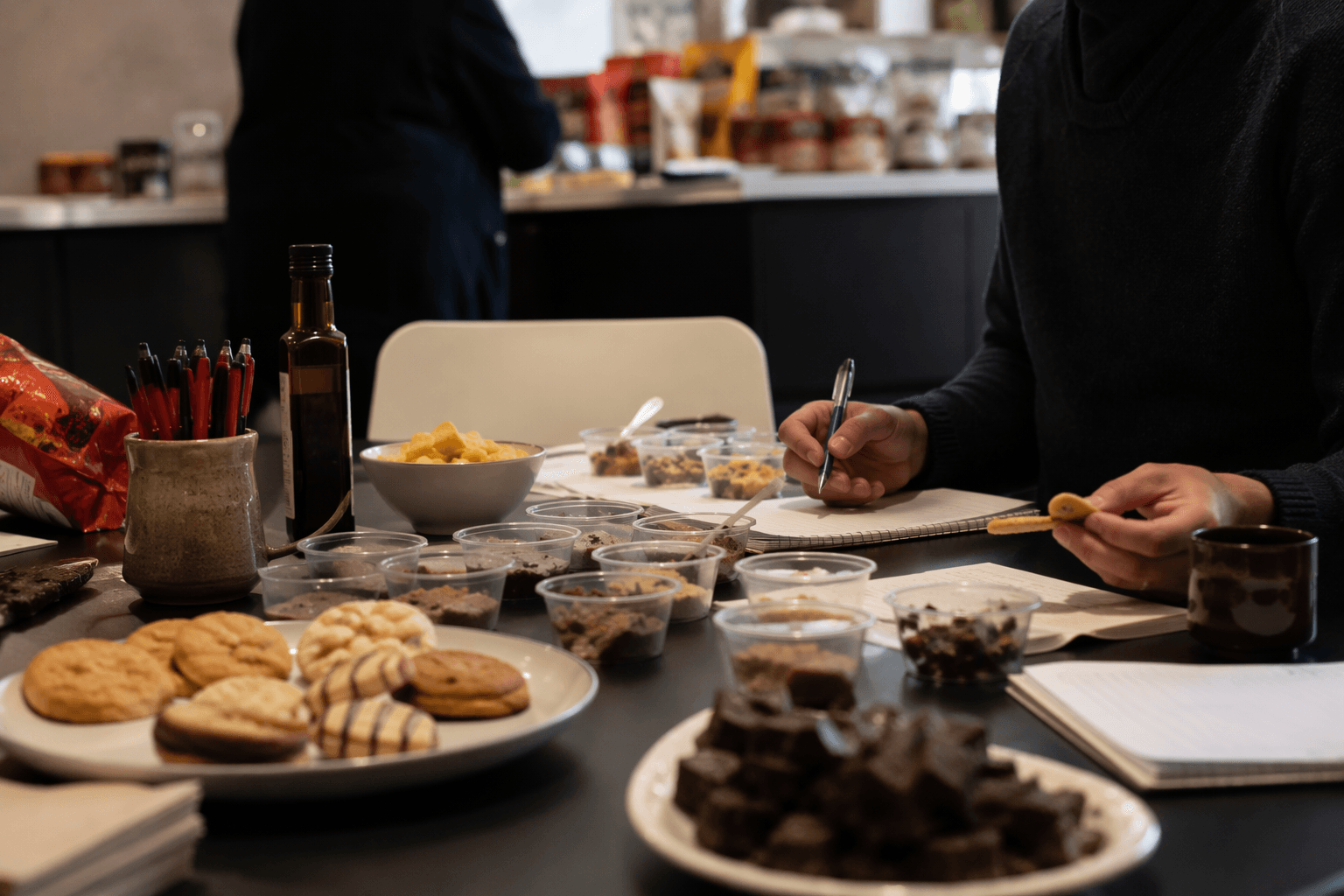
That process is not casual. Trader Joe’s calls its tasting panel “top secret,” and Tara Miller says it evaluates every possible product to make sure each one provides value for customers. This is where private-label strategy turns into a working decision, with crew members, not elves, researching, searching, and talking with vendors around the world to test what might belong on shelves.
What the tasting panel is really doing
A tasting panel is part test kitchen, part buying meeting, and part gatekeeper. Much of the work is about building awareness and understanding between Trader Joe’s and its supplier or vendor. The chain is not simply picking items off a menu. It is negotiating fit, consistency, price, and the chain’s own point of view on what customers should find in a store.
That is why “value” keeps coming up. The tasting panel is about finding the best place for value in a product. In practice, that means a product has to do more than taste good. It has to justify its spot in a limited assortment, make sense at the price point Trader Joe’s wants, and fit the chain’s reputation for oddball favorites and seasonal hits.
The work is also forward-looking in a very literal sense. A product may be tasteless in August and a holiday hit the next winter, or it may never make the cut because the panel decides the flavor, packaging, or price position is off.
The judgment call behind every “yes”
The most obvious skill in a tasting room is sensory judgment, but that is only the starting point. Crew members and buyers have to compare options, notice consistency from sample to sample, and judge whether a product feels unique enough to stand out in a crowded specialty grocery case. They also have to think about seasonality, because a holiday item lives or dies on timing as much as flavor.
Packaging matters too, because Trader Joe’s products have to read quickly on shelf and feel like they belong to the brand. Price position matters just as much, since the company frames the panel around value, not novelty for novelty’s sake. A good product is not just delicious, it is useful to the chain’s assortment and credible to the shopper who has to decide in a few seconds whether to try it.
That is why product development at Trader Joe’s looks closer to category management than to simple recipe approval. The panel has to sift through a vendor’s pitch, the product’s performance, and the brand story attached to it.
Why store crews should care about decisions made in the room
The people standing in the tasting room may never stock the same item twice, but their decisions shape the day-to-day work of the store. When a product wins a place in the assortment, crews are the ones who explain it to shoppers, keep it visible, and answer the inevitable questions about whether it is returning next year. A yes in product development becomes ordering, merchandising, and customer conversation on the floor.
That is also why Trader Joe’s product development shows up as a crew issue, not just a headquarters issue. Limited-time items create buzz, but they also create work: fast sell-through, short replenishment windows, and a constant need for staff to know what is new and what is disappearing. The shelves tell the story of the panel’s decisions long before a customer ever hears about the tasting room.
In 2020, Trader Joe’s podcast presented the chain’s approach as new product development in a pandemic, with tasty goods in every aisle and steps toward greater diversity and inclusion in the product mix.
What this says about moving from store operations into buying
Trader Joe’s makes it easy to forget that buying is a career lane with its own ladder. The tasting panel gives away the kinds of skills that can move someone from store operations into merchandising or product development: pattern recognition, clear communication, curiosity about suppliers, and the ability to translate customer reactions into a commercial call. Those are the same habits that help on the floor when you are tracking what sells, what gets asked for, and what confuses shoppers.
For a crew member thinking about a move into the office side of the business, the lesson is not to become a professional taster. It is to learn how product decisions are made, how a vendor relationship works, and how Trader Joe’s defines value. Vendor understanding is central to the job, which means anyone who wants into buying has to get comfortable with both the product and the conversation behind it.
Trader Joe’s tests new products through a tasting process, the subject of a Sept. 14, 2023, Forbes article. The tasting process is one of the mechanisms that decides what reaches the shelf.
This article was produced by Prism’s automated news system from verified source data, official records, and press releases, then run through automated quality and moderation checks before publishing. The system is built and supervised by the people who set the standards it runs under. Read our full AI policy.
Did this article answer your question?