Trader Joe’s in-store model faces rising shopper expectations for product info
Costco’s cautious tech rollout is raising the bar for product information, and Trader Joe’s will feel it most in the aisle. That puts more weight on crew knowledge, signage, and fast answers.
A new benchmark for the grocery aisle
Costco’s measured approach to technology is doing something more important than signaling a retail trend. It is resetting what shoppers think is normal when they look for product information, compare items, or decide whether something is worth putting in the cart. Supermarket News has described Costco as slower to embrace technology than Sam’s Club, yet still moving forward with AI on product pages, which matters because it shows that even a warehouse club known for operational discipline now sees digital product clarity as part of the shopping experience.
That shift puts Trader Joe’s in a different position. The chain has built its business around the opposite model, one that is intentionally in-store, intentionally human, and intentionally limited online. Trader Joe’s says it does not sell products online, does not offer curbside pickup or delivery, and does not work with third-party delivery services such as Instacart or Dumpling because they cannot match the in-store value and shopping experience. In other words, while Costco is using technology to improve product presentation, Trader Joe’s is asking its stores and its crew to carry that same informational load on the floor.
What Trader Joe’s already promises shoppers
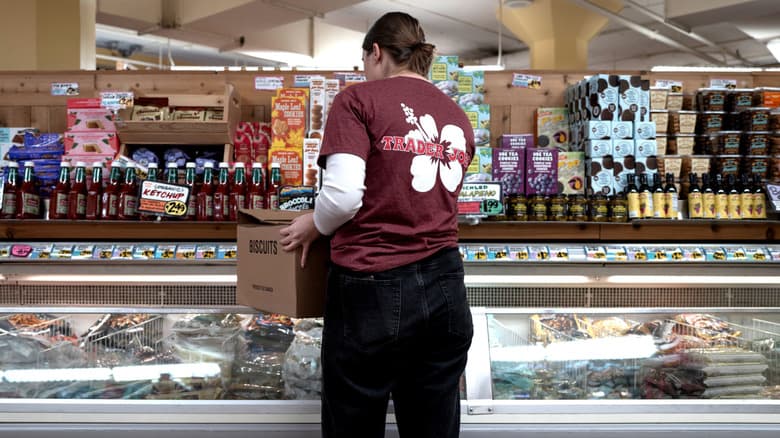
Trader Joe’s public materials leave little ambiguity about where shoppers should go for answers. The company says not every product is represented on its website, and that the best place for product information is the neighborhood store. That is a meaningful policy benchmark, not just a brand statement. It means the chain is telling customers that the most reliable product advice still comes from the crew standing in front of the shelf, not from a browser tab.
That expectation is reinforced by how Trader Joe’s describes its workforce. The company says its crew members are “knowledgeable, friendly Crew Members,” and that the chain has been about “discovery and fun” since 1967. It also says Merchants are exclusively promoted from Crew Members, and that they are customer service champions who set a “Wow customer experience” example while working directly with customers. Trader Joe’s is not just selling groceries with personality. It is building a service model in which crew judgment is part of the product.
The company’s own product philosophy supports that approach. Trader Joe’s says it tastes everything before putting its name on it and offers only products it feels are extraordinary. That curation gives the brand its cult appeal, but it also raises the stakes on how products are explained in store. If the assortment is tight and the items are highly selected, then the conversation with crew becomes the search function.
Why that changes crew work on the floor
The practical implication is not that Trader Joe’s should copy Costco’s tech strategy. It is that customer expectations are being trained elsewhere, and those expectations spill into stores that choose not to go digital. A shopper who has seen clearer product detail online, cleaner comparison pages, or better in-stock information at another retailer is less likely to tolerate vague shelf talkers, unclear substitutions, or a dead-end answer from the front of the aisle.
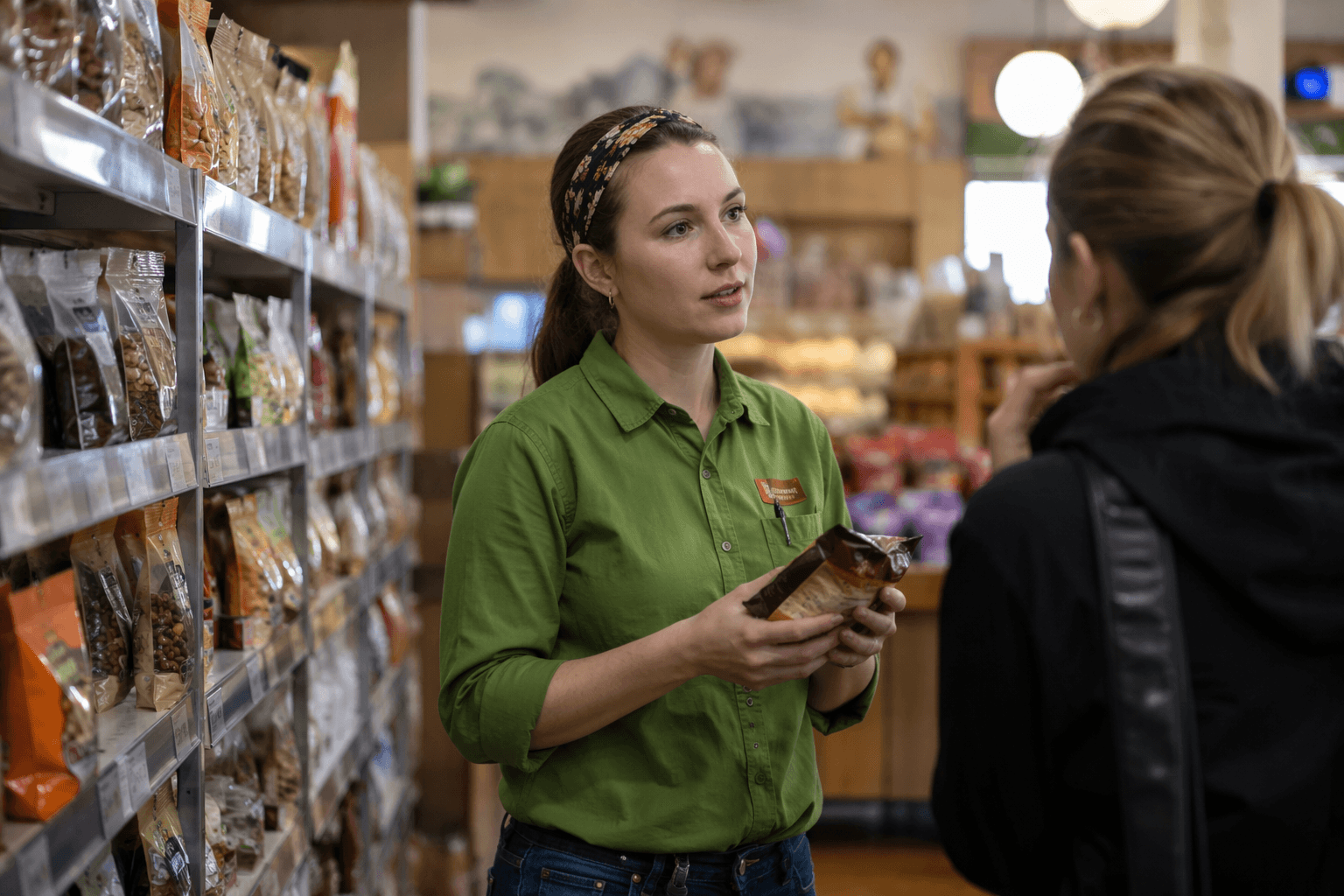
For crew members, that raises the value of fast, informed responses. A customer asking what a sauce tastes like, how a frozen item compares to another dinner option, or whether a seasonal product has returned is not looking for a corporate script. They want the kind of answer Trader Joe’s has always claimed to provide, the kind that turns a question into a recommendation. In that sense, product knowledge is now a workflow issue, not just a customer-service nice-to-have.
What stores can realistically adopt, without breaking the low-friction model, is more operational clarity at the shelf level:
- clearer shelf tags and product descriptions
- faster answers on substitutions and close equivalents
- stronger handoffs between crew members when a customer needs a specialty answer
- more consistent product knowledge for seasonal, limited-run, and rotating items
None of that requires an app, curbside pickup, or a delivery network. It does require management to treat product education as part of daily execution, because the store itself is the interface.
Growth makes the information gap more visible
Trader Joe’s is also expanding, which makes consistency even more important. The chain opened 34 stores in 2024, had 20 more slated for 2025, later opened 43 stores in 2025, and planned more than 20 openings in 2026. That pace means more first-time shoppers, more new crew members, and more situations where a customer’s first impression depends on how quickly someone can explain the difference between one product and another.
The good news for Trader Joe’s is that shoppers still reward the model. The American Customer Satisfaction Index reported in January 2025 that Trader Joe’s tied Publix for the top supermarket satisfaction score at 84, and later put Trader Joe’s at 86, ahead of Publix. That suggests the chain’s in-store experience still resonates, even as the market standard for product information keeps rising around it.
For managers, that score is a reminder that customer trust is built in the aisle, one answer at a time. For crew, it means the job is not just moving product or ringing registers. It is translating the store’s curation into something a shopper can use immediately. Costco’s tech rollout may be deliberate, but the broader message is clear: shoppers now expect faster, cleaner product information everywhere, and Trader Joe’s will keep winning only if its human model remains just as efficient as the digital ones around it.
This article was produced by Prism’s automated news system from verified source data, official records, and press releases, then run through automated quality and moderation checks before publishing. The system is built and supervised by the people who set the standards it runs under. Read our full AI policy.
Know something we missed? Have a correction or additional information?
Submit a Tip