Trader Joe’s donates all safe unsold food to local nonprofits
Trader Joe’s says 100% of safe unsold food goes to local nonprofits, with requests due three weeks ahead. Nearly 80% is produce, bakery, proteins, dairy, eggs and entrees.
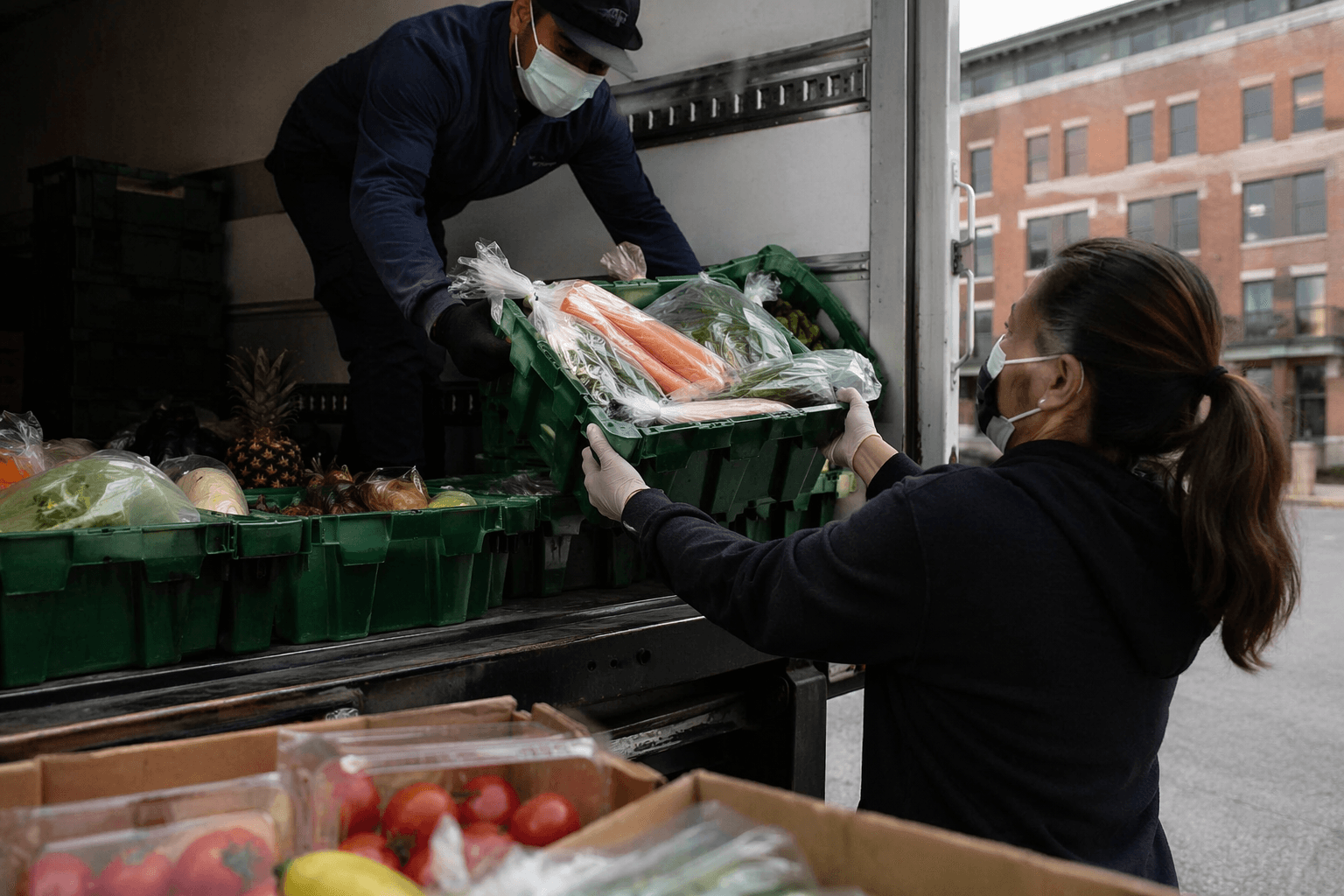
Trader Joe’s Neighborhood Shares is not just a brand talking point. It is a standing store-level process that moves 100% of products that are unsold but still safe for consumption to local food banks and other nonprofit food recovery partners, with redistribution happening seven days a week. For crew members, that makes leftover food a daily operations issue, not an afterthought: what did not sell still has value, and the store has a routine for moving it quickly and safely.
The mix of donations shows how central the program is to back-room work. Trader Joe’s says nearly 80% of Neighborhood Shares donations are perishables, including produce, entrees, bakery items, proteins, dairy and eggs. That means the program is built around the kinds of items that require careful handling and fast handoff, not just shelf-stable goods. In a grocery setting, that matters for shrink, food safety and the simple question of what happens when a product is still usable but no longer saleable.
The company has also put guardrails around the process for outside partners. Food and beverage donation requests are limited to one per year per organization company-wide, and nonprofits must submit requests on letterhead with a valid tax ID number. Requests are due at least three weeks before the food is needed, and Trader Joe’s says not every request can be fulfilled. Those rules give stores and partner agencies a common timeline, which is what turns a goodwill gesture into a repeatable operating system.
Trader Joe’s describes Neighborhood Shares as a longstanding program, and the scale is large enough to show why it matters across the chain. In 2024, the company said its stores donated 98 million pounds of quality products. In 2023, it said Neighborhood Shares accounted for more than $469 million worth of quality products. For crew and managers, those figures make clear that donation handling sits alongside inventory control and merchandising as part of the job.
The broader context is hard to miss. Feeding America says 1 in 7 people in the United States face food insecurity, and the USDA Economic Research Service said 13.7% of U.S. households were food insecure in 2024. At the same time, the U.S. Environmental Protection Agency and the U.S. Department of Agriculture have a national goal to cut food loss and waste in half by 2030, while EPA notes that food decomposing in landfills emits methane. At Trader Joe’s, Neighborhood Shares puts those pressures into a store routine, linking the sales floor, the back room and the neighborhood nonprofits that receive the food.
This article was produced by Prism’s automated news system from verified source data, official records, and press releases, then run through automated quality and moderation checks before publishing. The system is built and supervised by the people who set the standards it runs under. Read our full AI policy.
Did this article answer your question?