Trader Joe’s workers can request ADA accommodations for job demands
Trader Joe’s crew members do not have to earn accommodations. The ADA gives qualified workers a right to ask for changes that help them do the job safely.

At Trader Joe’s, crew members run registers, stock shelves, and create displays while keeping the shopping experience fun, friendly, and informative. The ADA gives qualified employees and applicants a legal right to reasonable accommodation, which can include changes to schedules, duties, policies, leave, or reassignment when a disability makes the job harder.
What the ADA covers
Title I of the Americans with Disabilities Act requires an employer to provide reasonable accommodation to a qualified individual with a disability unless doing so would create undue hardship. Reasonable accommodation can include job restructuring, leave, modified or part-time schedules, modified workplace policies, and reassignment.
The ADA Amendments Act of 2008 strengthened that protection by broadening the definition of disability. Congress passed the ADA in 1990, and the 2008 amendments were enacted on September 25, 2008 to restore the law’s original intent and make it easier for people to establish coverage.
How that applies on a Trader Joe’s floor
That mix can be physically demanding and mentally fast-paced, especially in a store culture that relies on flexibility and constant customer contact. If a condition makes part of that routine harder, the question is not whether the worker can push through it without complaint. The question is what adjustment would let the worker keep contributing.
A reasonable accommodation at Trader Joe’s might be a modified schedule, a short leave period, a temporary change in task mix, or a policy adjustment that removes a barrier. A crew member who cannot safely handle certain stocking duties might ask for reassignment to another part of the shift. Someone whose condition makes early openings or late closings difficult might ask for a modified schedule or part-time arrangement.
How to make the request
The law does not require perfect legal language. A worker does not need to recite the ADA or build a case file before speaking up. What matters is making clear that there is a medical condition or disability-related limitation and that a workplace change is needed to do the job.
- that you have a condition affecting work
- what part of the job is becoming difficult
- what change would help
- who should handle the request next
A simple request should cover four things:
For example, if lifting, standing, repetitive bending, or a rotating schedule is creating problems, say so directly and tie the request to the barrier. Be specific about the adjustment you think would work, whether that is a different shift, a temporary leave, a policy exception, or a task change. If you have medical documentation, keep it handy, but do not wait for paperwork to start the conversation.
What the interactive process is supposed to look like
Accommodation should move through an informal, interactive dialogue. That means the employer and employee are supposed to talk through the problem, identify the limitation, and look for workable options rather than treating the first request as the last word. Managers should respond promptly, effectively, and clearly identify who handles accommodation requests.
A manager does not have to approve every request, but a manager should not ignore it, delay it without reason, or demand that the worker solve the problem alone.
For crew members, the best protection is documentation. Put the request in writing, note the date, describe the problem in plain language, and keep copies of any messages or medical paperwork you submit. For managers, the best practice is to treat the request as a workflow issue, not a discipline issue.
Why Trader Joe’s culture makes this especially important
Trader Joe’s says listening to crew member feedback is essential to how it improves. A workplace built around team spirit can sometimes make workers hesitate, especially if they worry about being seen as difficult or less committed. The ADA is designed to lower that pressure by making the request itself a protected workplace action.
The company also says crew members accrue paid time off from hire, with contributions of 3.6% to 7.5% of pay to the PTO account, roughly five to 10 days a year, and that it offers employee assistance programs, relocations and transfers, and other benefits to eligible crew members. Those benefits do not replace the ADA, but they give managers more tools to build a practical solution. If a condition requires time away, a transfer, or a different role, the company already has systems that can support that conversation.
Trader Joe’s also says 78% of Mates started as Crew, and 100% of Captains were promoted from the Mate role. Reassignment can be part of an accommodation.
When accommodation fights spill into labor tension
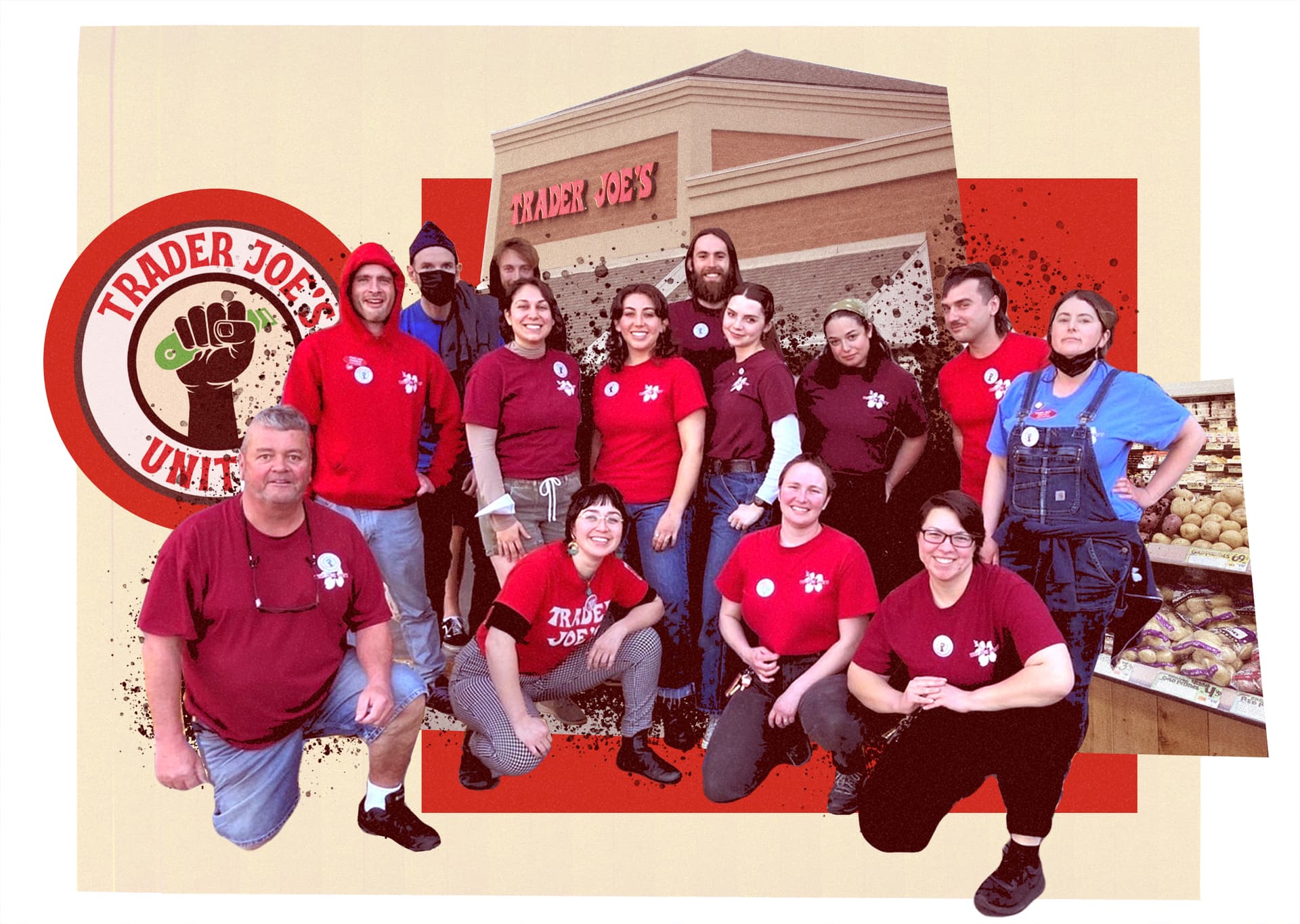
Trader Joe’s labor history shows how quickly a workplace issue can become a bigger conflict when communication breaks down. Workers at the Hadley, Massachusetts store formed Trader Joe’s United on July 28, 2022, and a later petition to decertify that union was dismissed by the National Labor Relations Board in 2024.
In 2026, a former Trader Joe’s worker sued the company, alleging injuries were ignored and the interactive process was not followed.
This article was produced by Prism’s automated news system from verified source data, official records, and press releases, then run through automated quality and moderation checks before publishing. The system is built and supervised by the people who set the standards it runs under. Read our full AI policy.
Did this article answer your question?