Trader Joe's workers watch wages against rising living costs
June’s wage bump looks better on paper than on a rent bill. Trader Joe’s crew are weighing pay, benefits and promotion paths against high living costs and union pressure.
Real average hourly earnings for all employees rose 0.8% from May to June, helped by a 0.3% increase in average hourly earnings and a 0.4% decline in CPI-U. Over the year, real hourly pay rose just 0.1%, and Trader Joe’s workers may still feel squeezed when rent, groceries and commuting costs hit the monthly budget.
What the June wage data actually means for crew
The monthly numbers were stronger for production and nonsupervisory employees, the large hourly workforce category that best mirrors retail labor. For that group, real average hourly earnings rose 0.8% from May to June, and real average weekly earnings rose 0.6% over the month. The longer view is quieter: real average weekly earnings for all employees rose 0.3% year over year, which can be swallowed quickly by housing, transit and food costs in expensive markets.
Trader Joe’s pay story has to be judged against the full cost of staying in the job. A crew member does not compare wages only with another grocery chain’s starting rate. The real test is whether pay, benefits and scheduling are enough to keep a worker in place when the local labor market is still competitive and the bills keep arriving. The Bureau of Labor Statistics has scheduled the next real earnings release for August 12, 2026.
What Trader Joe’s says it already offers
Trader Joe’s has long built its employment pitch around more than base pay. The company says Crew Members currently receive up to a 20% store discount, and eligible Crew Members can get medical, dental and vision coverage with contributions as low as $25 per month. It also says paid time off increases with tenure, which gives longer-serving workers a tangible reason to stay rather than treat the job as a short stop.
The promotion pipeline is another part of the pitch. Trader Joe’s says 78% of Mates started as Crew and 100% of Captains were promoted from Mate. That kind of internal mobility can help morale when workers want to see a path beyond the register or the stockroom, but it only works if crew believe the path is real and the timing is fair. Trader Joe’s also says pay rates are not the same at every store, which is important context for anyone comparing the company with local grocery wages or trying to understand why one location may feel more competitive than another.
Why a good package can still feel thin
Crew members are not just evaluating hourly wages in isolation. They are weighing whether a schedule is predictable enough to arrange child care, whether commuting eats too much of the paycheck, and whether the overall package still feels strong once housing and grocery bills are paid.

Modest inflation-adjusted gains can still land as underwhelming. A small rise in real hourly earnings may show up in the data, but it does not always change how a worker experiences the week. If rent jumps faster than pay, or if an irregular retail schedule makes second-job planning hard, the feeling on the floor can be that the company is keeping up on paper but not in daily life.
Union activity is part of the wage conversation now
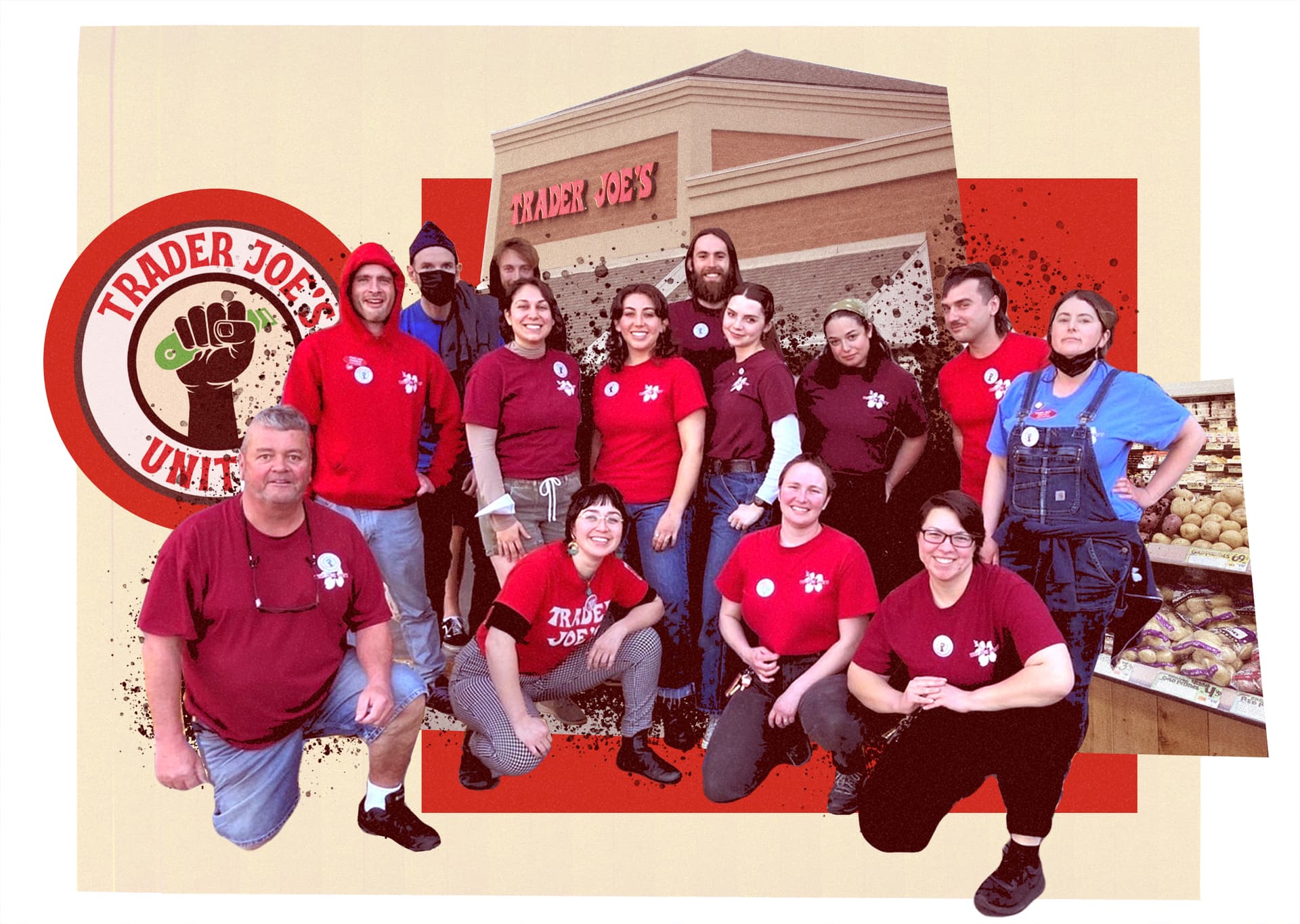
Trader Joe’s United, the independent labor union founded and powered by Trader Joe’s workers, has become the most visible sign that some crew want more leverage over pay and conditions. The first California unionized Trader Joe’s store was the Rockridge location in Oakland in April 2023, and organizing has since spread to stores in Hadley, Massachusetts, Minneapolis, Minnesota, Louisville, Kentucky and Chicago.
The North Center Trader Joe’s in Chicago became the first unionized Trader Joe’s location in Illinois after a contested ballot was resolved by the National Labor Relations Board in June 2026. The NLRB is the independent federal agency that protects the rights of private-sector employees to join together, with or without a union, to improve wages and working conditions. Wage complaints, scheduling disputes and workplace friction have moved into a formal labor setting, where crew members have a protected route to press their case.
There is also an open unfair labor practice case against Trader Joe’s, filed June 9, 2026, in Oakland, California. Trader Joe’s was founded in 1967 and still sells itself on neighborhood feel and friendly crew culture.
What crew and managers should take from this
A 20% discount, low monthly health contributions, tenure-based time off and a visible promotion ladder are meaningful pieces of the package. They matter most when they are paired with pay rates that feel strong in the local market, not just in company messaging.
For crew, the question is whether the whole offer still clears the bar once rent, groceries and transit are counted. For managers, the lesson is that retention is not just about hiring people who like the brand. It is about keeping faith with workers who can compare Trader Joe’s against other grocers, against the cost of living in their city, and now against the example set by stores where workers have already organized.
This article was produced by Prism’s automated news system from verified source data, official records, and press releases, then run through automated quality and moderation checks before publishing. The system is built and supervised by the people who set the standards it runs under. Read our full AI policy.
Did this article answer your question?