Walmart cuts 1,000 corporate jobs in tech-focused reorganization
Walmart cut or moved about 1,000 corporate roles, a sign that tech and product decisions are getting centralized while Trader Joe’s stays store-led.
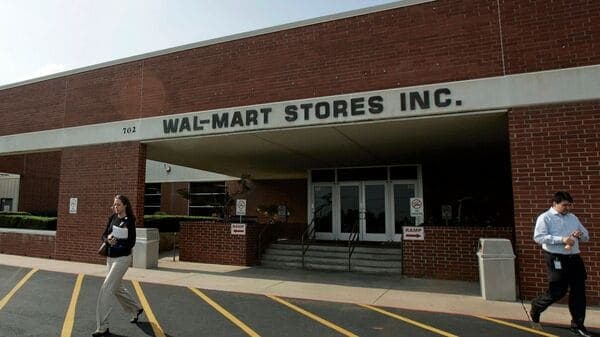
Walmart is trimming or relocating about 1,000 corporate jobs, most of them in technology, product and design, as it pushes harder into a unified, tech-heavy operating model. The memo, dated May 12 and signed by Suresh Kumar and Daniel Danker, says the company wants clearer ownership, less duplication and fewer layers across a single shared platform.
The cuts are small next to Walmart’s 2.1 million-person global workforce, but they land at a company that remains the largest private employer in the U.S., with about 1.6 million workers here. Many affected employees were told to move to Bentonville, Arkansas, or Northern California, which makes this more than a headcount story. It is also a reshaping of where corporate retail power lives.
Walmart has spent the past year consolidating its Global Tech and Product + Design groups after previously organizing separately for Walmart U.S., Sam’s Club and international markets. The latest move follows that earlier shift and underscores how aggressively the retailer is centering technology and AI-adjacent product work inside fewer hubs. Management has framed the change as simplification and consolidation, not a direct replacement of workers by AI, but the direction is clear: fewer silos, more centralized control.
For Trader Joe’s crew members and managers, the relevance is indirect but real. Trader Joe’s has built its brand on the opposite model, one that still emphasizes neighborhood stores, knowledgeable Crew Members and a very small office crew in Monrovia, California and Boston, Massachusetts. Its careers pages say store strategy is run from the floor of the store, with no back offices. The chain also has no self-checkout and does not operate e-commerce or delivery, which keeps the store experience, and the people running it, at the center of the business.

That makes Walmart’s reorganization a useful policy signal inside grocery. If a giant like Walmart is narrowing decision-making around tech and product, rivals can feel pressure to match that efficiency without losing the store-level autonomy that helps define their culture. At Trader Joe’s, that tension reaches into operations, staffing support and the pace of technology adoption, all of which shape the day-to-day work crew members feel on the floor.
Trader Joe’s is still growing the old-fashioned way, by opening stores. It added 34 locations in 2024 and has a Woodinville, Washington opening set for May 15, 2026. But the company also faces a more complicated labor backdrop than its reputation suggests. Trader Joe’s United says it is an independent union founded by workers, and the first unionized store, in Hadley, Massachusetts, voted in 2022. More than two years later, that store still lacked a contract, a reminder that even a store-first culture has its own internal power struggles.
Know something we missed? Have a correction or additional information?
Submit a Tip