UPS Teamsters guide drivers on documenting contract violations
UPS Teamsters are being told to treat every misassigned package as evidence, from the DIAD entry to the grievance, because the contract only works when workers document it.
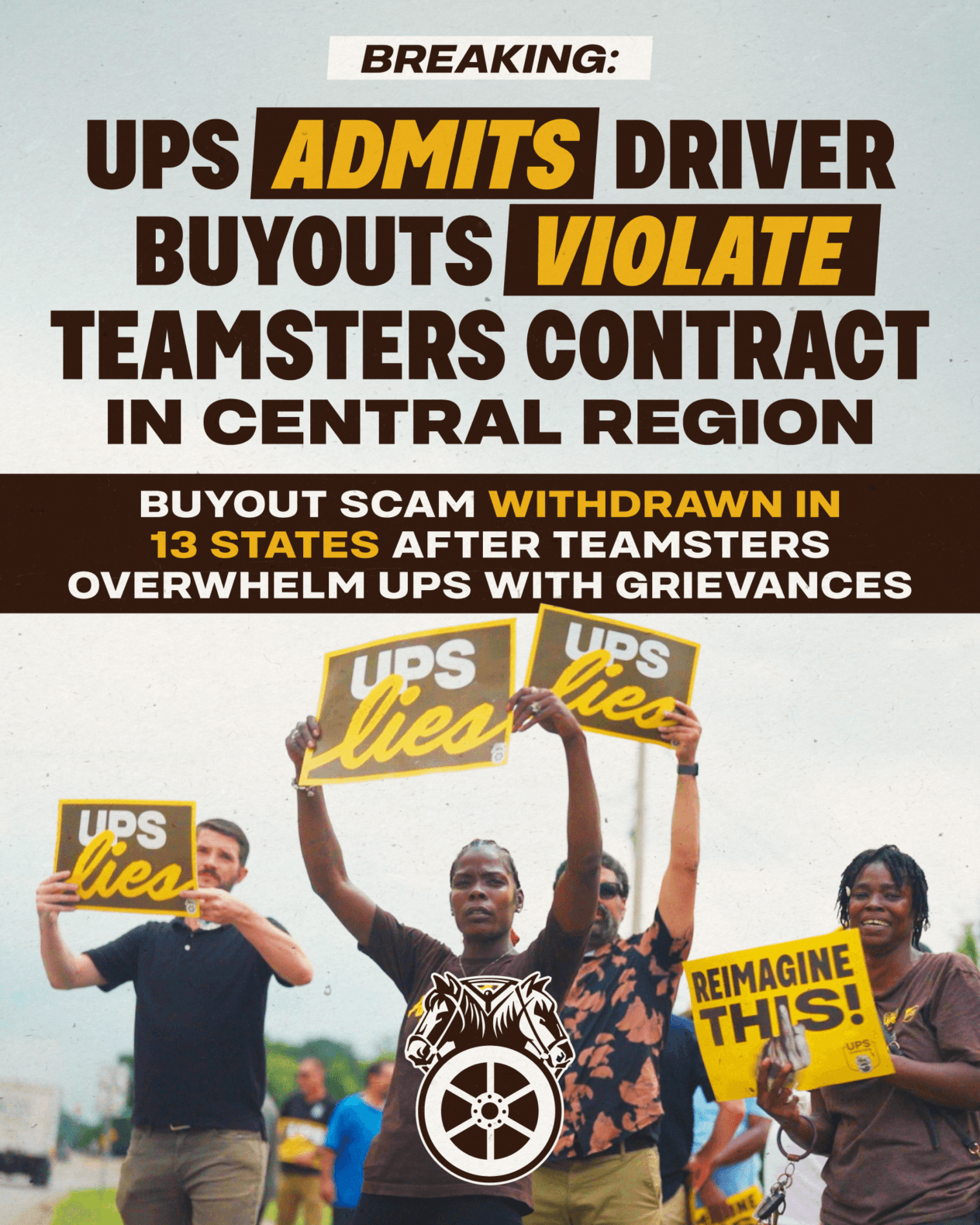
At UPS, the safest route to protecting a job is to document the one that got stolen. The contract enforcement playbook on Protect Jobs turns that idea into a checklist: air drivers deliver air packages only, ground packages belong with package drivers, and any ground stop handed to the wrong classification should be written into the DIAD and grieved at the RPCD rate.
Know the job before you chase the violation
The first line of defense is knowing which work belongs to which classification. Air drivers should stick to air work, while ground packages should only be delivered by package drivers. If management shifts a ground delivery onto the wrong route or hands it to the wrong driver, the issue is not just a bad day on the loop. It is a contract problem that can be turned into a wage claim and a record of job erosion.
That matters because UPS is built on classification boundaries. Package handlers, package car drivers, feeder drivers, mechanics, and part-time hub workers all work inside a system where assignments are supposed to be sorted by job title, seniority, and route. When a worker takes a stop outside that lane, the immediate question is not whether the delivery got done. It is who should have done it, under what pay rate, and whether the company is quietly redrawing the map of the work.
Write it down in the DIAD and make the grievance match the facts
The page’s instruction is blunt: if you are given a ground package to deliver, document it in the DIAD, file a grievance, and demand RPCD pay. That sequence matters because it ties the violation to the route record, the date, and the exact assignment rather than leaving it as a vague complaint about overwork. In a UPS center, the difference between a win and a shrug often comes down to whether the paperwork can show the employer crossed a line.
- the route or run
- the date and time
- the classification doing the work
- the package type or assignment
- what management told you to do
For workers, the practical standard is simple. Keep track of:
That is the kind of detail that gives a grievance teeth. It also makes the dispute harder to bury in the kind of local deadlock that too often turns contract language into a suggestion instead of a rule.
Use the same discipline on ride-alongs, notices, and classification disputes
UPS Teamsters United’s broader enforcement approach is built around records, not guesswork. The page ties into ride-along and OJS documentation, 24-hour notice reminders, and the push to move national-language disputes into the grievance system instead of letting them sit unresolved at the local level. That gives workers a practical reminder: enforcement is procedural, and procedure favors the person who can prove what happened.
That mindset is especially important in a workforce where the pressure to absorb extra work never really stops. When a route gets overloaded, when a relief driver is used to cover the wrong stop, or when the company leans on workers to do work that should sit in another classification, the contract language only helps if someone captures the violation in real time. The paperwork is not bureaucracy for its own sake. It is how UPS employees turn a workload dispute into a claim for wages, route integrity, and future work protection.
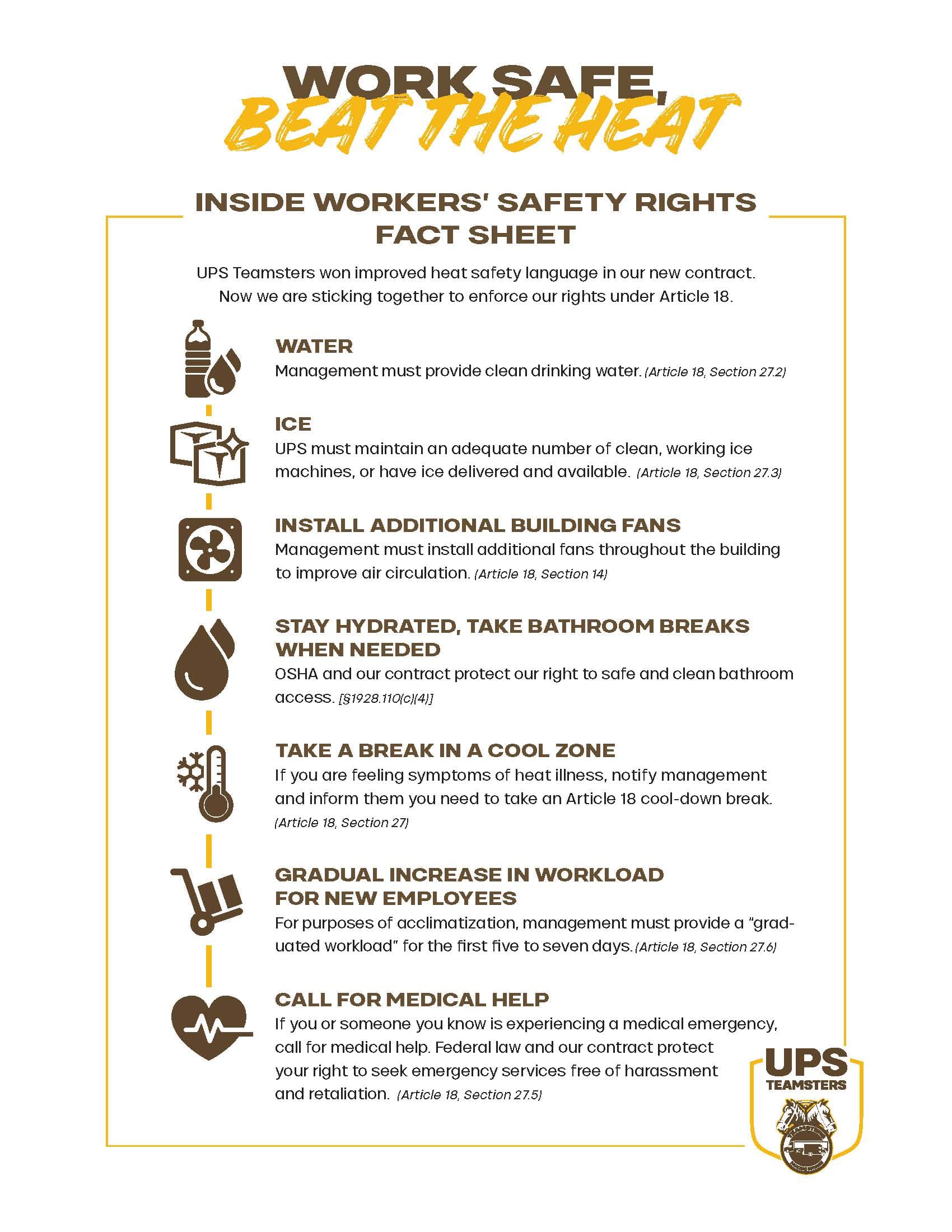
Bathroom breaks are part of the contract fight too
The same enforcement logic applies to restroom access. OSHA says employers must allow workers to leave their work locations to use a restroom when needed and avoid unreasonable restrictions on restroom use. For mobile workers, OSHA also says employers must provide readily available transportation that gets them to restrooms promptly if restrooms are not available at the work location.
OSHA’s interpretation goes further by requiring case-by-case review of restrictions, including how long workers are told to delay bathroom use. In practice, that means management cannot turn basic human needs into a discipline issue just because the route is moving fast or the supervisor would rather pretend the stop never happened. The page’s plain advice, go when you gotta go, is not a throwaway line. It is a reminder that federal law protects the right to stop and use the restroom when necessary.
For part-timers and full-timers alike, this is one more area where the record matters. If a supervisor pushes a delay, blocks access, or creates an unreasonable restriction, workers need to know the time, the location, and what was said. The same way a misassigned ground package belongs in the DIAD, a restroom denial belongs in the grievance file.
Why UPS workers are being trained to keep records
The push for documentation comes from the scale of the company and the size of the contract fight that shaped current expectations. United Parcel Service, Inc. delivered an average of 22.3 million packages per day in 2023, totaling 5.7 billion packages for the year, and reported $91.0 billion in revenue. In a system that large, management depends on speed, and workers depend on proof.
That pressure was on display during the 2023 UPS-Teamsters contract fight. UPS and the International Brotherhood of Teamsters reached a tentative five-year agreement on July 25, 2023, avoiding a possible strike involving about 340,000 workers. Members then voted electronically from August 3 to August 22, 2023, and ratified the national agreement on August 23 with an 86.3 percent yes vote. The new UPS National Master Agreement runs through July 31, 2028, and the Teamsters said it covers more than 300,000 UPS employees in the United States.
The union also described the agreement as the largest private-sector collective bargaining agreement in North America. That label matters less as a slogan than as a warning to management: the job classifications, wage rates, and route boundaries in this contract are not decorative language. They are the terms that now have to be enforced every day, package by package, route by route, and grievance by grievance.
The lesson for the shop floor
This is what contract enforcement looks like at UPS when it is done seriously. Air stays with air. Ground stays with package drivers. Misassigned work gets written down, grieved, and paid at the right rate. Bathroom rights are not negotiable because a supervisor is in a hurry. And in a workplace built on volume, the worker who keeps the cleanest record often has the strongest case.
For UPS employees and the supervisors who manage them, the message is the same: the contract is not self-enforcing. It only protects jobs when the language is matched to the facts, and the facts are captured before anyone can erase them.
This article was produced by Prism’s automated news system from verified source data, official records, and press releases, then run through automated quality and moderation checks before publishing. The system is built and supervised by the people who set the standards it runs under. Read our full AI policy.
Did this article answer your question?