April consumer sentiment shows Walmart shoppers still focused on value, flexibility
Shoppers are still trading down, asking more price questions, and stretching every trip, which is putting fresh pressure on Walmart's front end, shelves, and staffing.

April sentiment still points to a cautious shopper
Walmart shoppers are still behaving like every trip has to deliver maximum value. That means smaller baskets, tighter price checks, more questions about substitutions and rollback signs, and less patience when an item is missing or a shelf label looks off.
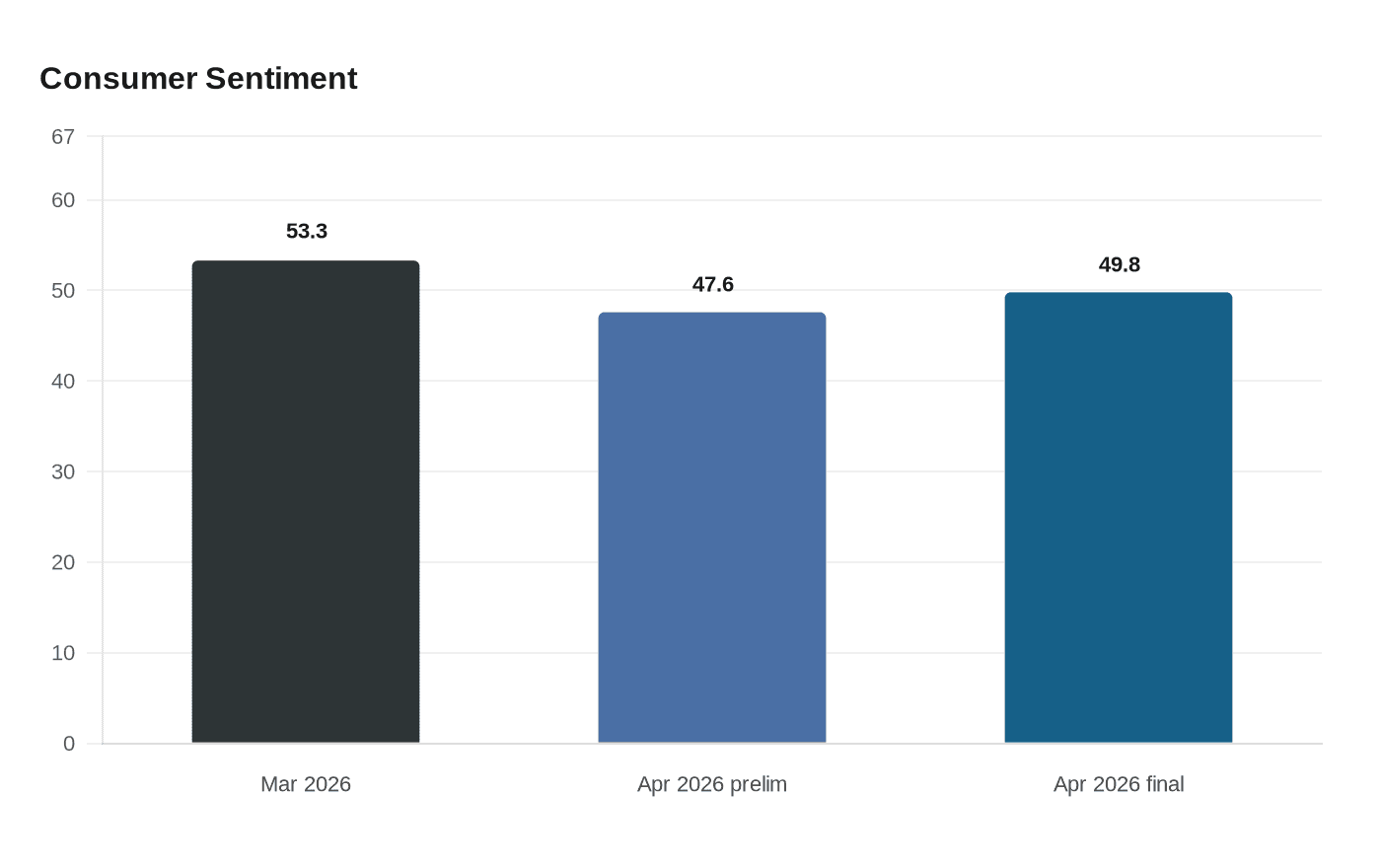
The University of Michigan’s final April 2026 consumer sentiment index rose to 49.8 from the preliminary 47.6, but it still fell from March’s 53.3 and was described as an all-time low. The current economic conditions index slipped to 52.5 from 55.8, while the expectations index fell to 48.1 from 51.7. Joanne Hsu said the decline was broad-based across political party, income, age, and education, and the University of Michigan said the result was comparable to the trough seen in June 2022. The survey also said the Iran conflict appeared to influence consumer views mainly through gasoline and potentially other prices.
What associates are already seeing on the sales floor
When households feel cautious, they do not stop shopping. They change how they shop. They compare unit prices more closely, buy smaller sizes when budgets are tight, postpone nonessential purchases, and spend more time looking for value, which is exactly the kind of behavior that changes the rhythm of a Walmart store.
Doug McMillon said in February 2025 that Walmart was seeing stressed consumers buying smaller pack sizes, being more selective, and prioritizing value purchases. John David Rainey said in June 2025 that consumers were spending more on food and had less left for general merchandise, while wallets were still stretched even as inflation headlines cooled. Those comments line up with what associates feel in real time: grocery and consumables keep moving, but discretionary items can slow, and every price change or promo tag gets more scrutiny.
For front-end associates, that often means more questions at the register and more customers double-checking whether a price on the shelf matches what rings up. For merchandise teams, it means more pressure to keep rollback signs, feature displays, and size comparisons accurate. When the shopper is uneasy, a bad label or a missing item is not a small miss. It can feel like proof that the trip did not deliver value.
How the sentiment readout changes daily store conversations
The practical effect of softer sentiment is that customers want reassurance before they spend. They want to know where the value is, which size makes the most sense, whether there is a better substitute, and when the next sale starts. That creates a different kind of service load than a confident consumer who is browsing for impulse buys.
In a Walmart setting, that shows up in a few predictable ways:
- More questions about unit pricing and pack size
- More requests for substitutions when preferred items are out of stock
- More attention to rollback items and feature endcaps
- Less forgiveness if an aisle is messy or a shelf tag is wrong
- More pressure on teams to keep basics full and easy to find
That is why presentation matters as much as price. Clean shelves, accurate labels, and well-stocked aisles help protect trust, especially when shoppers already feel stretched. Walmart has said its customer value proposition rests on everyday low prices, broad assortment, convenient shopping, and trust, and those promises only work if the store experience makes value easy to see.
What department managers and assistant managers need to watch
Sentiment data is not just a macro reading sitting in a report. At store level, it helps managers anticipate the conversations customers are likely to have over the next few weeks. If shoppers are worried, they usually ask more about substitutions, rollback items, and when the next sale starts, and they are quicker to notice when something is out of stock.
That matters for labor planning too. When consumers shift toward essentials, some departments get busier while others slow down, so leaders need labor to stay flexible and the right associates to be in the right place at the right time. A front-end rush driven by price checks may not look like a full-store surge, but it can still leave customers frustrated if coverage is thin.
For assistant managers, the takeaway is that execution becomes even more important when sentiment softens. The store does not need more hype. It needs sharper replenishment, cleaner presentation, and teams that can move quickly between value questions, stocking, and service recovery. The best-run stores will be the ones that keep the basics tight while demand shifts under them.
Why this matters for hourly associates and growth inside the company
For associates thinking about career growth, this environment rewards the people who can explain products clearly, solve problems quickly, and stay calm when customers are stressed. That is especially true in value retail, where the job is not just scanning items or stocking shelves. It is helping shoppers feel confident that they made the right choice.
A cautious consumer may never say they are reacting to a sentiment index, but the effect is visible everywhere in the building: smaller baskets, more value questions, more careful comparisons, and less tolerance for confusion. The April reading suggests that pressure is still there, and Walmart’s stores will keep feeling it first in the aisles, at the registers, and in the way every associate is asked to make value visible.
This article was produced by Prism’s automated news system from verified source data, official records, and press releases, then run through automated quality and moderation checks before publishing. The system is built and supervised by the people who set the standards it runs under. Read our full AI policy.
Did this article answer your question?