Walmart shrink concerns reshape front-end work, staffing, and training
Shrink pressure is changing Walmart's front end, from more locked items and receipt checks to hosted checkout and tighter training for cashiers and service-desk teams.
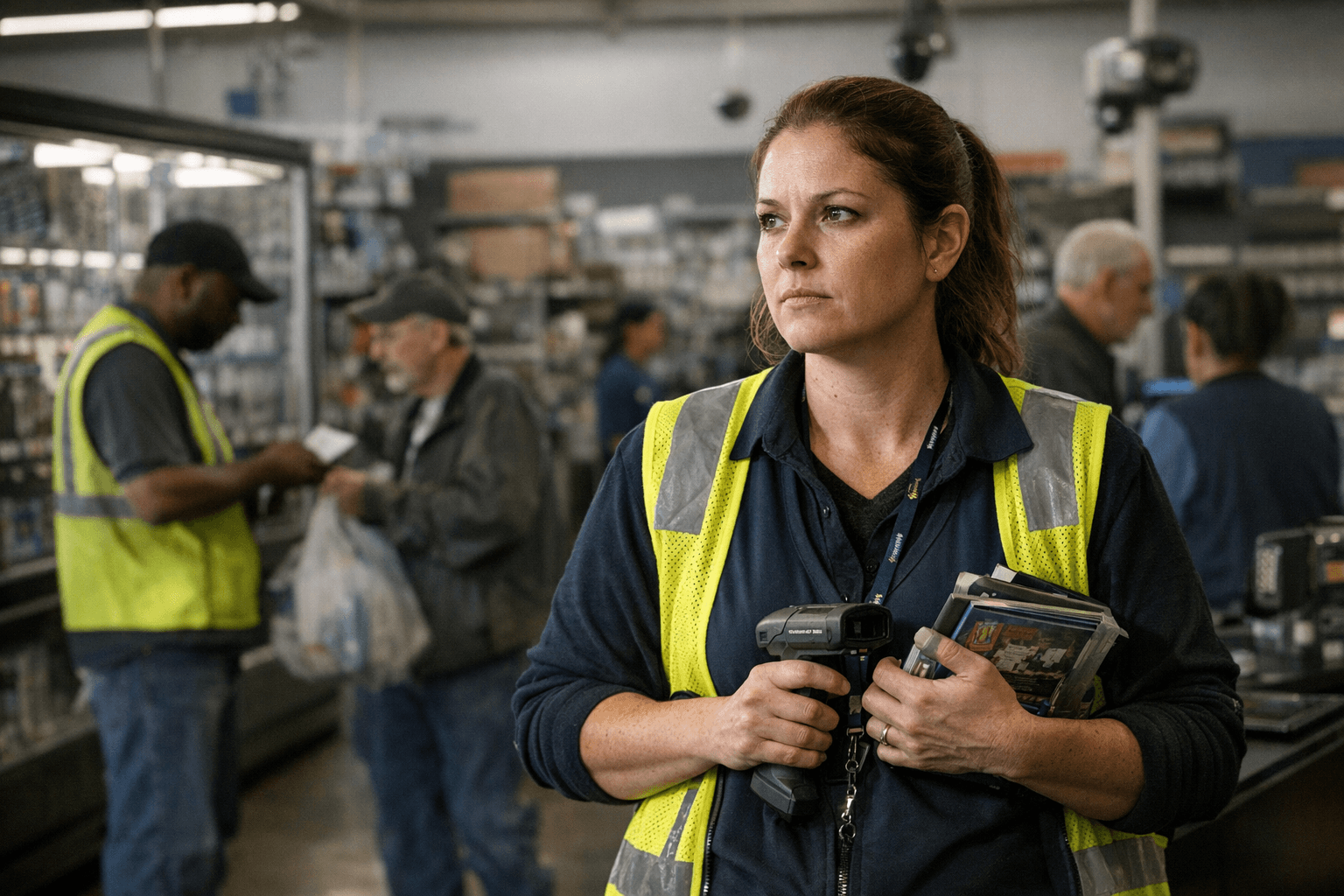
The front end is where shrink pressure stops being abstract. When Walmart tightens security, cashiers, service-desk staff and floor associates feel it in the form of locked cases, more receipt checks, extra coverage at self-checkout and more customer friction at the exit.
Shrink turns checkout into an operations problem
What looks like a theft-prevention decision from the office quickly becomes a staffing decision on the floor. More merchandise gets secured, more associates get pulled to customer service and exit points, and more managers spend time explaining why a category is locked or limited instead of pushing sales.
That shift changes the job for every layer of the store. Department managers are left trying to keep the area moving fast enough to keep customers calm while still protecting inventory. Assistant managers have to make sure the rules are consistent so associates are not improvising at the register, at the service desk or in the aisle.
For hourly associates, the practical effect is simple: the work grows beyond scanning and bagging. A cashier or self-checkout host can become the first person a shopper meets when a purchase is slowed down by a locked item, a receipt question or a return issue that needs a supervisor. The store may call that “security,” but on the floor it is often more time spent calming people down and less time spent serving them quickly.
What associates should handle, and what should move up the chain
The cleanest stores are the ones where employees know exactly what they can resolve themselves and what has to be escalated. Front-end associates should be trained to guide shoppers, answer basic checkout questions, direct them to open lanes, and keep the line moving without inventing new rules on the spot.
They should not be left to sort out policy disputes alone. If a customer challenges a locked-case rule, disputes a receipt check, pushes back on a return exception or becomes confrontational, that is the point where the issue should move to a supervisor or manager. The goal is not to turn cashiers into security guards. It is to keep them from absorbing problems that belong higher up the chain.
That distinction matters because the wrong setup creates risk in both directions. If associates are too strict, honest shoppers feel punished. If they are too loose, the store loses control over shrink and the front end becomes inconsistent from shift to shift.
Hosted checkouts show where Walmart is heading
Walmart has already been redesigning how the front end works. Its customer-facing FAQ says it has rolled out Hosted Checkouts in a number of stores, with associates in a Customer Host role helping customers find registers, complete checkout and answer questions. Walmart says those hosted checkouts are designed to help customers finish shopping faster.
That is a telling choice. Instead of treating checkout only as a transaction point, the company is turning it into a managed service area, where associates are expected to steer customers, reduce confusion and keep traffic moving. The model also signals that self-checkout is no longer being treated as a stand-alone answer. It is one part of a broader front-end layout that includes hosts, open registers and, in some stores, more supervision.
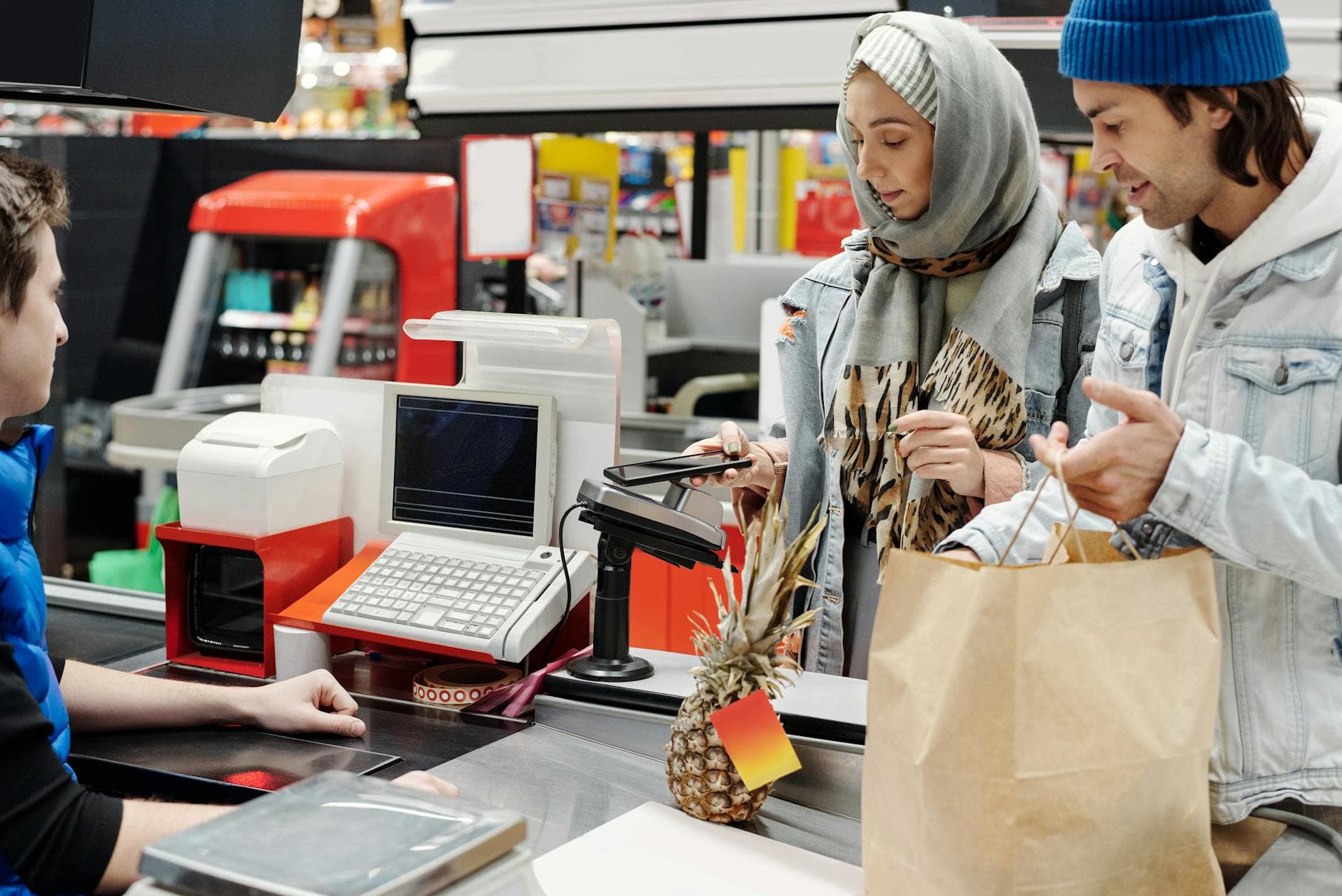
The idea did not appear overnight. Walmart corporate materials from 2020 said the company was reimagining checkout and testing a new checkout experience in a Fayetteville, Arkansas, Supercenter. In March 2020, it also said it was making key services completely contact free, including Walmart Pay on any register and self-checkout changes. Those earlier moves help explain why today’s shrink debate is landing so hard on the front end: the checkout lane has already been turned into a strategic tool, not just a place to ring people up.
Why staffing and training matter more when shrink rises
As shrink concerns rise, the store needs clearer communication and better staffing in the highest-risk areas. That means the front end, but it also means service desks, exit points and any area where customers routinely need help with exceptions. When the store is under pressure, every extra step added to prevent loss creates more work somewhere else in the building.
That is why training matters so much. Associates need to know when to be helpful, when to be firm and when to call for backup. If a host or cashier is left guessing, the result is inconsistency: one shift waves a shopper through, the next holds the line, and customers learn that the rules depend on who is working.
There is also a safety expectation built into this work. Customer friction is part of the job, but confrontation should not be normalized. If a situation starts to feel unsafe, that is not a frontline problem to solve with courtesy alone. It is a management problem that should be escalated immediately.
The companywide backdrop behind the front-end pressure
Walmart’s latest annual-report materials show how large the stakes are. The company said fiscal 2026 ended January 31, 2026, and its April 23, 2026 annual-report release said it has 2.1 million associates. The same release said annual shareholders’ meeting is scheduled for Thursday, June 4, 2026, and that John Furner highlighted a people-led, tech-powered approach with AI-powered solutions.
The numbers matter because they show how a front-end change in one store fits into a companywide operating model. Walmart’s 2026 annual-report materials also cited 5.1 percent constant-currency revenue growth in fiscal 2026 and 24 percent global eCommerce growth, which helps explain why the company keeps investing in checkout design, labor allocation and technology at the same time.
The security lens is broader than the sales floor, too. Walmart’s privacy and security pages show it routes law-enforcement requests through a dedicated portal, a reminder that the company treats safety, compliance and store operations as connected parts of the same system. That mindset is also visible in local store reporting, including 2025 accounts from places such as Shrewsbury, Missouri, where self-checkout was removed and police-call data was cited as a factor.
The direction is hard to miss. Walmart is not just trying to sell faster; it is trying to make the front end a controlled part of the shrink strategy. For associates, that means more rules, more hosting and more moments when judgment calls need to be passed up the chain instead of handled ad hoc.
This article was produced by Prism’s automated news system from verified source data, official records, and press releases, then run through automated quality and moderation checks before publishing. The system is built and supervised by the people who set the standards it runs under. Read our full AI policy.
Did this article answer your question?