Deloitte sees value pressure, AI adoption reshaping Walmart’s retail playbook
Walmart’s low-price story now runs through AI, tighter inventory, and faster service, with associates feeling the pressure at the shelf and the register.
Value is not just about price anymore
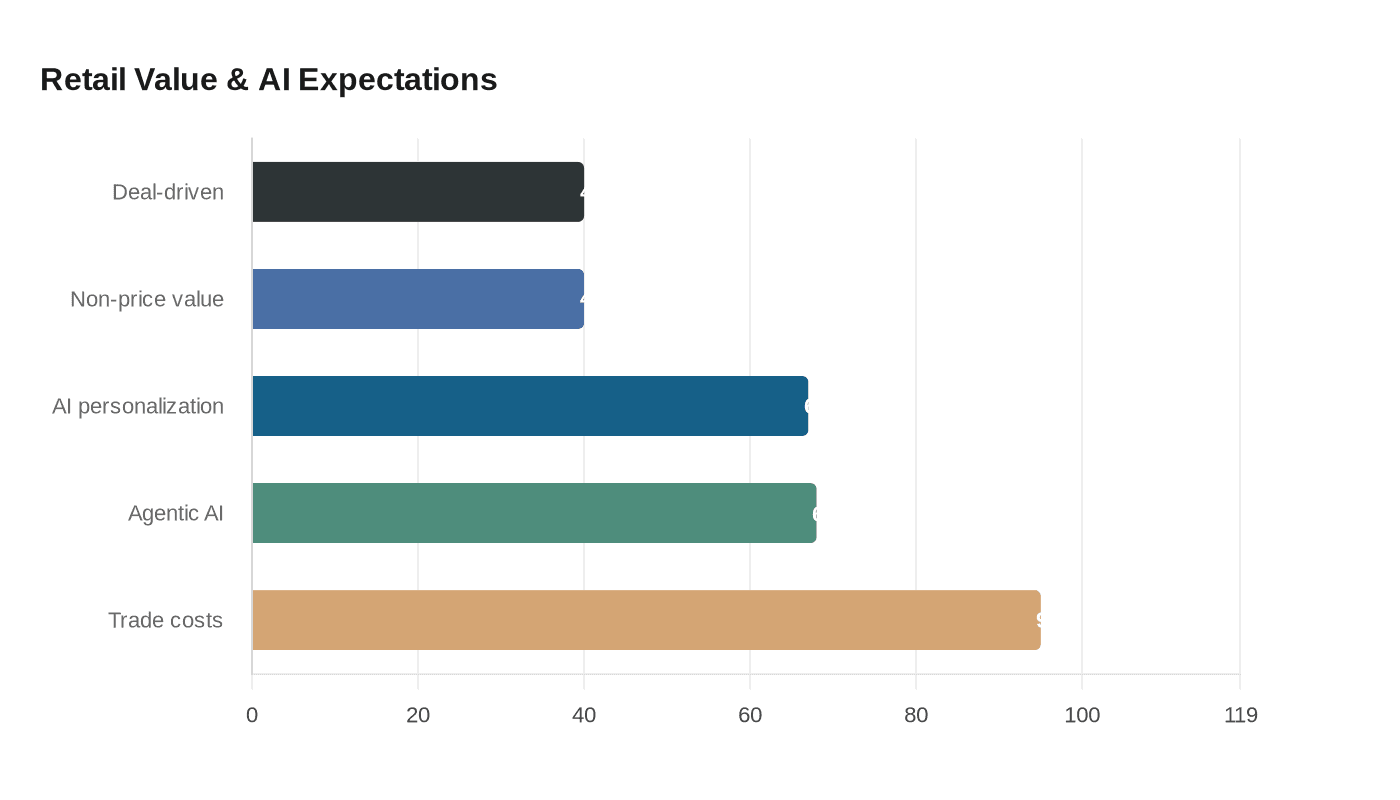
Value pressure is no longer just a merchandising problem at Walmart. Deloitte’s latest retail outlook says shoppers want convenience, personalization, and low prices at the same time, while four in 10 Americans are now deal-driven or cost-conscious, including higher-income households. For Walmart workers, that shows up in a very familiar way: more customers hunting for markdowns, more questions about substitutions and alternatives, and less patience for gaps on the shelf or slow lines at checkout.
The part of Deloitte’s analysis that matters most on the floor is that non-price factors now account for up to 40% of brand-value perception. That means quality, service, checkout ease, loyalty, and employee interactions still shape whether a trip feels like a win or a waste of time. In practice, the job is not just to keep prices low. It is to make a low-price trip feel easy, accurate, and fast enough that customers believe they got the best total value.
The survey points to big-retailer thinking, not niche theory
The Deloitte survey behind these findings was conducted online from Oct. 13 to Nov. 19, 2025 and included 330 retail executives. Most of them were running large operations: 86% worked at retailers with at least $1 billion in annual revenue, and 41% were at companies with $10 billion or more. That matters because the outlook reflects how large-scale retail leaders are making decisions, not just what smaller specialty chains are guessing about the market.
Deloitte also frames 2026 as more than a one-off inflation reaction. The report suggests the industry is settling into a more structural shift toward value-seeking behavior, which means Walmart’s traffic mix, basket mix, and service expectations are likely to stay under pressure even if the economy improves. For hourly associates and managers, that translates into a store environment where every stocked shelf, every clean endcap, and every smooth handoff at pickup helps protect the perception of value.
AI is moving into the daily work, not just the pilot phase
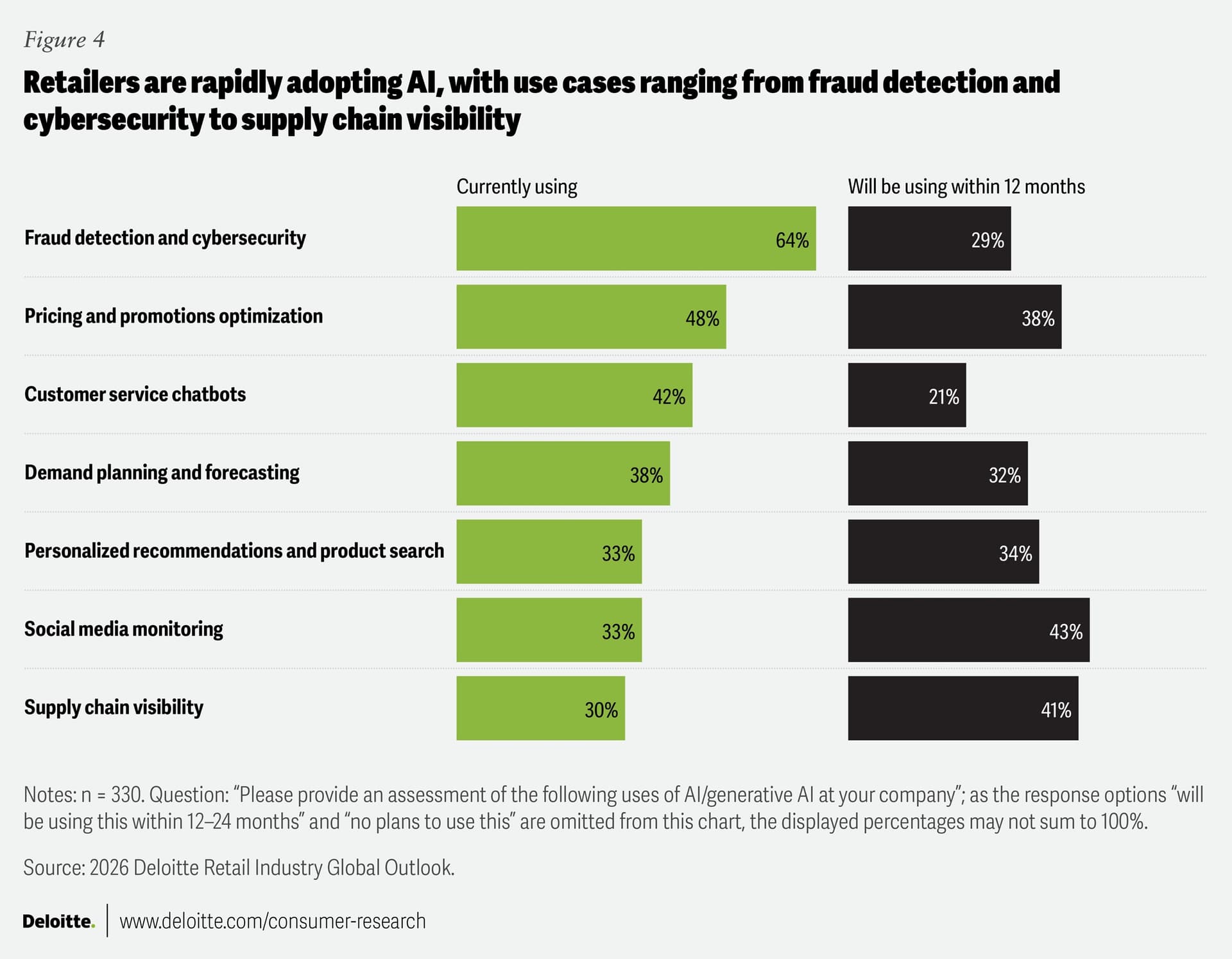
Deloitte says AI is shifting from experiment to core operations. Most retailers are already deploying it or planning to within 12 months, 67% of executives expect AI-driven personalization capabilities within the next year, and 68% expect agentic AI adoption in the next 12 to 24 months. The report also says chat-based tools already drive 15% to 20% of referrals for some retailers, while agents could influence up to 25% of global e-commerce sales by 2030.
Walmart has been moving in that same direction. In May 2025, the company said it was developing purpose-built agentic AI tools tailored to retail tasks using its own data and large language models. In June, Walmart said it was deploying AI-powered tools across its U.S. business for 1.5 million associates. That means AI is not just a shopper-facing experiment like a chatbot in the app. It is also becoming a work tool that can shape how associates find answers, complete tasks, and keep pace with customer demand.
The store-level implication is straightforward: technology is being pushed closer to the job itself. Walmart’s GenAI-powered copilots have evolved into assistive agents, and Sparky is now part of the Walmart app as a shopping assistant. For employees, that points to a future where more routine questions, product lookup, and task support are handled through digital tools, while the human side of the job shifts toward solving exceptions, helping customers who are stuck, and keeping the store moving when the software is not enough.
Supply-chain resilience is now a front-line issue
Deloitte says 95% of surveyed retail executives expect global trade policies to push costs higher. That is a broad warning, but it lands hard at Walmart because the company has already told investors and shoppers that tariffs were forcing price increases and that it could not absorb all of the pressure. Reuters reported in May 2025 that Walmart said it would have to start raising prices later that month because of tariffs, and that higher tariffs would result in higher prices.
The operational meaning for associates is that supply chain strategy and store execution are now inseparable. When costs rise, retailers get more aggressive about sourcing, inventory flow, and assortment decisions. That can mean more pressure to keep the right items on hand, more attention to shrink and waste, and less tolerance for backroom disorder or slow replenishment.
Walmart has already shown how far this can go. In July 2025, the company said predictive AI was sorting produce in Costa Rica and rerouting inventory in Mexico before stores opened. That is not abstract automation. It is the difference between produce arriving where it is needed, when it is needed, and a morning shift starting with fewer holes to fill. For managers, it means more decisions are being made before the doors open. For associates, it means the store increasingly depends on the quality of the data and the speed of the systems behind the scenes.
What this means on a Walmart shift
The practical takeaway for Walmart workers is that value, AI, and supply-chain resilience are converging into one operating model. Retail leaders want lower costs, but they also need better service and faster fulfillment, which puts more weight on store execution than ever. In that world, a clean aisle, a fast checkout, and accurate inventory count as much as the sign on the shelf.
- Associates are being asked to do more with digital help, not less with fewer people.
- Managers will be judged on whether inventory actually reaches the floor fast enough to match demand.
- Customers will still demand the lowest price, but they will punish friction just as quickly.
The pressure will not always look the same from one department to the next, but the direction is clear:
Walmart’s own FY2025 ESG report describes the company as a people-led, tech-powered omnichannel retailer focused on affordable, quality goods and resilient value chains. That sounds like corporate language, but it maps closely to what Deloitte is describing: a retail model where service, software, and supply chain are all part of the same value equation. For Walmart workers, the job ahead is less about choosing between tech and people than learning how both now define the pace of the store.
This article was produced by Prism’s automated news system from verified source data, official records, and press releases, then run through automated quality and moderation checks before publishing. The system is built and supervised by the people who set the standards it runs under. Read our full AI policy.
Did this article answer your question?