Walmart expands skills-first training, opens clearer paths to higher-paying jobs
Walmart is betting that skills, not degrees, can move hourly workers into better-paid roles, with training, certificates and clearer next-step jobs.
A ladder built from the sales floor
Walmart is trying to turn frontline work into a clearer path upward. The company says 90% of its U.S. roles do not require a degree, and it says 75% of salaried store, club and supply-chain managers in the United States started as hourly associates. That matters because it recasts an entry-level job as the start of a career track, not a stopping point.
The company is backing that message with money and structure. Walmart says it will invest $1 billion in career-driven training and development by 2026, and it has framed the effort as a way to move people into higher-paying, in-demand jobs without treating a college degree as the default gatekeeper. For workers deciding whether to stay or leave, the pitch is straightforward: experience on the floor, in the backroom or in supply chain can count if it is paired with the right training and credential.
How Walmart defines a skills-first path
The logic of the program is less about a single training class and more about matching people to jobs based on skills, experience and potential. That includes frontline roles that can lead into store and club management, truck driving, pharmacy technician work, HVAC technician jobs and other skilled positions. Walmart is essentially saying that performance and proof of ability can matter more than formal education in a lot of its staffing decisions.
That shift also changes how managers can coach people. Department managers and assistant managers now have a clearer language for talking about next steps, whether that means cross-training, an internal transfer or a short credential that opens a different lane. For associates, the message is that the work you already do can build toward something else, rather than simply filling the schedule until you leave.
Walmart also says this approach is meant to help solve labor shortages, improve mobility and strengthen the broader economy. That is a big claim, but it fits the retailer’s scale. When a company with Walmart’s footprint decides to normalize skills-first hiring, it can influence how workers think about credentials well beyond one chain.
Training that is meant to lead somewhere
Walmart Academy sits at the center of that strategy. The company says it is one of the largest private training programs in the nation, and it expanded the global academy in 2022 to help 2.1 million associates build and grow their careers. The academy uses both digital and in-person offerings, which gives the company a way to train workers across stores, clubs and supply chain operations without relying on one-size-fits-all classroom instruction.
The company has also leaned harder into shorter credentials. In February 2024, Walmart said it was doubling the number of Walmart-paid short certificate options as part of a plan to fill about 100,000 higher-paying, in-demand jobs over the next three years. That is the practical heart of the strategy: if the company can shorten the distance between a current job and a better one, it can keep experienced workers from walking out the door.
For hourly associates, that means the most important question is not whether they have a degree, but whether they can complete the training that lines up with the next role. For managers, it means career conversations can become more concrete, tied to specific certificates, simulations and internal openings rather than vague promises about someday moving up.
The roles that become reachable next
The strongest selling point for workers is the list of jobs Walmart says can open up through this system. Store management and club management remain the most visible internal promotions, but the company is also pointing to technical and logistics roles that often pay more and carry more responsibility. Truck drivers, pharmacy technicians and HVAC technicians are not casual add-ons here; they are examples of how Walmart wants to link frontline experience to jobs with clearer wage ladders.
That matters because it broadens the idea of advancement. Not everyone wants the same promotion, and not every associate is aiming for a management office. Some workers may want a technical role, a schedule with more stability or a job that is less dependent on the pace of a sales floor. Walmart’s skills-first framework gives the company a way to tell those workers there is a path, even if it runs through a certificate rather than a four-year diploma.
Why the company is pushing this now
Walmart’s skills-first push is also part of a larger employer coalition effort. In April 2025, the company said the initiative was led by the Burning Glass Institute and backed by employers including Accenture, Bank of America, Blackstone, Home Depot, Microsoft, Nordstrom, PepsiCo and Verizon. Walmart said the effort is aimed at building a framework for skills-first hiring that can work across businesses, not just inside one retailer.
The timing reflects a labor market in which more than 80 million workers in the United States do not have a college degree. Walmart’s argument is that degree screens narrow the labor pool too much, especially for jobs where demonstrated ability matters more than classroom credentials. From the company’s perspective, skills-first hiring is both a staffing fix and a broader business strategy, one that can widen access while making it easier to fill hard-to-hire roles.
The company has roots in that thinking. Walmart.org has pointed to the earlier Retail Opportunity Initiative, a five-year, $100 million philanthropic effort from 2015 to 2020, as part of the groundwork for its current push. That history matters because it shows the company has been building this framework for years, not improvising it in response to one labor shortage.
What to watch next inside the company
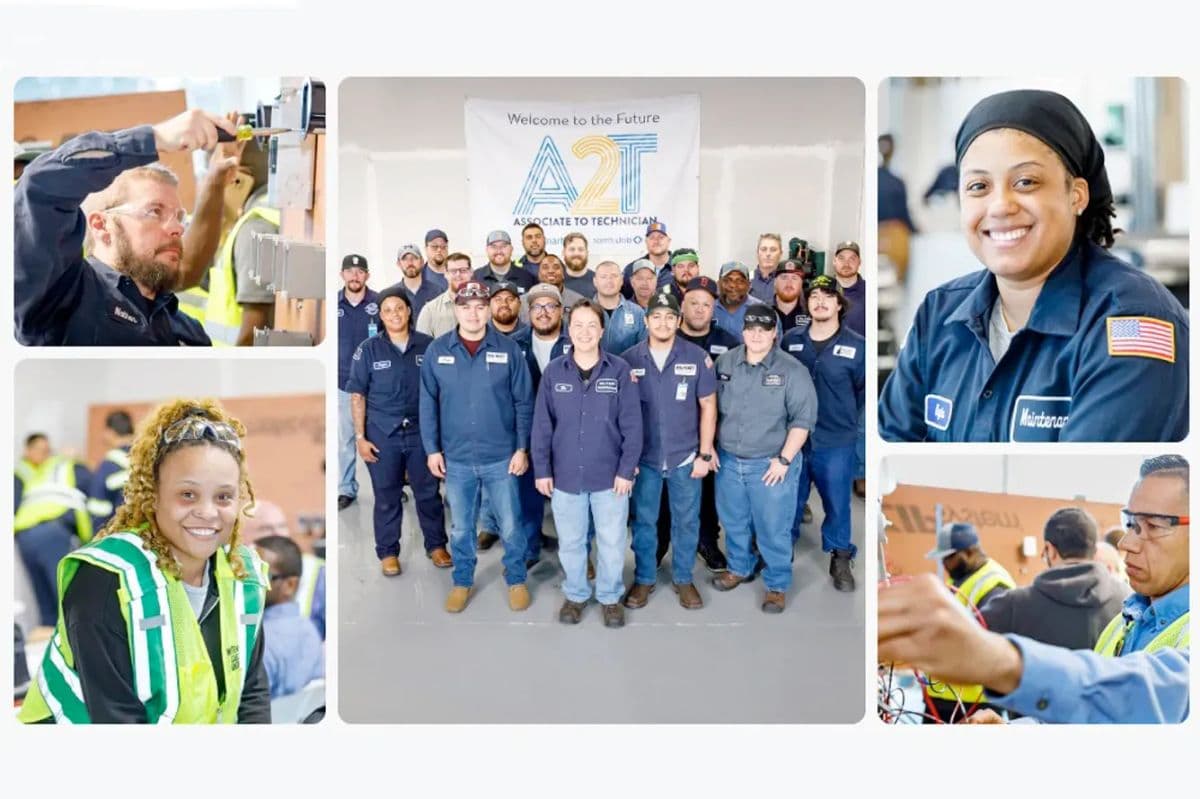
Walmart has continued to add tools that fit the same model. In June 2025, it said it was piloting an AI-powered interview coach and expanding its Associate to Technician program, including new training locations in Indiana and Florida. Those moves suggest the company wants to make the path from associate to skilled worker more navigable, especially in technical roles where the learning curve can be intimidating.
For workers, the key question is whether this becomes a real internal mobility system or just a better label for the same old ladder. The answer will be measured in how many associates move into higher-paying jobs, how many short certificates lead to actual promotions, and whether the company keeps widening access to roles that once seemed out of reach. If Walmart follows through, the company will have done more than launch another training program. It will have made advancement look less like a leap and more like a series of visible steps.
This article was produced by Prism’s automated news system from verified source data, official records, and press releases, then run through automated quality and moderation checks before publishing. The system is built and supervised by the people who set the standards it runs under. Read our full AI policy.
Know something we missed? Have a correction or additional information?
Submit a Tip