Grocery Outlet closes 36 stores, tightens reviews in turnaround push
Grocery Outlet shut 36 underperforming stores and began annual operator reviews after a $180.3 million quarterly loss.
Grocery Outlet’s turnaround is now moving from warning signs to hard numbers: the Emeryville, California chain closed 36 underperforming stores, launched a new annual business review process for independent operators, and paired those moves with a $180.3 million first-quarter loss.
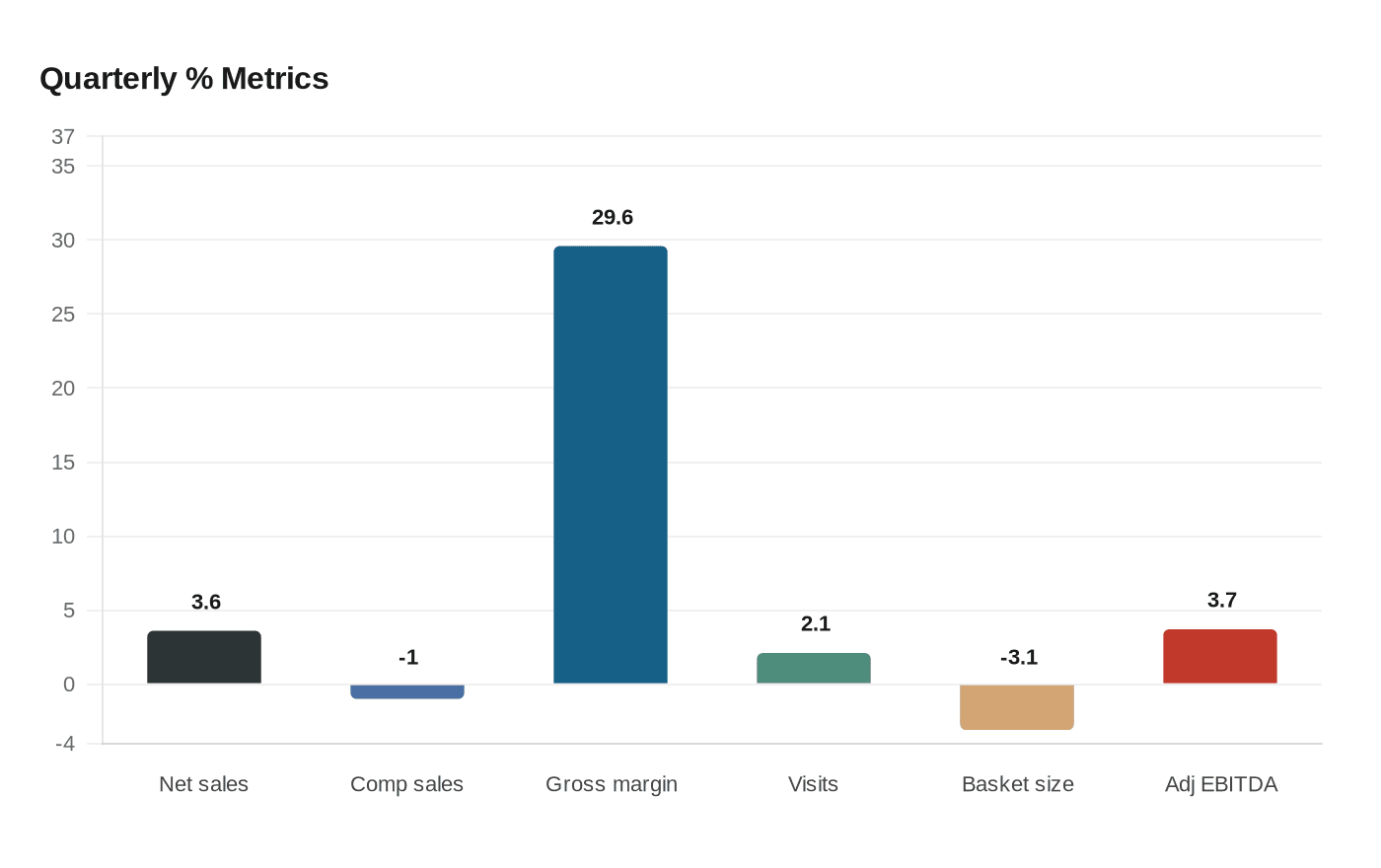
For the quarter ended April 4, net sales rose 3.6% to $1.17 billion, but comparable-store sales fell 1.0% and gross margin slipped to 29.6% from 30.4% a year earlier. The operating loss reached $178.0 million, including $158.0 million in non-cash goodwill impairment and $18.2 million in restructuring charges. Adjusted EBITDA was $43.1 million, or 3.7% of net sales, while adjusted net income fell to $4.6 million from $13.0 million a year earlier.

The business kept traffic moving, with customer visits up 2.1%, but baskets shrank as average transaction size fell 3.1%. That split matters on the sales floor because it shows Grocery Outlet is bringing in more shoppers without getting much more out of each trip, a pressure point that usually leads to tighter assortment control, sharper promotional planning, and more scrutiny of shelf presentation. The company said it completed 34 store refreshes in the quarter, bringing the total to 58, and still expects about 100 refreshes by year-end.
Grocery Outlet also said it completed the planned closure of 36 underperforming stores in April, part of an optimization plan the board adopted on March 4. The chain ended the quarter with 549 stores in 16 states after opening seven locations and closing 28 during the period, including 27 under restructuring. Management said the plan should eventually improve adjusted EBITDA by about $12 million annually, and the company kept its fiscal 2026 guidance unchanged.
For Walmart, the signal is clear: value retail is not standing still, even when margins are thin. Grocery Outlet said it is simplifying in-store signage, elevating key value items, and increasing its opportunistic branded product mix by nearly 2 percentage points since the start of the year. It also plans about $20 million in promotional investments in 2026 to rebuild value perception. That kind of reset raises the bar for Walmart store teams too, because the fight over price perception, assortment, and speed often shows up as stricter execution standards on the front line. Walmart’s own strategy centers on everyday low prices, broad assortment, convenience, and trust, and management has framed its business model as one that can support lower prices, wages, and technology investment. When a rival starts closing stores and tightening reviews, the pressure usually lands on the shelf labels, the labor schedule, and the pace of every store walk.
Know something we missed? Have a correction or additional information?
Submit a Tip