Lowe’s marketplace shift shows how Walmart associates’ roles are changing
Lowe’s is putting marketplace orders into associate software, a preview of Walmart’s next floor job: sell, solve, and place digital orders from the aisle.

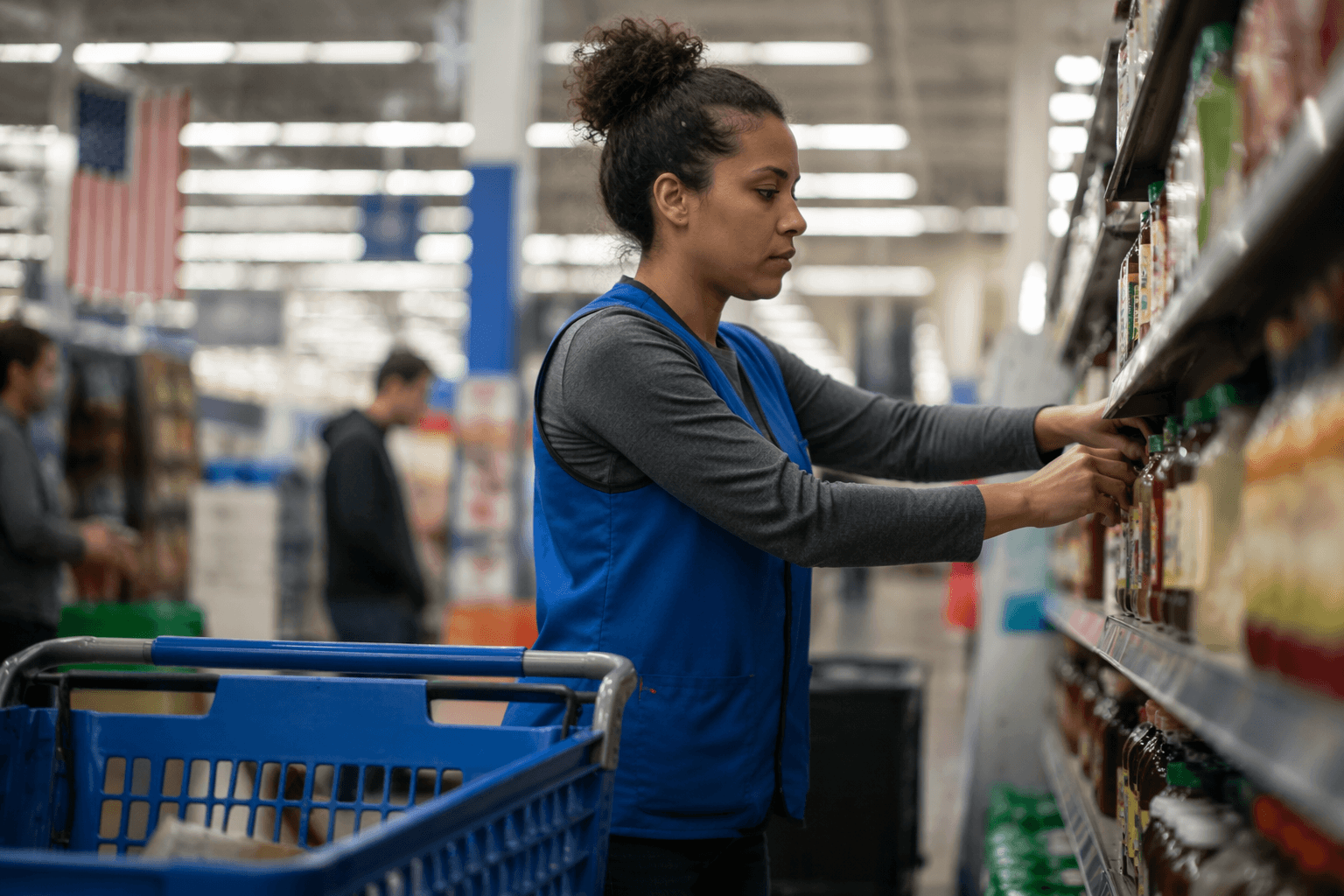
Decorative geese and above-ground pools no longer have to be dead-end requests at Lowe’s. Associates can use My Red Vest to search third-party marketplace products alongside store inventory and complete purchases in store, a preview of where Walmart store work is heading.
What Lowe’s changed in the store
The new setup lives inside My Red Vest, the tool Lowe’s associates use on the floor. Workers can search marketplace products alongside Lowe’s own inventory and complete purchases in store, with the items shipped to customers’ homes. Customers do not need to care whether an item comes from store stock or from a drop-ship marketplace seller, which is the key operational change for anyone handling the sale.
The company rolled out the feature in more than 1,700 stores and announced it at its second annual seller summit in Chicago. Lowe’s launched its third-party marketplace in December 2024, then partnered with Mirakl in May 2025 to accelerate the business. In its May 20, 2026 first-quarter results, Lowe’s said online sales rose 15.5% and that marketplace contributed to that growth.
The associate’s device becomes a sales-and-service tool that connects physical shopping, online assortment, and special-order support in one workflow.
Why Walmart associates should pay attention
For Walmart, the lesson is not that Lowe’s sells different products. It is that the store associate role is blurring into a blend of selling, ordering, and digital problem-solving. If a marketplace-style tool can turn a missed shelf sale into an assisted order, then the person standing in the aisle becomes part salesperson, part catalog guide, and part order-resolution helper.
That change raises the bar on what associates need to explain. Customers will expect clear answers on what can be ordered, what can be delivered, what can be picked up, and what happens when the item is unusual or not normally stocked in the building. The more the store behaves like an endless aisle, the more training has to cover device use, delivery logic, and how to walk a shopper through a purchase that starts on the floor but ends at home.
It also changes accountability. A missed sale is no longer always a lost sale if the associate knows how to move the customer into a marketplace order. But that also means metrics can get tougher, because managers may expect workers to resolve more requests without losing time to device troubleshooting, catalog confusion, or the handoff between store inventory and third-party fulfillment.
Walmart already built the foundation
Walmart has been moving toward this model for years. It launched Me@Walmart on June 3, 2021 as a single in-store app for U.S. associates and committed to providing more than 740,000 associates with a Samsung Galaxy XCover Pro smartphone, case, and protection plan.
The company widened that approach in June 2025 by deploying AI-powered tools to its 1.5 million U.S. associates. Those tools include real-time translation in 44 languages and task management that cut shift-planning time from 90 minutes to 30 minutes in early tests.
Walmart’s marketplace growth shows why the company keeps leaning in. In August 2024, it said Walmart Marketplace had delivered more than 30% sales growth in each of the previous four quarters, and seller count on Walmart.com had grown 20% in the prior fiscal year. By July 2025, Walmart said more than half a billion items were available across Walmart.com through marketplace, while noting that assortment expansion is constrained by store space.
When a customer wants something the building cannot physically carry, the digital catalog becomes the answer, and the associate handles the order.
What the job will require next
The work is moving from helping someone find a product to helping them complete the purchase in the best available channel. That means knowing how to check stock, how to route a customer to an online or marketplace option, and how to explain the difference between something that is in the building, something that can be shipped, and something that may need special handling.
Managers will feel it too. Training time will need to cover more than stocking, zoning, and pickup handoffs. It will have to include how to use store software confidently, how to handle questions about marketplace items, and how to keep service smooth when the sale crosses from the shelf to a seller network the customer never sees.
Walmart already has the pieces in place: Me@Walmart for associate workflow, AI tools for translation and task management, Store Assist for local fulfillment, and a marketplace that keeps expanding beyond store walls. Walmart said in January 2023 that Store Assist powers local fulfillment and had already helped fulfill more than 830 million orders across more than 4,700 stores.
This article was produced by Prism’s automated news system from verified source data, official records, and press releases, then run through automated quality and moderation checks before publishing. The system is built and supervised by the people who set the standards it runs under. Read our full AI policy.
Did this article answer your question?