New state wage laws set second compliance deadline for Walmart employers
A July 1 wage bump in Alaska and California’s tighter pay rules create a second compliance deadline for Walmart stores, clubs and warehouses.
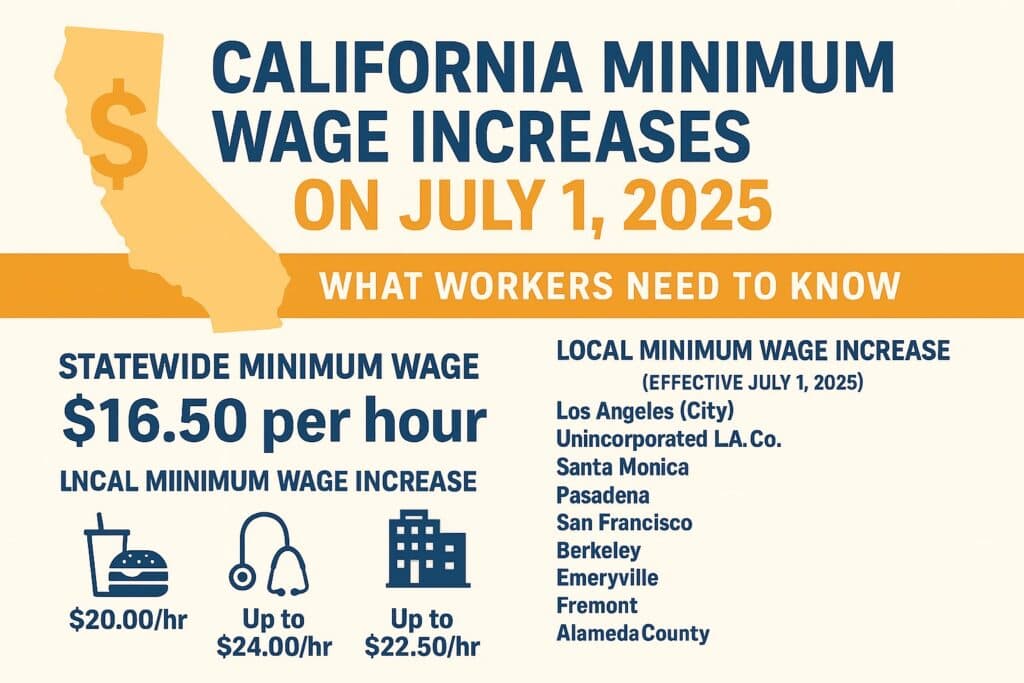
Walmart managers are heading into a second compliance deadline as a new wave of state and local workplace rules lands on July 1, touching pay rates, postings, scheduling and leave administration across different markets. For hourly associates, the changes matter less as legal theory than as day-to-day details: whether a shift is posted on time, whether the pay rate on a paycheck is right, and whether the break room notices are current.
Fisher Phillips warned on June 12 that employers can no longer treat compliance as a once-a-year problem that starts in January. Its July 1 cheat sheet pointed to a cluster of rules taking effect midyear, including Alaska’s statewide minimum wage increase, California wage changes, local wage hikes in multiple California cities and counties, an Arkansas child privacy law and a California allergen-disclosure rule for larger restaurant chains. For Walmart, the lesson is the same across stores, clubs and warehouses: the relevant rule is often the one tied to the exact location, job family and jurisdiction, not just the companywide handbook.
Alaska is the cleanest example. The Alaska Department of Labor and Workforce Development says the state minimum wage will rise from $13.00 to $14.00 an hour on July 1, 2026. That increase follows Ballot Measure 1, approved by voters in November 2024, which also set a later step to $15.00 on July 1, 2027 before annual inflation indexing begins in 2028. Any Walmart operation in Alaska will need to make sure payroll, wage notices and hiring materials match the new floor.
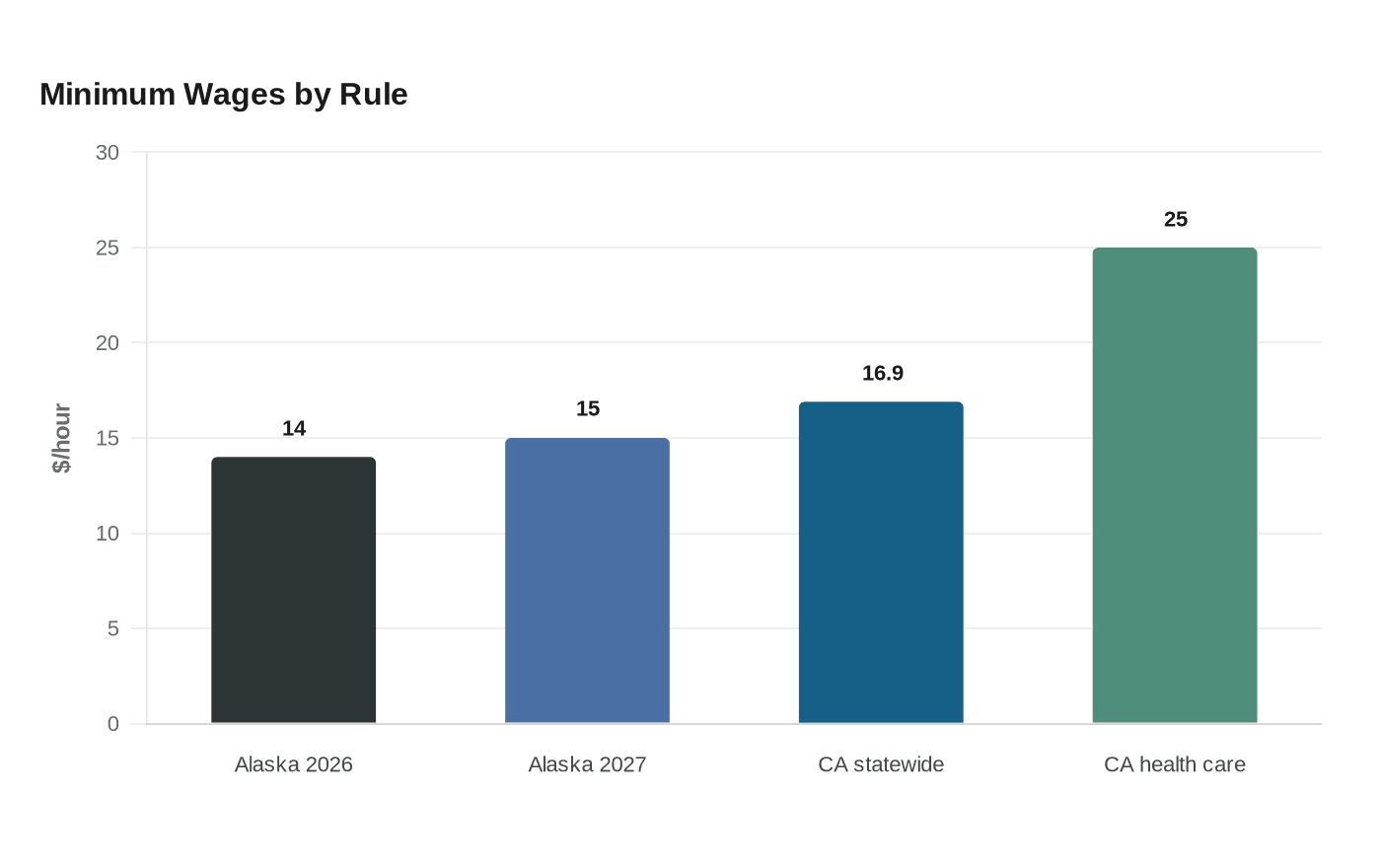
California is messier, and that is where managers are likeliest to get tripped up. The California Department of Industrial Relations says the statewide minimum wage is already $16.90 an hour as of January 1, 2026, but some cities and counties require more. UC Berkeley’s Labor Center says local minimum-wage ordinances have spread far beyond the small handful of places that had them before 2012, which means a store’s exact address can change the wage rule it must follow. California also has separate wage standards for some fast-food and health care workers, and the state says the health care minimum wage is scheduled to reach $25 an hour on July 1, 2026 for covered workers, with different rates for some facility types.
California’s labor agency says employers can download current minimum-wage and industry wage-order posters for workplace posting, a reminder that compliance is not abstract. In a Walmart where one location is under one wage floor and another store a few miles away is under a different one, the practical work falls to department managers and assistant managers who set schedules, check postings and catch payroll mistakes before associates do.
This article was produced by Prism’s automated news system from verified source data, official records, and press releases, then run through automated quality and moderation checks before publishing. The system is built and supervised by the people who set the standards it runs under. Read our full AI policy.
Did this article answer your question?