NLRB clarifies Walmart workers’ rights to organize and speak up
Walmart workers can act together on pay, schedules, safety and petitions even without a union, and managers cannot punish protected activity.
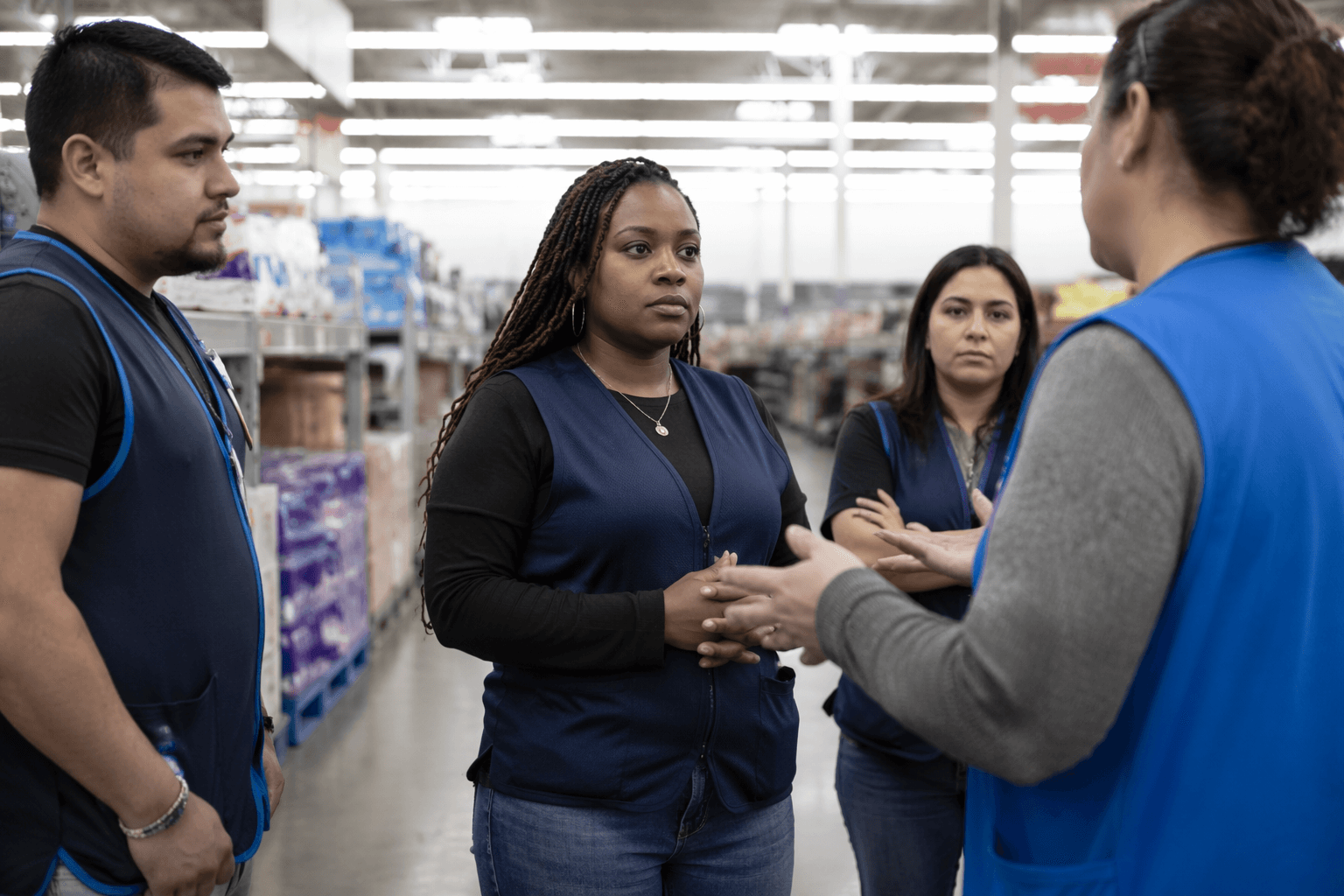
Walmart workers often know when the floor is slipping long before corporate does: hours get cut, trucks back up, safety complaints pile up, and the schedule gets tighter. The National Labor Relations Board says federal law gives employees covered by the National Labor Relations Act the right to join together to improve wages and working conditions, with or without a union. For hourly associates, department managers and assistant managers, that matters because the legal line is not just about formal organizing, but about everyday conversations and group action on the job.
What the law protects
The NLRB’s protected concerted-activity guidance draws a line between union activity and broader worker rights. Forming a union is one option, and so is decertifying a union that has lost support, but workers do not need a union card or a formal campaign to be protected. The agency says “concerted activity” includes two or more employees acting together for their mutual aid or protection over workplace terms and conditions, and in some cases a single employee can be covered too if that person is acting for others or trying to spark group action.
That is the key point for Walmart workers: the law protects collective efforts aimed at pay, benefits, scheduling, staffing, safety, and other working conditions. It also protects employees when they raise those issues not just internally, but with a government agency or the media. In a retail setting, that can mean speaking up about understaffing, asking for safer stocking procedures, or comparing notes about why hours keep changing from week to week.
Everyday actions that can be protected
The U.S. Department of Labor says protected concerted activity can include workers discussing among themselves how much they are paid, circulating petitions, refusing unsafe work, handing out leaflets, and wearing buttons or T-shirts for mutual aid or protection. The NLRB likewise says employees may distribute union literature, wear buttons or shirts, talk about the union with coworkers, and solicit authorization cards during non-work time and in non-work areas, subject to limited special circumstances.
For Walmart associates, that means a conversation in the break room about wage increases or schedule changes can fall under protected activity if it is a group effort to improve conditions. It can also mean asking coworkers to sign a petition about hours, safety, or workload. If workers join together to raise a problem with management, or even if one worker raises it on behalf of the group, federal law may protect that action.
A practical way to think about it on the sales floor or in the back room:
- Talking with coworkers about pay, benefits, scheduling, or safety can be protected.
- Asking a group to sign a petition can be protected.
- Wearing a union button or shirt on non-work time or in non-work areas can be protected.
- Talking to management, a government agency, or the media about workplace problems can be protected.
- Walking off the job to protest unsafe conditions can be protected in the right circumstances.
Where management cannot cross the line
The NLRB says supervisors and managers cannot spy on workers, coercively question them, threaten them, bribe them, or punish them for protected union activity. That matters at Walmart because enforcement often turns on small, offhand comments and uneven treatment. A manager who lets one group hand out leaflets but disciplines another, or who reacts to a safety petition with threats, can create legal risk quickly.
At the same time, employers may enforce neutral solicitation and distribution rules during working time. That distinction is important in a store that runs on strict routines, timed breaks, and busy service windows. Walmart can still manage work hours and work areas, but it cannot use those rules to single out protected activity or chill employees from discussing wages, schedules, or safety concerns.
Why Walmart’s history makes this more than theory
Walmart’s labor record shows why these rights matter in practice. Workers staged strikes and protests in October 2012, in a nationwide Black Friday action in November 2012, and again in 2013 through the Ride for Respect actions. The NLRB’s Office of the General Counsel later authorized complaints alleging Walmart threatened employees in California and Texas over strikes and protests tied to November 22, 2012.
A later Reuters report said an NLRB judge ruled in 2016 that Walmart had unlawfully retaliated against workers who took part in 2013 strikes and had to offer reinstatement to 16 dismissed employees with back pay. Those disputes are not abstract labor history. They show that when Walmart employees push on wages, staffing, or retaliation, the question of what is protected and what is unlawful can end up in front of federal labor authorities.
The NLRB’s record also notes multiple sets of strikes in that period, including an October 2012 walkout involving more than 58 workers at certain Los Angeles-area locations and a Black Friday strike in November 2012 involving about 100 employees. By the time those disputes were being examined, the line between lawful collective action and unlawful employer response had become a recurring issue at one of the country’s largest retailers.
The legal stakes are still active
Recent filings show the issue is not frozen in the past. An NLRB case page for Walmart in Baden, Pennsylvania, shows a charge filed on July 10, 2022 and docket activity continuing into 2026, including a board decision in February 2026 and an informal settlement agreement in April 2026. For workers, that is a reminder that wage disputes, scheduling fights and retaliation claims can still move through the labor board system years after the original complaint.
The broader organizing picture has also changed in parts of North America. In September 2024, about 800 workers at a Walmart distribution center in Mississauga, Ontario, voted to join Unifor by 56 percent. In May 2026, those workers ratified what was described as the first collective agreement ever negotiated with Walmart anywhere in North America, with 93 percent approval. That is a major marker for Walmart workers because it shows that organizing pressure at the company can produce a contract, even in a system where most U.S. Walmart workers remain non-unionized.
What this means on the floor
For Walmart workers, the practical lesson is straightforward: you do not have to wait for a union campaign to have protected rights. If you and your coworkers are comparing pay, pushing back on unsafe work, circulating a petition about hours, or raising a common problem with management, federal law may protect that conduct. And if you are a manager, the safest approach is not to guess, but to treat these conversations carefully and consistently.
That balance is especially important at Walmart, where scheduling, attendance, workload and safety issues can become flashpoints fast. The law does not stop management from running the business, but it does stop management from punishing workers for acting together to improve it.
This article was produced by Prism’s automated news system from verified source data, official records, and press releases, then run through automated quality and moderation checks before publishing. The system is built and supervised by the people who set the standards it runs under. Read our full AI policy.
Know something we missed? Have a correction or additional information?
Submit a Tip