U.S. job openings jump, but retail labor market softens
Openings rose to 7.6 million, but hiring fell and retail vacancies dropped 43,000, a sign Walmart workers may face a tighter market for hours and job moves.

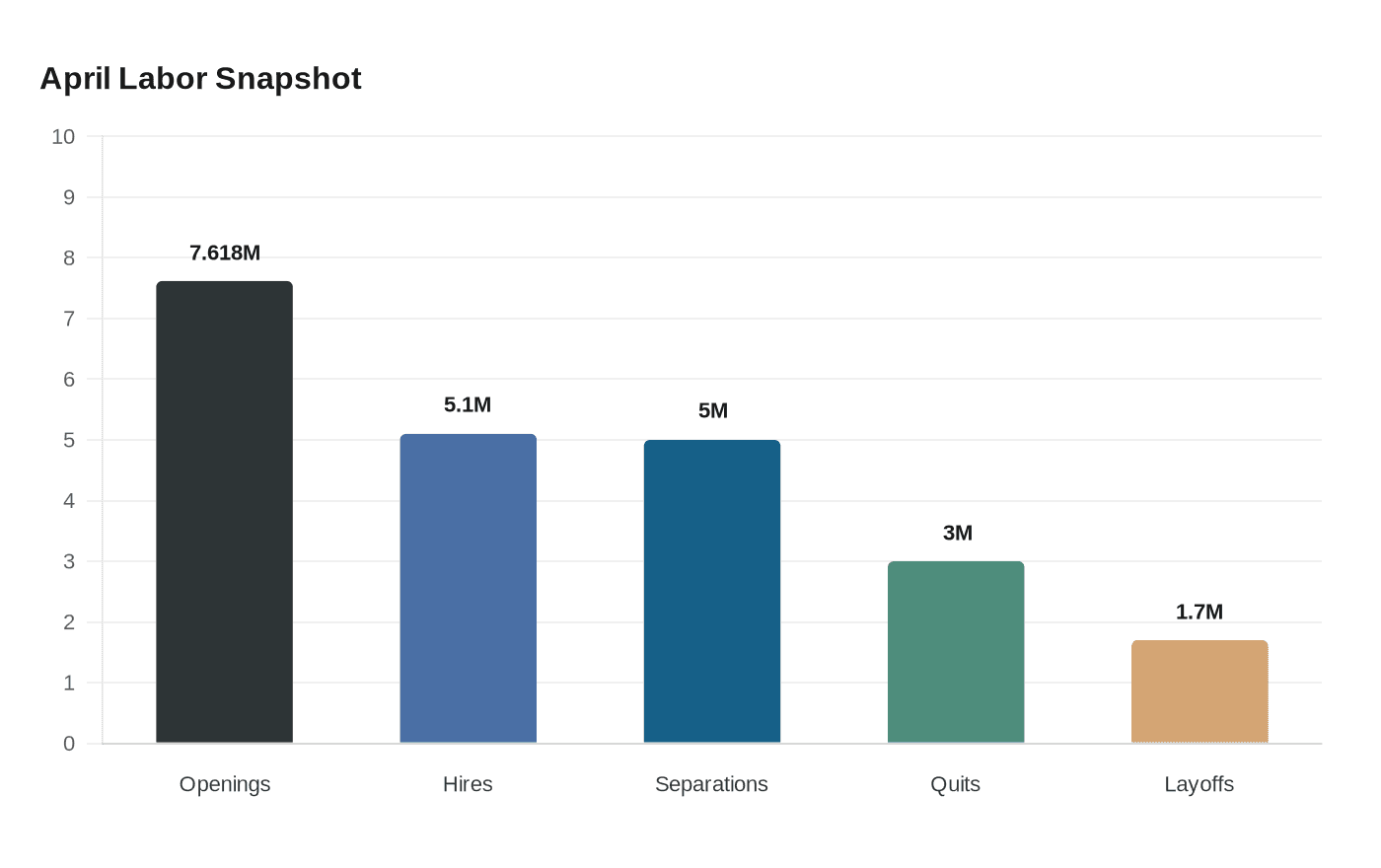
Walmart associates looking for more hours, a transfer, or a cleaner exit into a new job are running into a labor market that looks healthier on paper than it feels on the floor. The latest federal job report showed openings rising by 731,000 to 7.618 million in April, but hiring weakened at the same time, a split that points to caution rather than momentum.
The U.S. Bureau of Labor Statistics said hires fell to 5.1 million and total separations slipped to 5.0 million. Quits held at 3.0 million, while layoffs and discharges were little changed at 1.7 million. In retail trade, layoffs and discharges decreased by 88,000, and retail also had 43,000 fewer unfilled positions. That combination suggests fewer openings, fewer exits, and less churn in the very part of the labor market that matters most to store associates and department leads.
For Walmart, where staffing decisions ripple through every aisle, that softer retail backdrop can change the leverage workers feel day to day. When job openings are plentiful and workers are quitting more freely, associates have more room to move, bargain, or leave for another retailer. When openings fall in retail and quits slow, the market gets stickier. Existing employees may stay put longer, but managers may also have a harder time filling open shifts, building overnight teams, or backfilling seasonal gaps without stretching the current crew.
The report also showed the job openings rate rising for establishments with 1 to 9 employees, while the broader market stayed in a slow-hire, slow-fire pattern. That matters for Walmart stores because the company’s labor model depends on a steady flow of applicants, especially for entry-level roles where turnover is common and coverage is always tight on evenings, weekends, and inventory-heavy periods.
Walmart, based in Bentonville, Arkansas, said in its April 23 annual report and proxy filing that it employs about 2.1 million associates worldwide and generated $681 billion in fiscal 2025 revenue. The company says it tries to hold onto workers through competitive pay, career advancement, skills-based training, education benefits, flexible scheduling, and health and well-being programs. Walmart also says the average promotion comes within nine months and that 90% of U.S. roles do not require college degrees.
Those promises sit against a labor strategy that has emphasized retention for years. Walmart says its 2015 investment in wages and education helped drive a 93% increase in starting wages since 2015 and led to training for more than 3.5 million associates through Walmart Academy. In a retail market where openings are still high but hiring is weaker, that internal pipeline matters more. It can help Walmart keep shelves staffed, but it also means workers are competing in a slower-moving market where the next job may not be as easy to find.
This article was produced by Prism’s automated news system from verified source data, official records, and press releases, then run through automated quality and moderation checks before publishing. The system is built and supervised by the people who set the standards it runs under. Read our full AI policy.
Did this article answer your question?