US labor market adds 172,000 jobs, Walmart faces hiring pressure
A steady 4.3% jobless rate means Walmart still has to fight for hourly workers, using pay, schedules and promotions to keep stores staffed.

Walmart is still hiring in a labor market that has not cracked, and that matters on the sales floor. The Bureau of Labor Statistics said total nonfarm payrolls rose by 172,000 in May and the unemployment rate held at 4.3 percent, a range it has stayed in since July 2025. That is not a boom, but it is not the kind of labor slump that makes hourly recruiting easy for a company that depends on reliable store coverage.
The details behind the headline point in the same direction. Jobs grew in leisure and hospitality, local government and health care, while financial activities lost jobs. The labor force participation rate stayed at 61.8 percent and the number of unemployed people was 7.3 million. For Walmart managers, that means the pool of available workers is not flooding the market, so hiring, retention and internal mobility all stay competitive rather than comfortable.

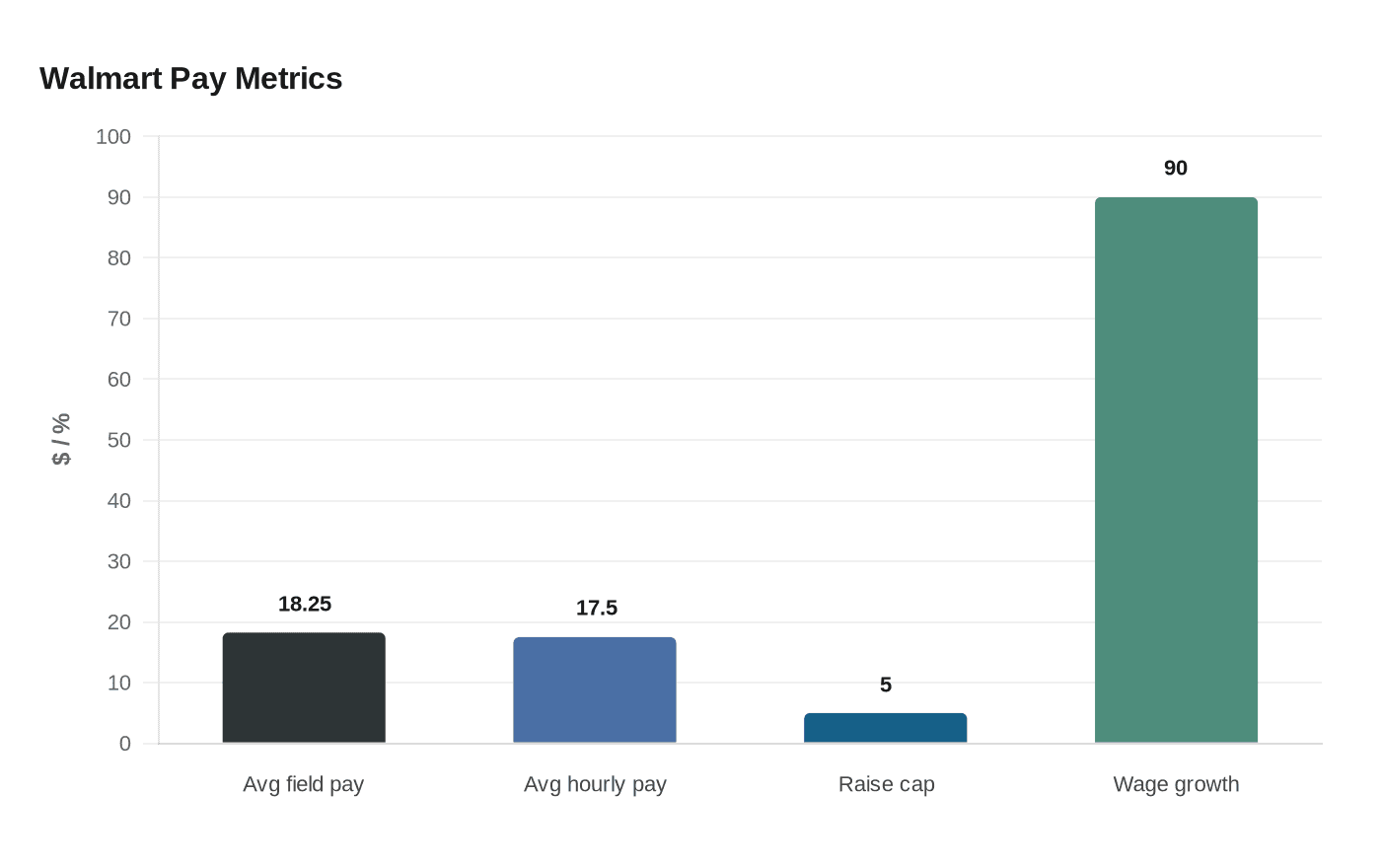
Walmart has the scale to feel that pressure. The company says it employs about 2.1 million associates worldwide, with roughly 270 million customers and members visiting its stores and websites each week across more than 10,750 stores in 19 countries. In Bentonville, Arkansas, the company has spent years leaning on wages to stay ahead of the hourly labor market. Walmart says the average U.S. hourly field associate makes $18.25 an hour, minimum starting wages have risen by more than 90 percent since 2015, and a 2023 wage increase lifted its U.S. average hourly wage to more than $17.50.
That pay history matters because Walmart is again tying more of the employee experience to performance. In spring 2026, the company said eligible store-based associates hired on or before July 31, 2025, could receive annual raises of up to 5 percent based on reliability and performance, while base pay would not be cut for poor performance. For hourly workers, that puts more weight on attendance, consistency and how managers judge day-to-day execution, especially in stores that are trying to fill shifts without burning out the people already on the schedule.
The timing also intersects with automation and AI. Walmart’s fiscal 2026 annual report, filed for the year ended January 31, 2026, says artificial intelligence is fundamentally reshaping how customers shop and how associates work. That raises the stakes for scheduling, cross-training and fast onboarding. In a market with 4.3 percent unemployment, store leaders cannot count on a loose labor pool to solve staffing gaps, and associates who want more hours, a transfer or a promotion still have leverage if they can show up, learn fast and stay reliable.
This article was produced by Prism’s automated news system from verified source data, official records, and press releases, then run through automated quality and moderation checks before publishing. The system is built and supervised by the people who set the standards it runs under. Read our full AI policy.
Did this article answer your question?