U.S. retail sales rise 0.9% in May, boosting Walmart traffic outlook
May retail sales rose 0.9% to $763.7 billion, signaling Walmart stores may keep drawing value-driven shoppers even as inflation bites.

Strong May spending gave Walmart another sign that shoppers are still buying, especially motor vehicles and household basics, even as inflation and fading tax refunds could crimp demand later. U.S. retail and food services sales reached $763.7 billion, up 0.9% from April and 6.9% from a year earlier, a reading that points to a customer base that remains active rather than retreating.
The broader three-month trend was steady as well. Retail sales for March through May rose 5.3% from the same period a year earlier, suggesting May was not just a one-month bounce. The mix matters for Walmart, where traffic is driven by food, essentials, value apparel and other need-based purchases that tend to hold up when households are cautious, but where stronger demand can also mean tighter execution on the sales floor.
That backdrop fits Walmart’s own latest quarter. On May 21, Walmart said first-quarter fiscal 2027 revenue was $177.8 billion, Walmart U.S. comparable sales rose 4.1%, and global eCommerce sales grew 26% in the quarter ended April 30. Operating income increased 5.0%, though higher fuel costs in distribution and fulfillment cut into the result.
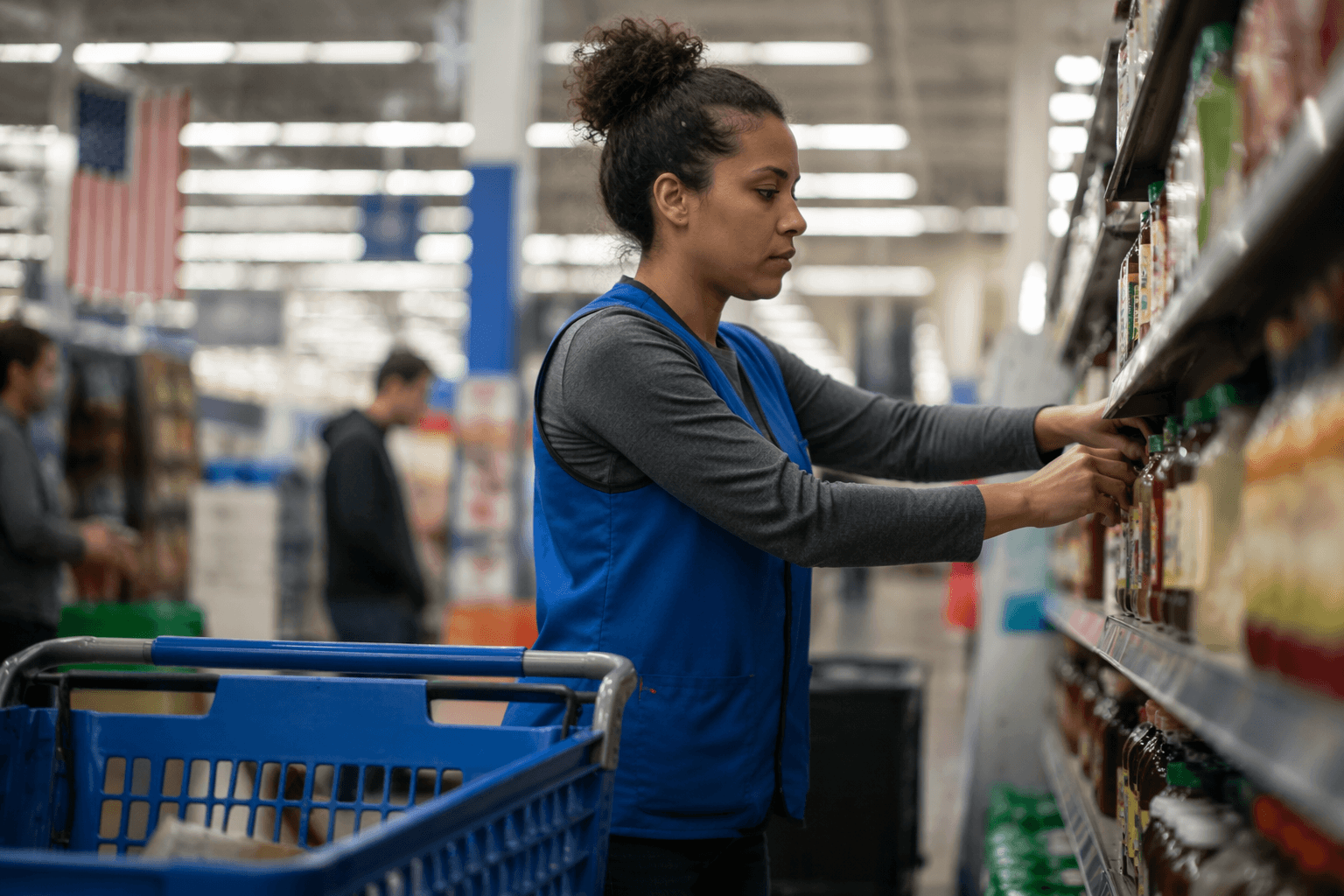
For hourly associates and store leaders, the message is not that work gets easier when sales rise. It is that the stores stay busier. Stronger traffic usually means more carts to manage, more items to keep stocked, and more pressure on department managers to keep shelves full and displays tight across grocery, consumables and promoted merchandise. In a retailer the size of Walmart, those shifts ripple quickly across store labor, front-end coverage and replenishment work.
Walmart’s scale makes national sales data especially important. The company says about 270 million customers and members visit its stores and websites each week, and it ended fiscal 2026 with $713 billion in revenue and about 2.1 million associates worldwide. When consumers are still spending, even selectively, that flow can support store traffic and the company’s value message in Bentonville and across the chain.

Still, the June retail-sales report carried a warning. A slowdown could emerge if the cushion from tax refunds fades and higher prices keep biting. For Walmart, that means the second half of June and the summer stretch will likely hinge on how long shoppers keep prioritizing value, essentials and promotions over discretionary spending.
This article was produced by Prism’s automated news system from verified source data, official records, and press releases, then run through automated quality and moderation checks before publishing. The system is built and supervised by the people who set the standards it runs under. Read our full AI policy.
Did this article answer your question?