Walmart associates learn what retail shrink means and why it matters
Shrink is the inventory gap behind locked cases, extra audits, and pressure on store metrics, and Walmart’s scale makes even small losses add up fast.
What shrink means on the floor
Shrink is the gap between what a store thinks it has and what is actually there after a physical count. The National Retail Federation says it is a trailing indicator of inventory loss, which means it shows what already happened, not what is happening in the moment. In plain English, shrink is the number that tells managers the shelf, the back room, and the system do not match.
That matters because shrink is usually measured only after a full physical inventory, often once a year and sometimes twice a year depending on the retailer. By the time the number is known, the causes may already be buried inside daily work: a mis-scan at checkout, bad receiving, damaged goods that were not properly recorded, theft, or return abuse. That is why shrink can feel abstract from the sales floor and very concrete in the work.
Why Walmart cares so much
At Walmart scale, small leaks become expensive quickly. Walmart’s fiscal 2025 annual report says the company generated $681 billion in revenues, $130 billion in eCommerce sales, and $36 billion in operating cash flow, a reminder that inventory accuracy is not just an accounting problem but a core operating issue. When a company that large loses track of product, the cost is amplified across thousands of stores and distribution points.
The company also frames itself around people and technology, which is exactly why shrink sits at the intersection of execution and systems. A store can have the right product flow on paper and still lose money if receiving is sloppy, items are not scanned correctly, or pallets are not worked the way the system expects. For hourly associates, that means shrink is not some distant corporate metric. It is tied to how well the store is run shift by shift.
How shrink shows up in daily work
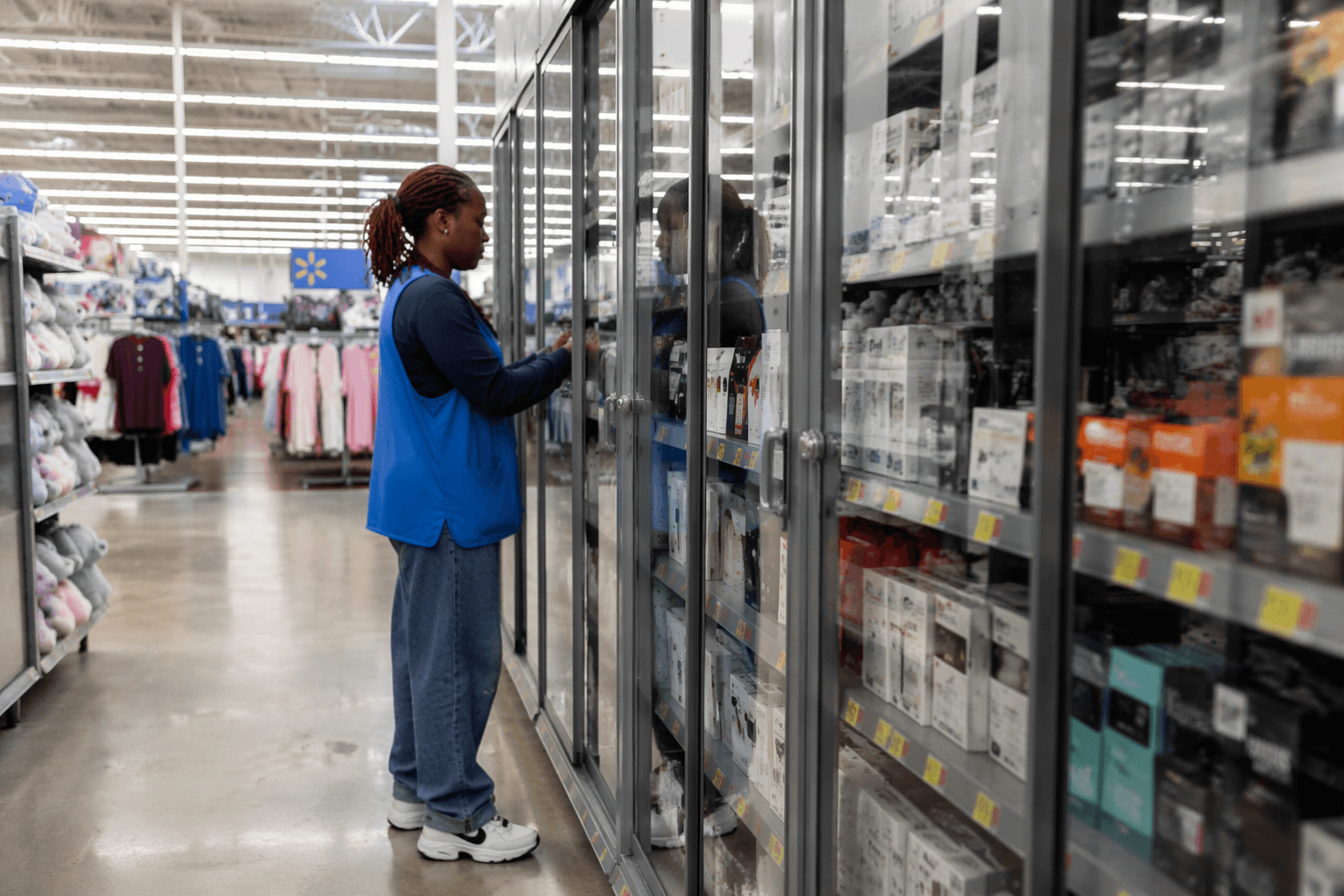
Shrink often lands on associates as more work, not less. If a category is constantly short, managers may lock up merchandise, tighten access, add audits, or ask teams to verify counts more often. That creates a familiar loop for shoppers and workers alike: more waiting for customers, more unlocking, more recovery, and more interruptions during an already busy shift.
It also shows up through pressure on store performance. When product walks out the door or disappears in the process, the store can end up looking understocked even when the team has been busy all day. That can trigger questions about execution, though the root cause may be a mix of theft, shipping errors, damaged product that was not adjusted properly, or simple scanning mistakes. For associates, the frustrating part is that shrink can make a good day look bad on paper.
The process problems managers watch closest
NRF’s guidance on loss prevention points to the same themes store leaders have heard for years: keep a structured inventory cycle, do regular audits and cash checks, and think carefully about the store layout because the physical environment can affect theft prevention. That is a management way of saying shrink is not only about crime. It is also about whether the basic store process is clean enough to trust.
The floor-level examples are the ones workers recognize immediately.
- Damaged goods that are tossed aside instead of written off correctly can distort counts.
- Mis-scans at checkout can make the system say an item sold when it did not, or that it never left when it did.
- Bad receiving can make product disappear before it ever reaches the sales floor.
- Theft cuts directly into inventory.
- Return abuse can leave the store holding merchandise or credit losses that never should have happened.
These are not the same problem, but they all end up in the same bucket when managers review shrink. That is why stocking, scanning, zoning, and receiving matter so much. A clean process protects the business and also protects associates from being blamed for a problem they did not create.
Why the measurement itself is debated
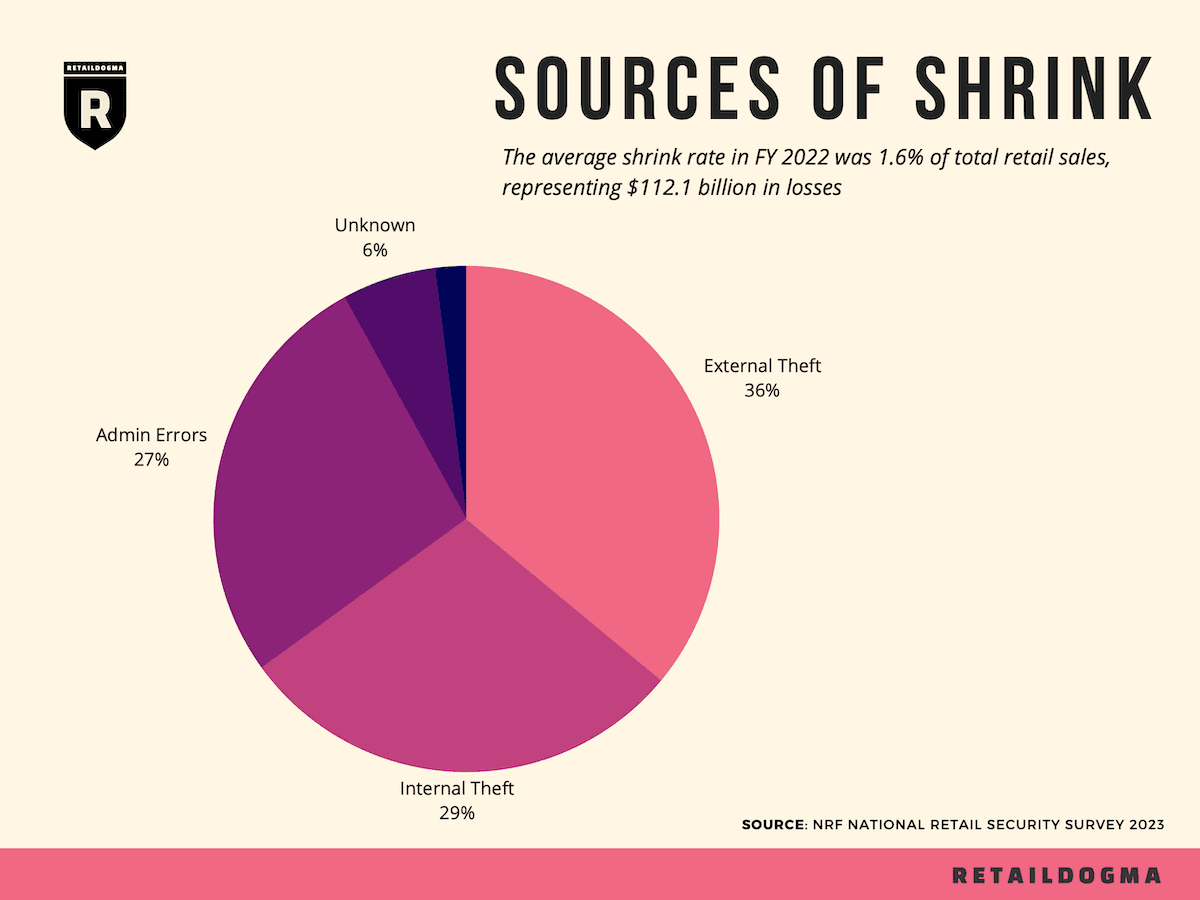
NRF’s 2023 National Retail Security Survey said the average shrink rate in fiscal 2022 rose to 1.6 percent from 1.4 percent in fiscal 2021, equal to $112.1 billion in losses. The survey also looks at the drivers of shrink, organized retail crime, violence, and other priorities. Those numbers show why the issue gets so much attention, but NRF has also been careful to say shrink is not a perfect benchmark for theft because it can reflect other issues too.
That caution matters because the industry is still arguing about how to measure the problem. NRF said theft, organized retail crime, and rising violence were major concerns for retailers in 2023, but in October 2024 the group said it would not publish its annual shrink report that year while it reevaluated the tools used to track theft and loss. In other words, the metric is important, but the measurement is not settled. Managers care about the losses; economists and security teams care about whether the number tells the full story.
What associates can actually influence
Associates cannot control every source of shrink, but they can affect the parts closest to daily work. The most useful habits are the ones that improve accuracy before problems compound.
- Scan items correctly every time, especially on busy freight and checkout shifts.
- Work receiving carefully so counts, labels, and product location match reality.
- Zone and recover consistently so missing product is easier to spot.
- Report damaged merchandise and discrepancies early instead of letting them disappear into the shift.
- Follow cash and audit procedures exactly, since small exceptions can become larger losses later.
For department managers and assistant managers, the lesson is even broader: shrink control belongs in the daily rhythm of the store, not just in asset-protection conversations. The stores that keep a tighter handle on inventory are usually the ones that keep the ordinary work boring in the best possible way, with fewer surprises in the back room and fewer mysteries on the shelf.
That is why shrink matters to Walmart associates even if they never hear the final number. It explains the locked cases, the extra paperwork, the uncomfortable questions after a bad count, and the pressure to keep the shelf, the system, and the receiving door aligned. At Walmart scale, inventory accuracy is not a side task. It is part of the job.
This article was produced by Prism’s automated news system from verified source data, official records, and press releases, then run through automated quality and moderation checks before publishing. The system is built and supervised by the people who set the standards it runs under. Read our full AI policy.
Did this article answer your question?