Walmart break and overtime rules, what federal law actually requires
Walmart workers often misread breaks and overtime. Federal law does not guarantee meal breaks, and overtime starts after 40 hours in a workweek, not after one long shift.

What Walmart workers often get wrong
The two biggest mistakes are simple, and they can cost money. Federal law does not guarantee a lunch break, and overtime does not turn on how long one shift feels. Under the Fair Labor Standards Act, the overtime line is 40 hours in a workweek, and meal breaks are only unpaid if they are bona fide and the associate is completely relieved of duty.
That distinction matters on the sales floor, in the back room, and on the time clock. A missed lunch, a shortened meal period, or a shift that runs long does not automatically create overtime on its own. What matters is how the hours were recorded, whether the time was worked, and whether the break was actually uninterrupted.
What federal law actually requires
The U.S. Department of Labor says the FLSA does not require employers to provide meal periods or rest breaks at all. When employers do offer short breaks, usually 5 to 20 minutes, those breaks are generally compensable work time. By contrast, meal periods are typically 30 minutes or longer, and they are generally not counted as hours worked if the employee is completely relieved of duty.
That is the core rule Walmart associates should keep in mind when they look at a schedule or a paycheck. A 15-minute break should normally be paid. A 30-minute meal period can be unpaid, but only if it is truly a break from work. If you are asked to keep an eye on customers, answer the radio, cover your area, or otherwise stay on duty, that is no longer the clean unpaid meal period federal law describes.
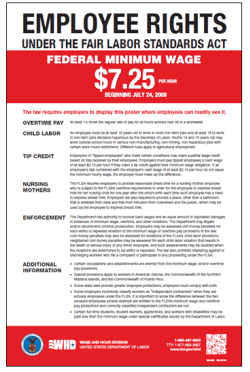
Overtime works the same way: the FLSA generally requires covered nonexempt employees to be paid at least one-and-a-half times their regular rate for hours worked over 40 in a workweek. A single long shift does not by itself trigger overtime if the weekly total stays at 40 or below. On the other hand, if a workweek crosses 40, those extra hours are the ones that matter.
Federal law also does not cap the number of hours workers age 16 and older may work in a workweek. That means many hourly employees are protected less by an hour limit than by overtime pay, accurate timekeeping, and state break laws that may be stronger than the federal baseline.

What to check on your time card and paycheck
For Walmart associates, the first thing to check is whether unpaid meal deductions match reality. If a meal period was interrupted, cut short, or skipped altogether, that time may have needed to be paid. The practical question is not just whether the schedule showed a lunch, but whether you were actually off duty for the full period.
It also helps to separate meal periods from short rest breaks. Under federal rules, those brief breaks are generally paid time, so they should not disappear from your hours worked. If your punches, edits, or auto-deductions make it look as though you were off the clock when you were still working, that can turn into a payroll problem fast.
A second issue is overtime calculation itself. Associates should look at the full workweek, not just one day. A long shift on Tuesday may not create overtime if the rest of the week was light, while a series of ordinary shifts can still push the week over 40 hours and trigger overtime pay.
Why Walmart stores often create confusion
Walmart’s own wage-and-hour policy says the company is committed to complying with applicable laws on off-the-clock work, rest breaks, meal periods, days of rest, overtime pay, termination pay, minimum wage, and youth wages. The policy also says it is a violation of Walmart policy for an associate to work without compensation. That matters because a lot of the misunderstandings on the floor come from the gap between what the law allows and what a store’s scheduling system expects.
The company says its average U.S. hourly field associate makes $18.25 an hour, and it says part-time and full-time hourly associates in the U.S. receive Protected PTO. Walmart also says schedules are provided in advance. Those policies can make store operations more predictable, but they do not replace federal wage-and-hour rules. They often sit on top of them, which is why a store may run by stricter scheduling practices even though the legal baseline remains the legal baseline.
Protected PTO is especially important in a retail setting where call-outs, coverage gaps, and peak traffic can pressure associates to stay late or swap time. If a missed shift, unexpected absence, or scheduling change is handled through the company system, the result can affect attendance, payroll, and whether the break or meal period was recorded the way it should have been.
State rules can be stronger than federal law
Federal law is only the floor. Some states impose stronger break requirements than the FLSA, and that can change how a Walmart schedule should be read in practice. A store may be following one rule on paper, while state law requires more frequent or longer breaks, or tighter rules on meal timing and pay.
That is why workers should compare their state rules with the federal baseline before assuming the company got it right. The same schedule can be legal in one state and incomplete in another. For managers, that means the timekeeping system has to do more than satisfy the federal minimum. It has to reflect the state where the store operates and the actual conditions on the floor.
Why this remains a live issue at Walmart
This is not an abstract wage-and-hour debate for Walmart. In 2007, the company said it corrected overtime calculations after a Department of Labor review found regular-rate errors involving bonuses and biweekly calculations. In 2012, the DOL said Walmart agreed to pay $4.83 million in back wages and damages to more than 4,500 employees for overtime violations. A 2024 SEC filing disclosed a $123 million settlement, another reminder that wage-and-hour compliance stays material at a company with a huge hourly workforce.
Those episodes explain why break coding, off-the-clock work, and overtime math deserve attention in every store. In a business built on thin margins and tight labor plans, a few minutes here or an incorrect pay code there can scale into a real wage issue across thousands of associates. The rule is straightforward even if the execution is not: short breaks are usually paid, meal periods are only unpaid when they are truly off-duty, and overtime starts after 40 hours in the workweek. For Walmart workers, that is the difference between a normal schedule and a paycheck that comes up short.
This article was produced by Prism’s automated news system from verified source data, official records, and press releases, then run through automated quality and moderation checks before publishing. The system is built and supervised by the people who set the standards it runs under. Read our full AI policy.
Know something we missed? Have a correction or additional information?
Submit a Tip