Walmart opens new EV fast-charging station at Bentonville store 100
Walmart’s new fast-charging station at store 100 adds another layer of parking-lot traffic, signage and maintenance work at a site already built for more than shopping.

Walmart’s latest EV fast-charging station at Bentonville store 100 is a parking-lot change that reaches well beyond drivers plugging in. At Walmart Supercenter #100, 406 South Walton Boulevard, the company has added another piece of physical infrastructure to a site that now has to handle shoppers, chargers, curb traffic and day-to-day store operations at the same time.
For associates and managers, the practical effect is not the charger itself but everything that comes with it. Parking spaces now have a second purpose, traffic flow has to account for cars that may stay longer than a typical shopping trip, and store teams have one more area where wayfinding, safety and customer questions can land on the floor. That can mean more coordination for facilities, asset protection, department managers and assistant managers, especially when charging stations sit inside the same lots customers use for pickups, deliveries and regular store visits.
Walmart said its chargers are owned and operated by the company using partner technology and are integrated into its app and parking lots. The retailer has also said its new fast chargers offer up to 400 kW charging and support CCS and NACS, signaling that this is not a test case but part of a broader network the company expects customers to use across the country.
The Bentonville opening fits into a plan Walmart announced in 2023 to build its own EV fast-charging network at thousands of Walmart and Sam’s Club locations by 2030. In January 2024, Walmart said the chargers would be convenient, reliable and affordable across thousands of stores and clubs in the United States. By early June 2026, industry tracking said Walmart’s DC fast-charging network had passed 500 stalls at more than 60 locations, showing that the rollout has moved from promise to operating footprint.
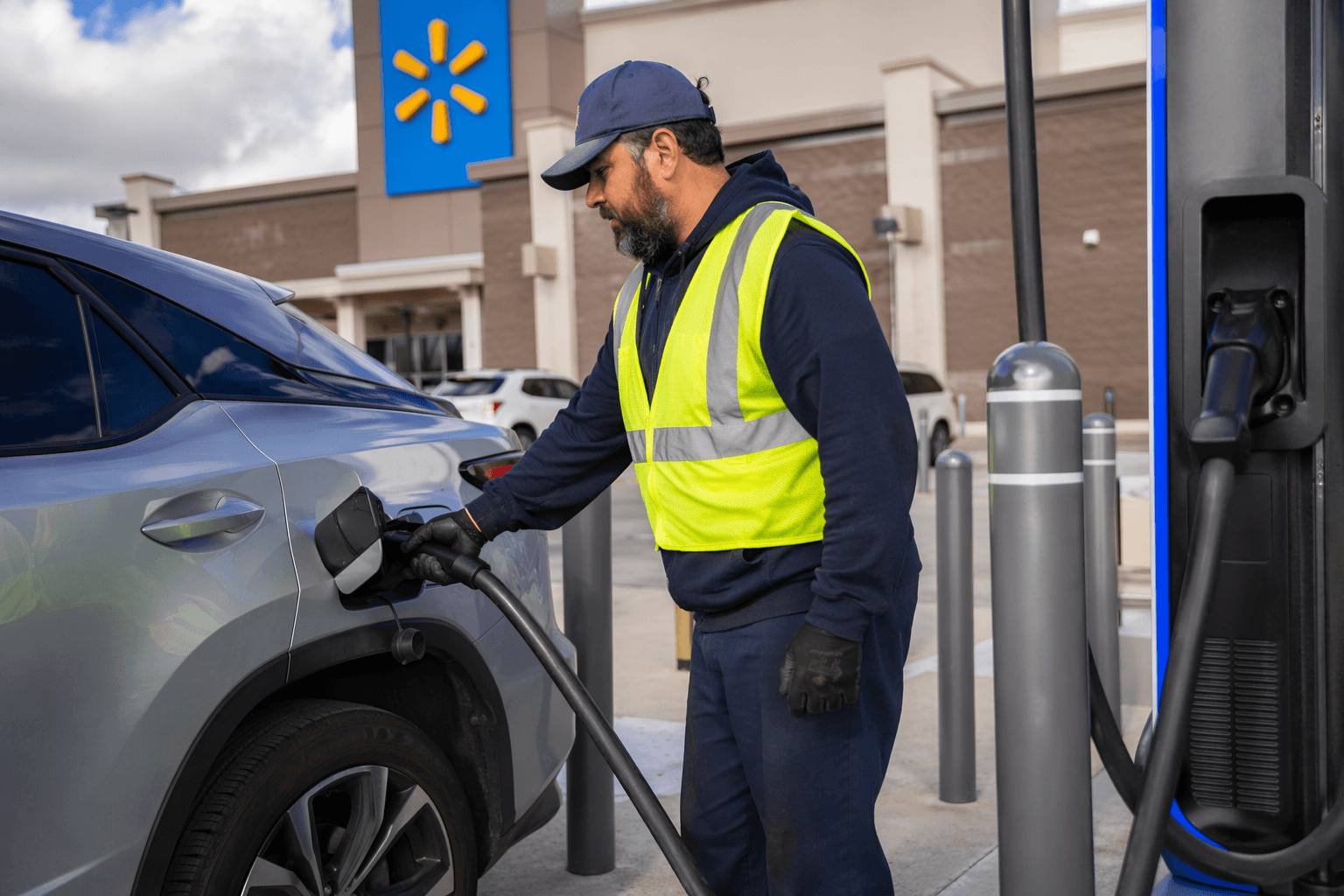
That scale matters for store-level work. Every new charging site adds another surface to clean, another set of signs to maintain, another piece of lot real estate to manage and another reason customers may be on site for something other than a quick grocery run. For Bentonville, the company’s headquarters market, the station also sits alongside Walmart’s broader commitment to spend billions of dollars this year on stores across the United States, a reminder that the retailer is still investing heavily in the physical side of retail even as it layers more digital services onto the same buildings.
KNWA/KFTA reported that the Bentonville station had a ribbon-cutting scheduled for June 18, underscoring how quickly these additions are becoming part of the regular operating rhythm at Walmart sites. The bigger story is not the ceremony. It is that Walmart’s stores are increasingly functioning as transportation, shopping and service hubs, and the workload inside the building is changing with them.
This article was produced by Prism’s automated news system from verified source data, official records, and press releases, then run through automated quality and moderation checks before publishing. The system is built and supervised by the people who set the standards it runs under. Read our full AI policy.
Did this article answer your question?