Walmart pulls self-checkout from Philadelphia store, shifts back to cashiers
Walmart is pulling self-checkout from one Philadelphia store, a move that could mean more cashier hours, more host-style work and tighter front-end staffing.
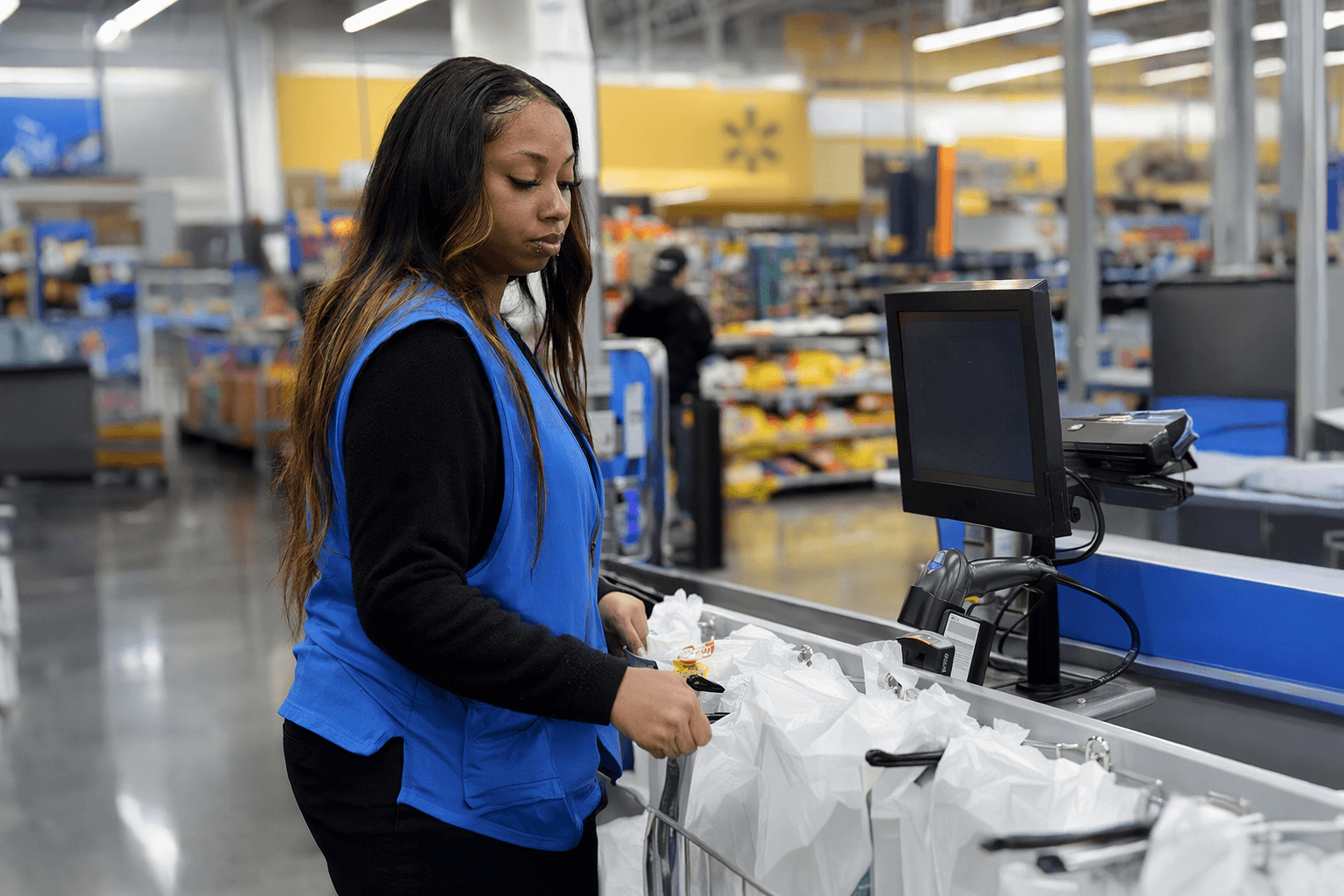
More of the work at Walmart’s front end is moving back into human hands, and that changes the job. In South Philadelphia, the shift away from self-checkout means more staffed lanes, more line control and more pressure on associates to keep customers moving when the register area gets crowded.
Walmart said on May 3 that one of its five Philadelphia stores was being moved back to a cashier-led checkout model. Local reporting identified the store as the South Christopher Columbus Boulevard location. The company said the decision followed a review of how customers shop at that store and was guided by feedback from associates and customers, local shopping patterns and the needs of the business in each community. Walmart said the goal was to improve the checkout experience and give associates more room to provide personalized customer service.
For workers, that is the part that matters. A store that steps back from self-checkout does not simply swap one lane for another. It can change who gets scheduled at the front end, how many hours go to cashiers versus self-checkout hosts, and how much cross-training managers expect from associates who have been bouncing between registers, floor support and service recovery. If the rollout spreads, front-end staffing levels will be the first thing hourly workers and department managers should watch.
The move also fits a larger pattern at Walmart, where the front end remains a live experiment rather than a settled system. On April 16, Walmart said it planned more than 650 store remodels in 2026 and early 2027, with updated stores potentially getting wider aisles, updated layouts, expanded pickup and delivery, and new digital touchpoints. Walmart’s checkout FAQ still says cashier checkout remains available, and Walmart+ members can use Scan & Go, which shows the company is not abandoning self-service so much as recalibrating where it works and where it does not.
Walmart has made similar changes before. In 2024, it said it had removed self-checkout from select stores in Shrewsbury, Missouri, Cleveland, Ohio and three stores in New Mexico, citing employee and customer feedback, shopping behavior and business needs. Back in Fayetteville, Arkansas, Walmart described a 2020 checkout test in which cashiers moved into a Host role to greet shoppers and guide them through the lane. That earlier experiment and this Philadelphia rollback point to the same reality: Walmart is still sorting out how much automation the front end can absorb before labor, shrink and customer frustration force a reset.
This article was produced by Prism’s automated news system from verified source data, official records, and press releases, then run through automated quality and moderation checks before publishing. The system is built and supervised by the people who set the standards it runs under. Read our full AI policy.
Know something we missed? Have a correction or additional information?
Submit a Tip