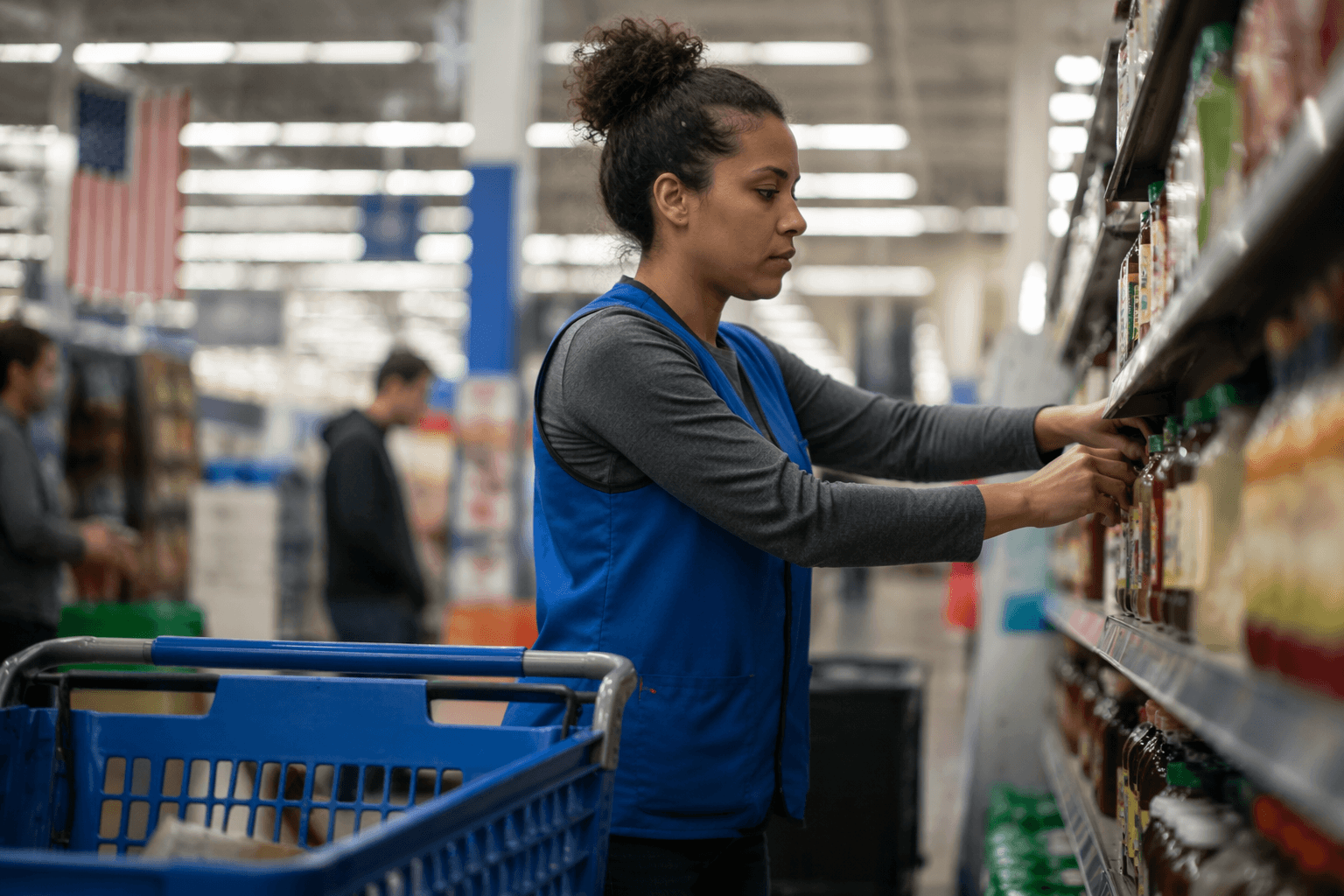
Walmart shows how automation streamlines fulfillment and reduces strain
Walmart’s new fulfillment setup cuts a 12-step manual process to five, shifting associates toward higher-skill work while reducing some of the physical strain.
How automation is reshaping the work
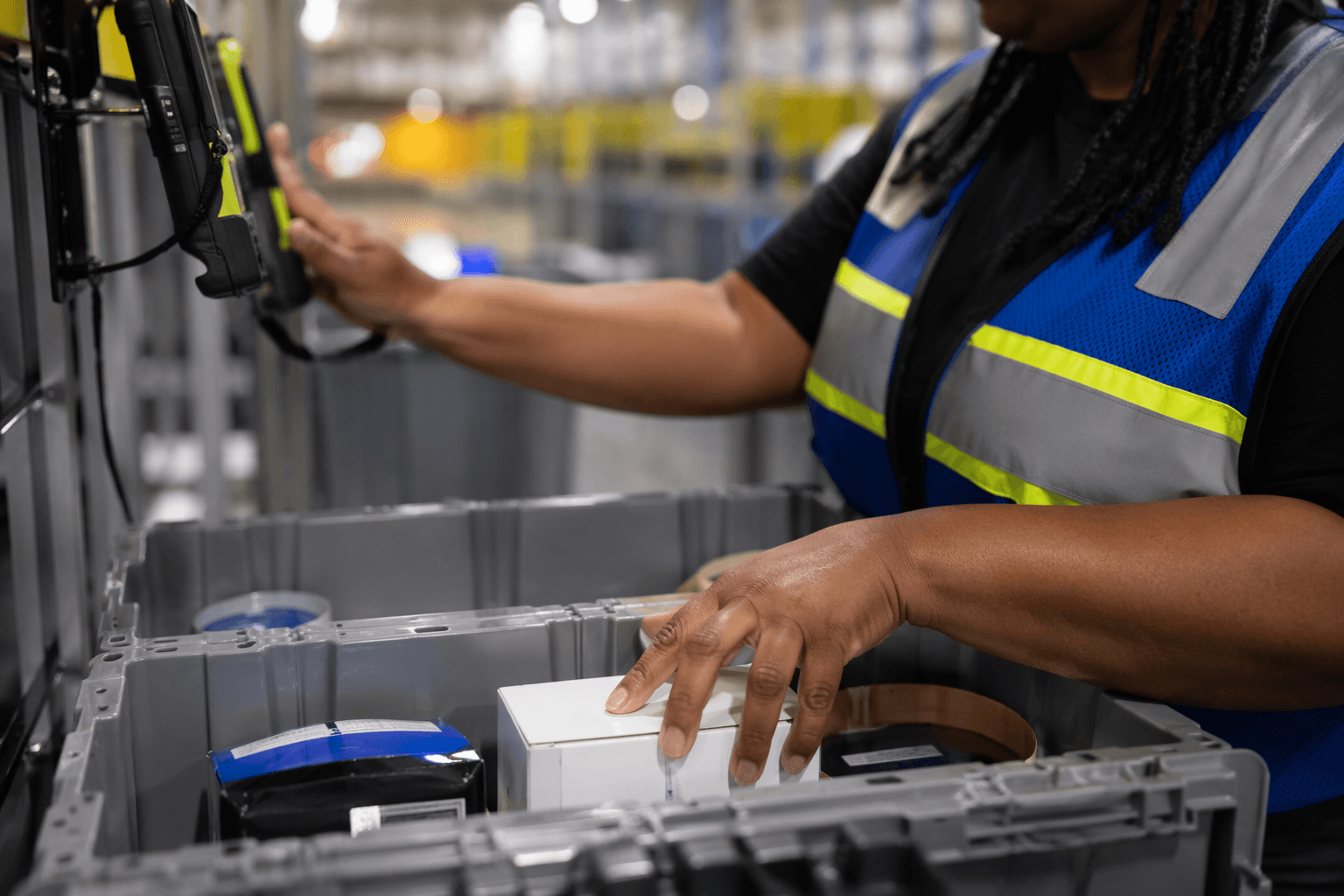
Walmart’s newest fulfillment model is not just about moving packages faster. It is about taking a manual, 12-step operation and compressing it into five core tasks: unload, receive, pick, pack and ship. In the Lancaster, Texas facility, Walmart Global Tech says the automated, high-density storage and retrieval system also raises and lowers items for associates, which matters as much for strain reduction as it does for speed.
That is the real story for hourly workers and managers. The company is not removing people from the process so much as changing what they do all day. Associates spend less time wrestling with heavy product or walking through a long manual workflow, and more time working inside a system that depends on accuracy, timing and machine-assisted movement.
From manual handling to system management
The Lancaster operation offers the clearest example of Walmart’s job redesign. In the old-style setup, workers moved through a 12-step sequence. In the newer facility, that sequence has been reduced to five steps, which should mean fewer handoffs, less wasted motion and less physical wear across a shift.
For associates, that changes the rhythm of the job. The work still depends on people, but the tasks are more tightly defined and more dependent on the system running correctly. Instead of doing everything by hand, workers are now part of an automated flow that makes inventory movement more predictable and can reduce the worst of the heavy lifting.
That also changes training needs. A fulfillment-center associate has to understand not only where a product goes, but how automated storage, retrieval and platform equipment fit into the sequence. The future Walmart job is increasingly about reading a process, following a system and catching exceptions quickly when the system does not behave as expected.
Why the company keeps investing here
Walmart’s push into fulfillment automation accelerated as delivery demand surged. In February 2022, the company said orders coming from its stores had increased 170% in the prior year. It also said pickup and delivery capacity had risen 20% in the prior year and that it planned another 35% increase that year. Those numbers explain why Walmart has treated supply chain automation as a frontline business issue, not a back-office experiment.
On June 3, 2022, Walmart announced four next-generation fulfillment centers, with the first planned to open that summer in Joliet, Illinois. The company said the four facilities would collectively employ more than 4,000 associates, and it spelled out new tech-focused roles such as control technicians, quality audit analysts and flow managers. That is an important signal for workers trying to understand advancement: automation is creating different jobs inside the network, not just removing tasks from the floor.
Walmart also said the automated storage system in those facilities would double storage capacity and double the number of customer orders fulfilled in a day. Combined with traditional fulfillment centers, the company said it could reach 95% of the U.S. population with next- or two-day shipping and provide same-day delivery to 80% of the U.S. population. With 4,700 stores within 10 miles of 90% of the U.S. population, the company is tying warehouse automation to its store footprint, not treating them as separate worlds.
What store teams need to understand
The automation story does not stop at the warehouse door. Walmart has framed its store-based market fulfillment centers as automated fulfillment centers inside stores, with separate inventory from store shelves. That matters for department managers and assistant managers because store replenishment, order flow and inventory accuracy increasingly depend on systems that sit inside the store but operate differently from the sales floor.
In October 2022, Walmart said it had agreed to acquire Alert Innovation and had been working with the robotics company since 2016 to customize bot technology for market fulfillment centers. The company said it first piloted the technology in late 2019 at a market fulfillment center in Salem, New Hampshire. Its bots move horizontally, laterally and vertically across three temperature zones without lifts or conveyors, which helps reduce space constraints and avoid pausing the system for maintenance.
For store leaders, that means the back of the building is becoming more automated, more specialized and more sensitive to timing. If the system improves, stores can process orders more quickly and with fewer substitutions. If it gets backed up, the pressure lands on managers who have to keep labor, inventory and customer expectations aligned.
The broader network is changing together
Walmart’s supply chain changes are happening across fulfillment centers, transportation, stores and clubs at the same time. In October 2023, the company said customers were already beginning to feel the benefits of its next-generation supply chain, including same-day delivery windows, Express Delivery in as soon as 30 minutes and late-night delivery until 10:30 p.m. across 4,000 stores. That gives the automation story a customer-facing edge, but it also changes the internal pace of work.

The company later said three next-generation fulfillment centers in Joliet, Illinois, McCordsville, Indiana and Lancaster, Texas were running, each at about 1.5 million square feet. Those facilities are not small pilots. They are large-scale operating models designed to carry more volume with tighter flow, which means associates and managers have to adapt to a network that is less forgiving of delays and more dependent on precision.
Walmart also said in April 2024 that 19 autonomous forklifts were being rolled across four high-tech distribution centers after a 16-month proof of concept. That is another sign of where the labor mix is heading. Some driving and movement tasks are being automated, while the human role shifts toward oversight, troubleshooting, maintenance, quality checks and coordination.
What it means for workers on the floor
For hourly associates, the shift is both practical and career-defining. Physical strain should ease in some parts of the job because automation can raise and lower merchandise, shorten workflows and reduce the number of manual steps between unload and ship. At the same time, the job becomes more technical, more process-driven and more dependent on learning new systems quickly.
That is where the new roles matter. Control technicians, quality audit analysts and flow managers are not just labels on a staffing chart. They show where Walmart sees advancement inside an automated network: people who can monitor movement, protect quality and keep the process flowing have a path into the next layer of the operation.
A Walmart World profile on Lisa Espinosa, a Lancaster associate who started at a conventional fulfillment center in May 2020 before transferring to the high-tech site, described the work as “life-changing.” That reaction captures the tension inside Walmart’s automation push. For some associates, the new model can mean less strain and more opportunity. For others, it will mean learning to keep pace with a system that demands more technical fluency and faster judgment.
The bottom line is simple: Walmart’s automation strategy is not just about speed, and it is not just about cost. It is a redesign of daily work, from how a box gets moved to who monitors the flow, who fixes errors and who moves up as the network gets more predictive, more automated and more tightly connected.
This article was produced by Prism’s automated news system from verified source data, official records, and press releases, then run through automated quality and moderation checks before publishing. The system is built and supervised by the people who set the standards it runs under. Read our full AI policy.
Did this article answer your question?