Walmart spotlights pay, benefits and career growth on worker page
Walmart's worker page lays out pay, benefits and career paths in one place, but some plan details still run through store systems.
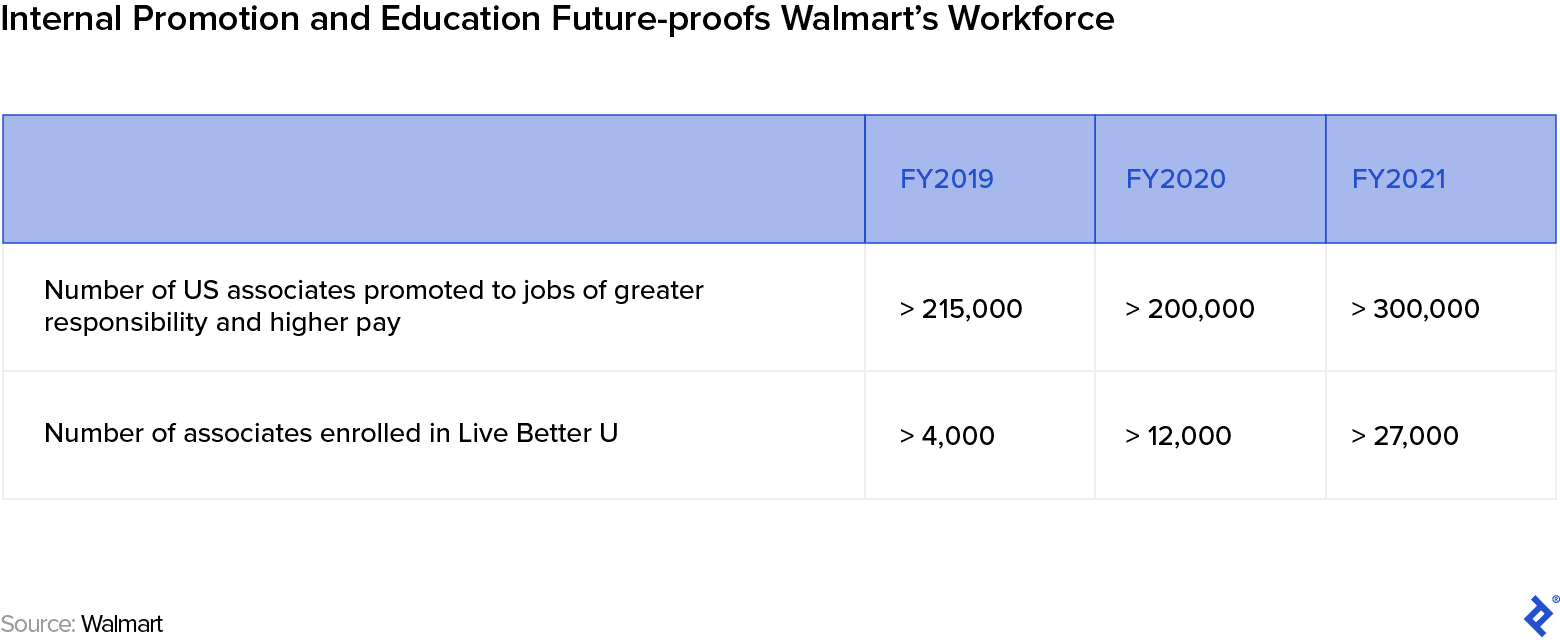
Walmart’s working page is trying to answer the question every associate asks at some point: what do you actually get here, and what happens if you stay? The company’s answer is a package that mixes medical coverage, retirement matching, leave, tuition support and a very explicit push toward promotion from within. The page is useful because it puts those promises in one place, but it is not the last stop for fine print, which still lives in internal systems and local store-level conversations.
What Walmart says associates get
The clearest thing about the page is that Walmart wants to be understood as more than an hourly pay operation. It says associates can see information on medical, vision and dental coverage, short- and long-term disability, paid time off, family leave, associate discounts and Walmart+ membership benefits for field associates. It also points workers toward Live Better U, career navigation tools and People Division support channels, which makes the page feel like a benefits hub and a mobility roadmap at the same time.
That matters because a retail job is rarely judged on wage alone. Hourly workers are looking for the total package, including how predictable the work is, what happens when life gets complicated and whether the company has a real path beyond the same shift, same aisle, same register. Walmart is clearly trying to package those answers together so a new hire, a department manager or an assistant manager can see where the company says the job can lead.
The pay and benefits snapshot
Walmart puts specific numbers behind that pitch. Full-time and eligible part-time associates can access medical coverage starting at $38.30 per biweekly pay period, and the company says that is about one-third less than the average premium at other national companies. For workers weighing a job offer, that kind of detail matters because insurance costs can erase a higher hourly rate faster than most people expect.
Retirement is also part of the offer. Walmart says its 401(k) plan matches each dollar employees contribute, up to 6% of eligible pay, which gives the company a fairly simple message: stay long enough to save, and it will add to the account. The company also says eligible associates can receive up to 16 weeks of paid leave for eligible birth mothers, and that its adoption benefit may pay up to $20,000 toward adoption costs.
Those details help explain why Walmart keeps calling the page a one-stop reference. Alongside the health and leave benefits, the company includes the Associate Stock Purchase Program, which is meant to give workers a stake in the company’s success. For associates trying to figure out whether Walmart is just a paycheck or a place to build something longer-term, that mix is the point.
Education is doing a lot of the heavy lifting
Walmart’s education pitch is especially central to how it describes the job now. Live Better U launched in 2018 as a $1-a-day education benefit, then dropped the fee in 2021. Walmart says the program gives full-time and part-time associates in stores, clubs, fulfillment centers and distribution centers access on their first day, with tuition and books paid in full.
The scale is part of the message. By February 2024, Walmart said Live Better U had reached more than 126,000 associates and generated nearly half a billion dollars in tuition savings. That is not small talk about tuition assistance. It is Walmart saying education is part of the compensation story, especially for workers who want to move into a different department, a leadership role or a job outside the store floor.
The company is also leaning hard on skills training. Walmart says it is investing $1 billion in skills training programs for associates, and it describes Walmart Academy as one of the largest training programs in the United States. Put together, those programs are meant to tell workers that advancement is not limited to a lucky opening or an outside hire. The company wants people to see training as a ladder, not a perk.
The career ladder is the real sales pitch
The strongest thread running through Walmart’s materials is internal mobility. The company says minimum starting wages have increased by more than 90% since 2015, the average promotion comes within nine months of joining the company, and 90% of U.S. roles do not require college degrees. That last point stretches beyond hourly work, too, because Walmart says it includes salaried store, club and supply chain management roles that can pay more than $117,000 annually.
For hourly associates, the most immediate number may be the one tied to logistics work. Walmart says supply chain associates make $27 an hour on average. For department managers and assistant managers, the message is more strategic: the company is trying to create a culture where promotion from within is normal, not exceptional, and where a frontline job can become the first rung rather than the ceiling.
That idea is reinforced by the company’s own leadership story. Walmart says CEO John Furner started in a frontline role, which is the kind of example the company uses to make mobility feel tangible rather than theoretical. In effect, Walmart is telling workers that the path up is part of the job architecture, not an afterthought.
What still needs local clarification
Even with all of that in one place, the page is not the final word on every question associates have. Walmart’s own materials point workers back to internal systems for exact eligibility, waiting periods and local plan details, which is where the real-life version of a benefit often gets more complicated than the overview suggests. That is especially important for workers comparing schedules, departments or transfer opportunities, because the broad promise on a corporate page does not always settle the details that matter on a specific store floor.
So the page works best as a starting point: a place to see what Walmart officially wants associates to believe about pay, benefits and advancement. The company is betting that clearer career pathways, visible training and concrete benefits will help it hold onto people in a labor market where workers shop for more than wages. If Walmart wants the mobility story to land, the next step has to happen where the work does, on the floor, in the schedule and in the manager conversation that turns a promise into a path.
This article was produced by Prism’s automated news system from verified source data, official records, and press releases, then run through automated quality and moderation checks before publishing. The system is built and supervised by the people who set the standards it runs under. Read our full AI policy.
Know something we missed? Have a correction or additional information?
Submit a Tip