Walmart store coach role spotlights leadership, training and associate growth
A strong store coach can make a Walmart shift feel orderly, staffed, and teachable. A weak one leaves hourly associates carrying the confusion in real time.
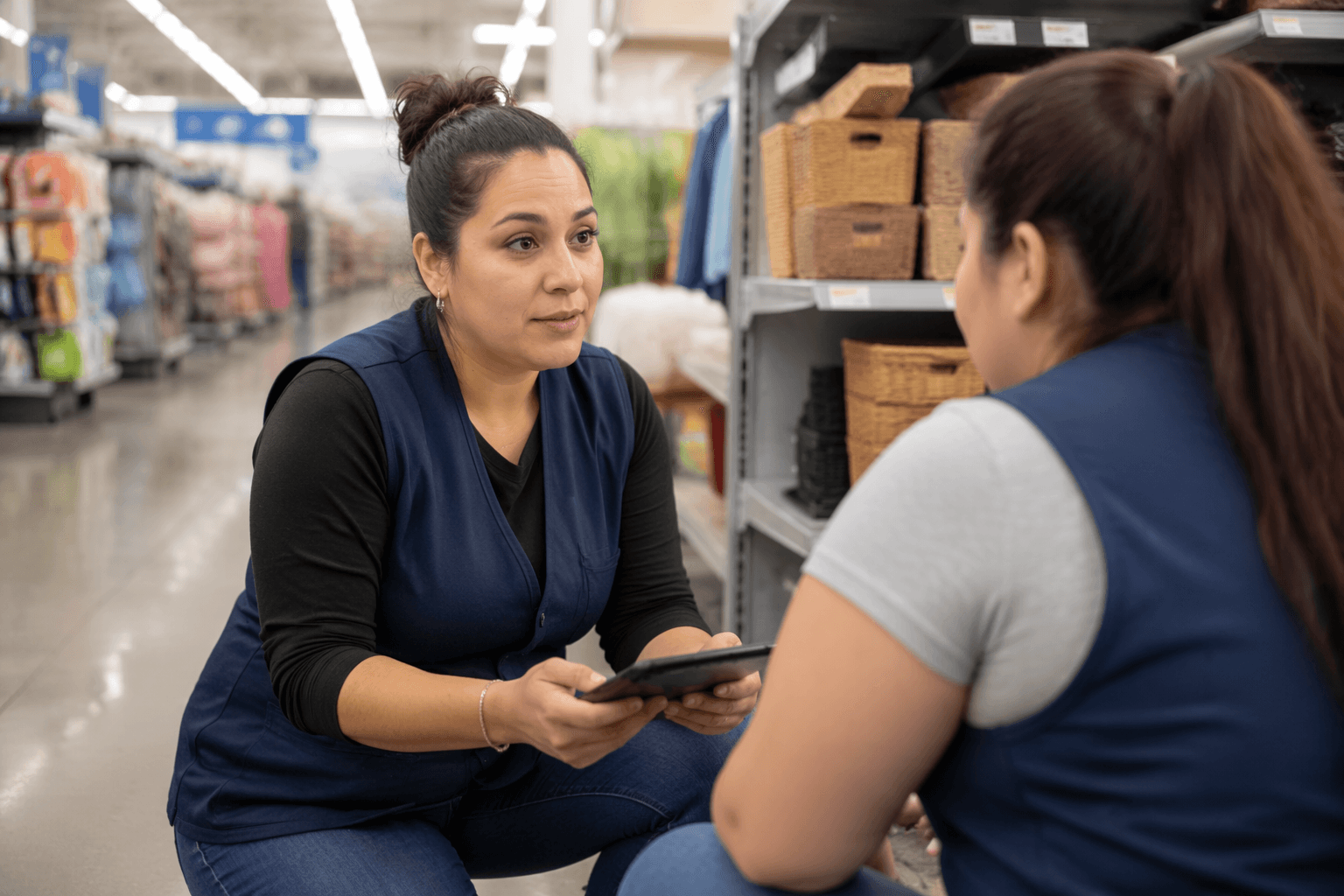
In September 2020, Walmart replaced assistant managers with coaches in its Supercenters. The role sits where staffing, freight, customer needs, pricing, and morale meet, and Walmart frames it as work that balances daily priorities, supports associates, and helps people grow. For hourly associates, that means the coach is not just another layer of management, but the person who often decides how heavy the shift feels and whether the store runs with direction or drift.
What the coach controls on the floor
The role carries broad authority in a store. Coaches are expected to teach and train associates, collaborate on store operations and business direction, manage customer-service standards, review profit and loss, and keep merchandise presentation, inventory flow, and shrink controls on track. They also handle hiring, training, mentoring, assigning duties, setting expectations, and recognizing performance.
Before the first pallet is opened, that shapes the work an hourly associate sees. If the coach sets priorities well, freight gets moved in the right order, departments know what matters first, and customer issues get handled without confusion. If the coach is weak on follow-through, the store feels it quickly: people get reassigned mid-shift, standards slip, and associates end up guessing which task matters most.
On Walmart’s careers page, store coach Brandon says he leads with “energy, empathy, and focus” while balancing daily priorities, supporting associates, and helping people grow.
Why hourly associates feel the difference every shift
For hourly workers, the coach is often the person who turns staffing into reality. A strong coach knows when the front end is short, when grocery needs backup, when a remodel crew is about to create extra congestion, and when the team needs a cleaner handoff between tasks. A weak coach leaves associates absorbing the friction, which usually shows up as rushed breaks, muddled communication, and a heavier workload for the same number of hands.
Walmart has also tied the manager relationship directly to job satisfaction. In a January 2024 message to store managers, the company said the number one driver of job satisfaction is an associate’s manager. The coach role sits at the center of retention, especially in a business where staffing levels, customer traffic, and freight volume can change from one shift to the next. If the coach is clear and present, associates are more likely to feel supported; if not, the floor tends to feel reactive.
Scheduling adds another layer. Walmart’s Me@Walmart app lets associates view schedules up to two weeks in advance, trade shifts, pick up extra shifts, and request time off. The app gives coaches a powerful lever over staffing. A coach who understands the app, communicates early, and adjusts fairly can ease burnout; a coach who makes late changes or leaves shifts undercovered turns the app into another source of frustration.
The role is part of Walmart’s leadership pipeline
Walmart did not build the coach job as a stand-alone title. The same Supercenter leadership overhaul also replaced department manager with team lead and added store lead in place of co-manager. The role is part of a broader operating model that leans on broader skill sets across fresh food, pricing, standards, and customer service.
The pay structure reflects that step up. Walmart says coach roles have a total pay range of $75,000 to $104,000, while team lead roles are hourly positions with a pay range of $19 to $37 per hour. The pay gap marks the coach as a management job with real responsibility over labor, execution, and people development.

The company has also put real money behind that path. Walmart says it has invested $1 billion in associate training and development, and it says 75% of salaried managers began as hourly associates. John Furner started in a frontline role.
What to learn if you want to move up
The quickest way into leadership at Walmart usually starts with operational fluency. The Academy Team Lead listing includes merchandise assembly, grocery unloading and stocking, remodel work, receiving, price change, and claims. Those are the systems a future coach has to understand in order to manage pace, spot bottlenecks, and keep the building moving when several priorities hit at once.
Walmart Academy adds another layer by offering job-specific retail training and leadership courses. The company’s own leadership model depends on associates who can do more than supervise. The people who move up are usually the ones who know how inventory moves, how standards slip, and how to correct a bad handoff before it turns into a bad day for the whole department.
The coach role also becomes a filter for advancement. A strong coach notices which associates can handle price changes without losing accuracy, who can work through a freight cycle without creating more problems, and who can keep calm when customer traffic spikes. In a company with an average U.S. associate tenure of five years as of fiscal 2025, those moments of recognition and training can determine whether someone stays, stalls, or steps into the next title.
This article was produced by Prism’s automated news system from verified source data, official records, and press releases, then run through automated quality and moderation checks before publishing. The system is built and supervised by the people who set the standards it runs under. Read our full AI policy.
Did this article answer your question?