Walmart ties community grants, disaster aid to business success
Small grants and storm relief are how Walmart reaches local communities, and associates can track the help through Spark Good, food donations, and relief drives.
Where a $250 grant becomes local aid
A Walmart store grant can start small and still land hard in a neighborhood. U.S. stores and clubs award local cash grants ranging from $250 to $5,000 to groups such as animal shelters, elder services, and community cleanups, and Walmart says those dollars have helped fund everything from truckloads of supplies to hospitals to tablets for a senior living facility and Chromebooks for distance learning.
That local system sits inside a company with enormous reach. Walmart says roughly 2.3 million associates live and work in communities around the world, and its FY2025 ESG report puts the company at about 2.1 million associates, more than 10,750 stores and eCommerce websites in 19 countries, about 270 million customers served each week, and $681 billion in total revenue. The math matters because Walmart is arguing that a retailer this large does not just sell into communities, it operates inside them.
How Spark Good turns giving into something associates can see
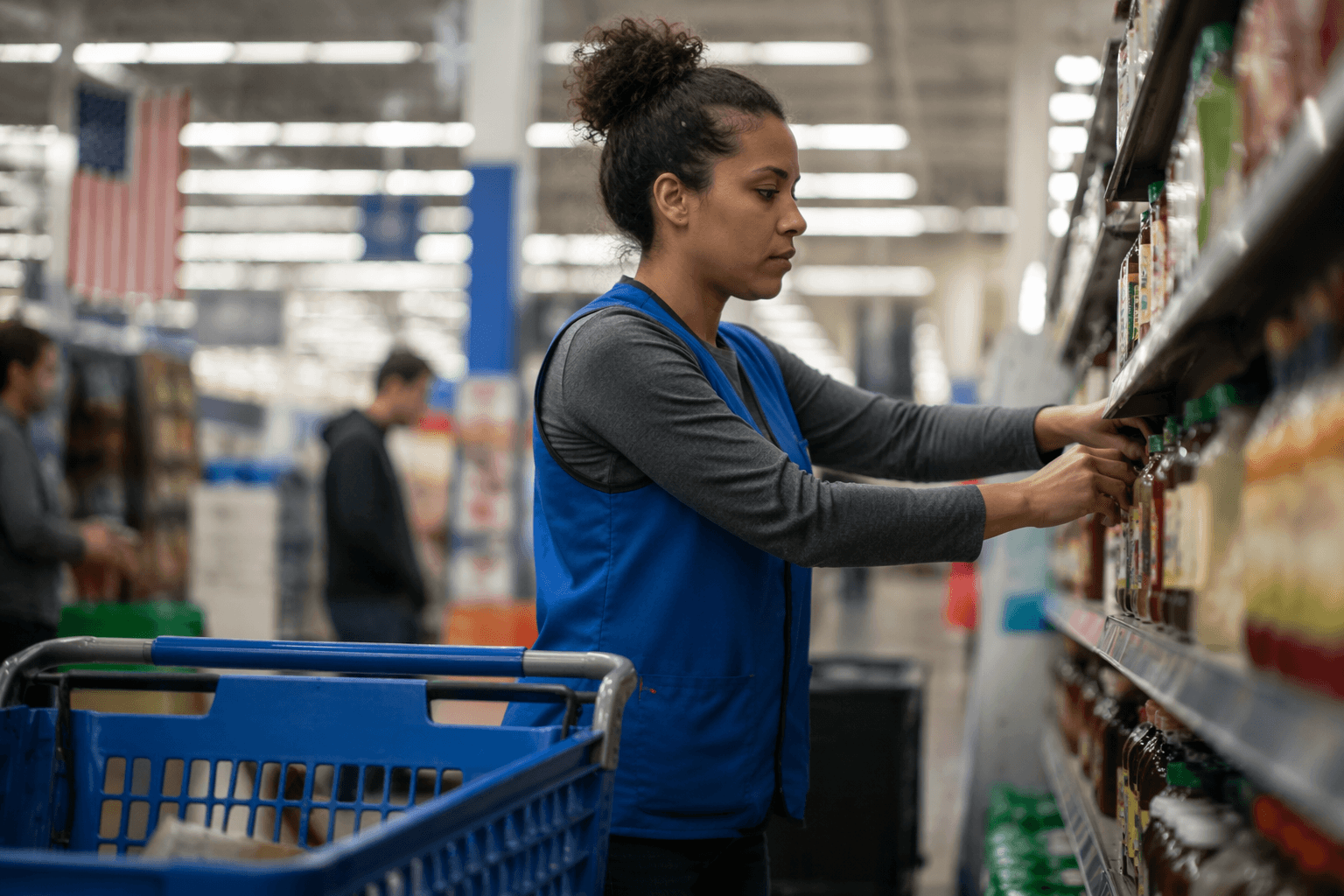
If you work in a store, the clearest sign that this is not just branding is the way support shows up locally. You may see donation drives, relief efforts after storms, or grant announcements tied to a nearby nonprofit, school, shelter, or service agency. Walmart says its Spark Good system brings together local grants, round-up giving, registry tools, storefront reservation tools, and associate giving and volunteerism under one umbrella.
The practical shift came in April 2024, when Walmart said it launched a new Spark Good Local Grants application and a Spark Good Associate platform. The point was to make it easier for nonprofits to apply for funding and easier for associates to find volunteer opportunities, which matters when a local organization is trying to move fast after a crisis or support a program on a thin budget. For managers, that is the useful takeaway: when Walmart says it wants to strengthen communities, the mechanism is often a store-level platform, not a distant corporate office.
- Spark Good grant announcements for nearby nonprofits
- volunteer postings tied to a store, club, or distribution center
- round-up or registry campaigns attached to a local need
- relief drives that suddenly appear after severe weather
What to watch for locally:
Food aid is the oldest part of the playbook
Walmart’s community strategy is older than Spark Good. The company says its first public commitment to fight hunger came in 2010, and its U.S. food donation program began in 2006 through the efforts of a single Sam’s Club. Since FY2015, Walmart says its nutrition education programs have reached 4 million people, with another 1.1 million reached in FY2022 alone.
The food donation numbers are the part that best explain the scale. Walmart says its U.S. stores, clubs, and distribution centers donated more than 696 million pounds of food to Feeding America in the relevant period it cites, while total global cash and in-kind donations from Walmart and the Walmart Foundation reached $1.5 billion in FY2022. For associates, that can translate into food drives, surplus product movement, and local partnerships that turn the back end of a store operation into community support.
Disaster response is where the local promise becomes visible fast
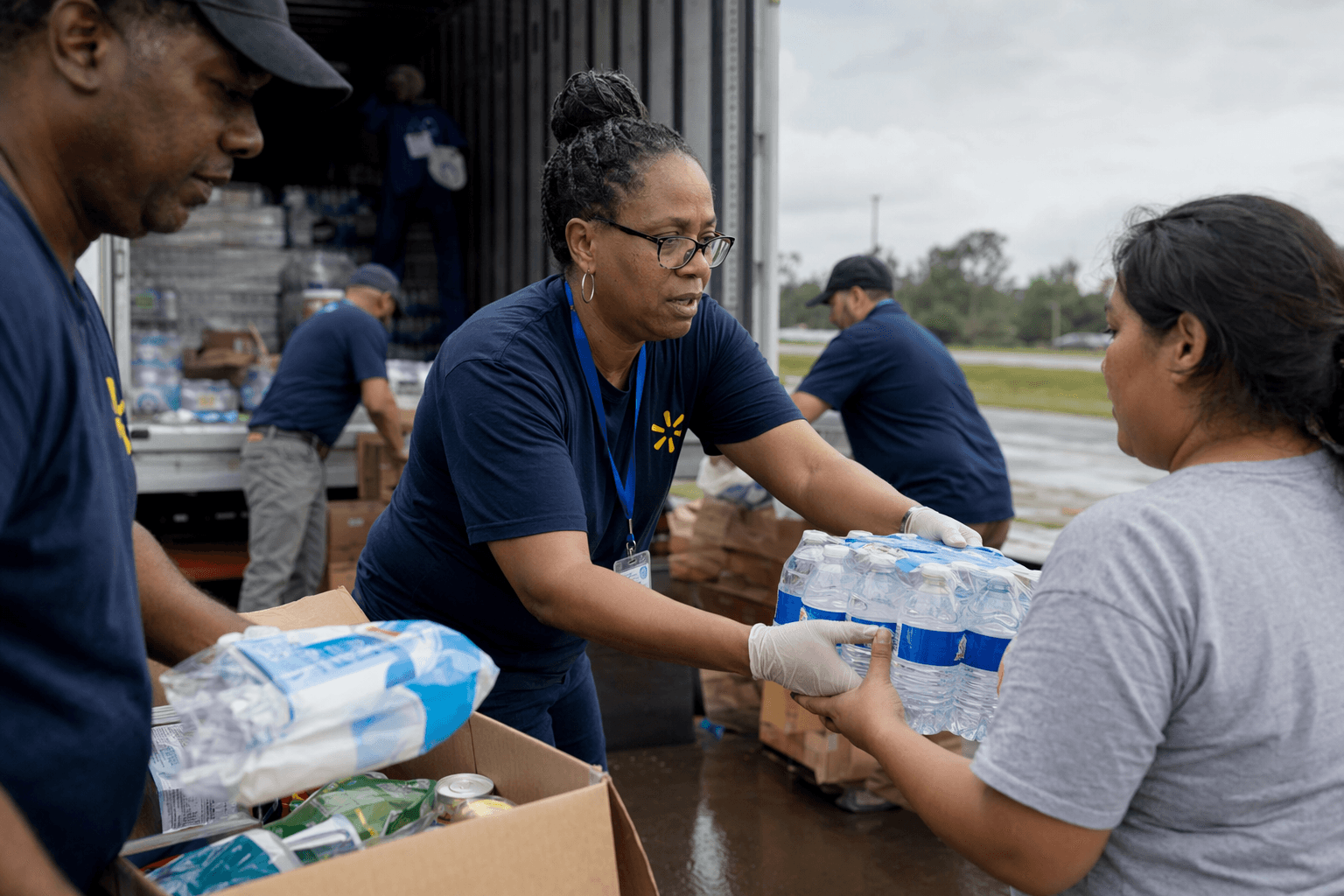
When storms hit, Walmart’s support often becomes impossible to miss. Since FY2022, Walmart, Sam’s Club, and the Walmart Foundation have contributed more than $55 million for disaster preparedness and response globally, and since 2016 they say the total for preparedness, response, and relief has topped $132 million. That is the long game, but the short game is the parking lot, where relief arrives.
In June 2024, Walmart announced disaster response mobile units operated by nonprofit partners that can bring charging and Wi-Fi access, hot meals, clean laundry, and showers to parking lots and community locations after disasters. The company said those units were already deploying in U.S. communities hit by storms, tornadoes, and wildfires. For a family without power, that is not abstract philanthropy. It is the difference between waiting out a crisis and having a place to charge a phone, clean up, and reconnect.
Walmart also tied its relief dollars to specific events. In May 2024, after severe storms and tornadoes in Northwest Arkansas, Walmart and the Walmart Foundation committed up to $2 million for immediate relief, including food, water, products, and grants to relief organizations. The company said that total included an initial $1 million and an associate match campaign up to $1 million, along with volunteer opportunities through Spark Good.
A few months later, in October 2024, Walmart, Sam’s Club, and the Walmart Foundation raised their Hurricane Helene commitment to $10 million, up from $6 million, to support communities in Georgia, Florida, North Carolina, South Carolina, and Tennessee. Walmart later said overall hurricane support would exceed $23 million through company donations and customer giving. Those are the kinds of numbers that make a local storm response visible far beyond headquarters.
Sam’s Club shows the same model at club level
Sam’s Club has been pushing the same community logic through its own stores. In April 2025, the company said associates volunteered more than 9,600 hours in 44 states during its Day of Service, working with more than 250 organizations. It also said those efforts helped generate close to $140,000 in Spark Good Volunteerism grants the year before.
The club-level grant system is especially concrete. Sam’s Club says all 600-plus clubs have a local grant budget that renews annually, typically ranging from $6,500 to $9,000 per club. One Texas project even combined several clubs’ budgets to donate $15,000 to Camp Blessing. For associates, that is a reminder that local giving is not just a corporate check. It is often a budget line inside the store or club where you work.
Why Walmart frames this as business strategy
Walmart’s argument is straightforward: helping customers, associates, suppliers, and communities thrive is good for business because it strengthens the places where the company operates. That is why the company talks about healthier food, stable jobs, and disaster support as part of the same story, not as separate charitable lines.
For hourly associates and managers, the practical lesson is not that every grant or relief package will touch your store directly. It is that Walmart’s community programs are designed to show up where you live, work, and shop, whether that means a local grant to a shelter, a food donation network, or a mobile relief unit after a storm. The company’s scale gives it reach, but the point of these programs is local: when a town needs food, money, supplies, or volunteer time, the store is often where that promise becomes real.
This article was produced by Prism’s automated news system from verified source data, official records, and press releases, then run through automated quality and moderation checks before publishing. The system is built and supervised by the people who set the standards it runs under. Read our full AI policy.
Did this article answer your question?