Walmart ties retention to pay, promotions, training and predictable schedules
Walmart says staying power comes from more than pay: steadier schedules, faster promotions, training and benefits that can change a shift from chaos to a career.
Walmart ties retention to the parts of the job associates feel every day
Walmart is making a clear argument: people stay when the job is stable enough to build around. The company says retention is driven by competitive pay, career advancement, skills-based training, education benefits, flexible scheduling, and a workplace culture that supports health and well-being. That framing matters because it shifts the retention conversation away from one-time hiring bonuses and toward the basics of daily work life, including whether a shift is predictable, whether a raise is meaningful, and whether there is a real path to move up.

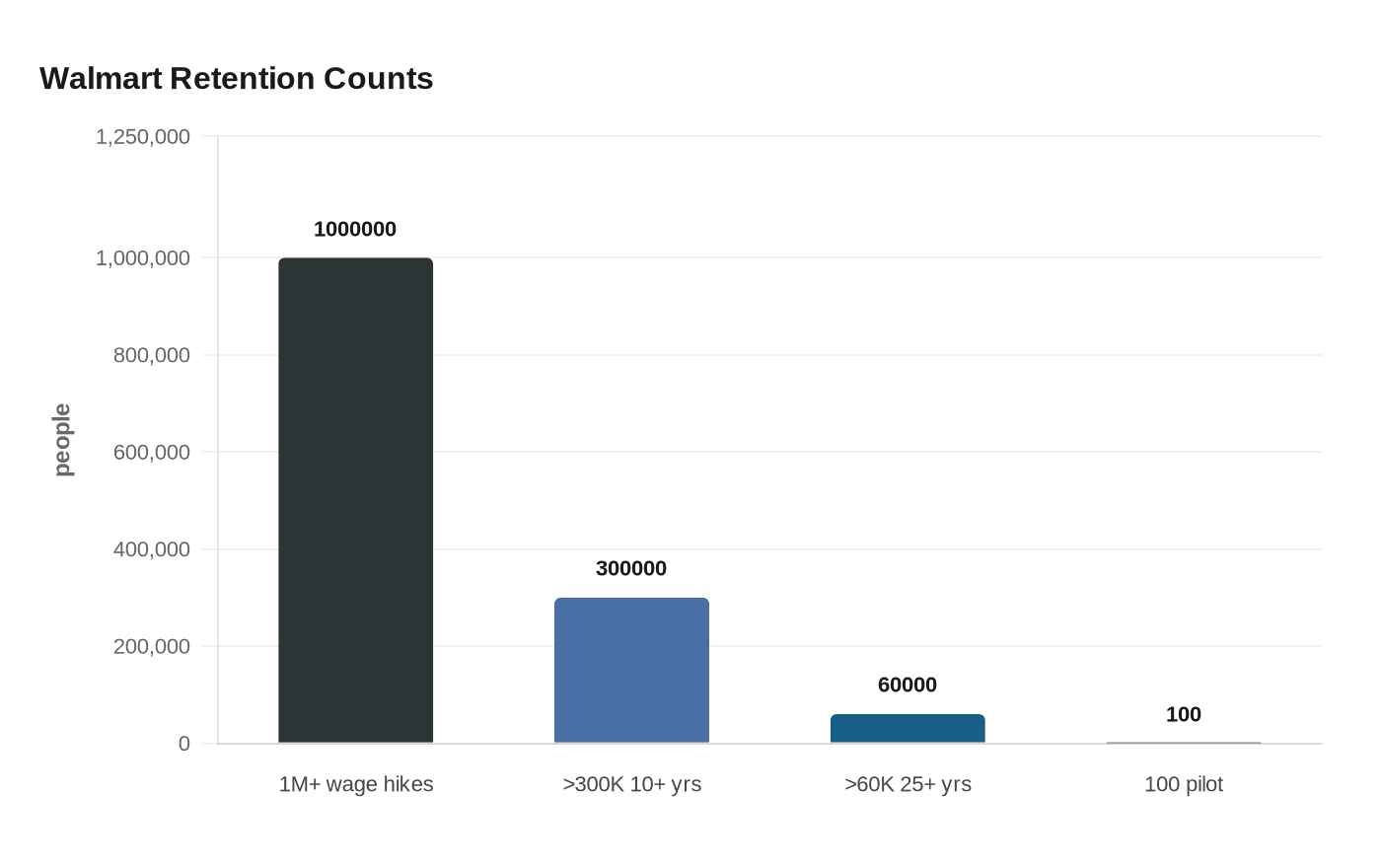
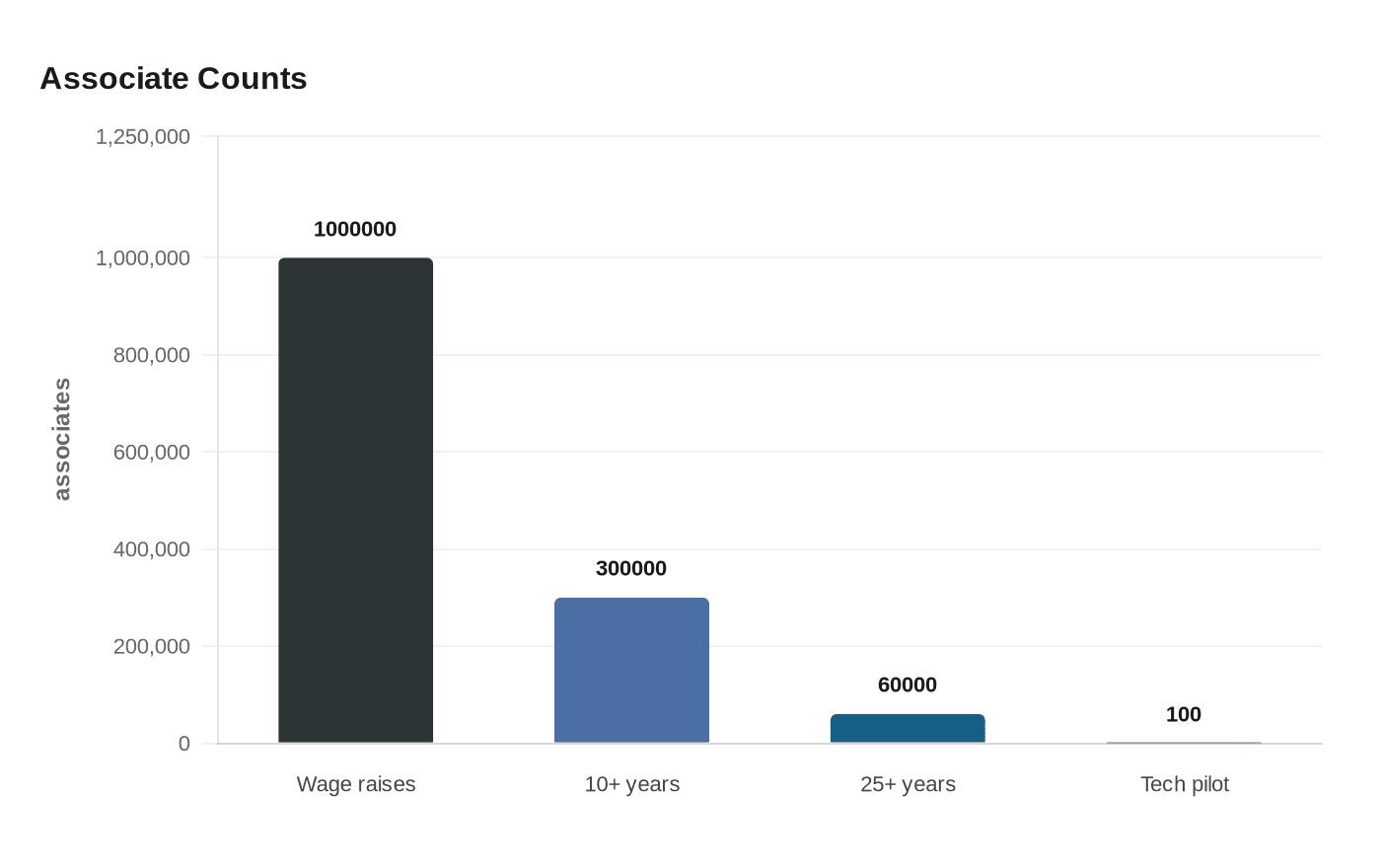
The company’s own numbers show how it thinks about loyalty. As of fiscal year 2025, Walmart said the average U.S. associate tenure was five years. More than 300,000 U.S. associates have been there for more than 10 years, and more than 60,000 have stayed for 25 years or more. Those figures suggest Walmart sees retention as a long-term operating system, not a short-term campaign.
Pay is the first test, but not the only one
Walmart says its U.S. frontline associates’ average hourly wage is close to $18, and the company says it has raised wages for more than 1 million frontline associates over the past few years. That is the part of retention most workers feel first: if the wage is not competitive with local labor markets, every other promise becomes harder to believe.
The company also says it regularly reviews wages against local markets and uses performance-based pay and incentives. In practice, that means the paycheck is supposed to reflect both local competition and individual contribution. For hourly associates, the real question is whether those reviews keep pace with nearby employers, inflation, and the demands of the store floor. For managers, it is a reminder that pay policy is not just a corporate spreadsheet issue, it is a staffing issue that affects call-outs, turnover, and morale.
Promotion speed is a retention tool, not just a morale booster
Walmart says about 75% of its U.S. associates are promoted from within, and U.S. associates receive their first promotion in nine months on average. That is a fast internal ladder by retail standards, and it helps explain why Walmart talks about retention as a pathway to advancement rather than simply a matter of holding people in place.
For associates, the practical meaning is straightforward: if you are being trained, coached, and scheduled with an eye toward growth, staying can feel worth it. If those steps are missing, the promise of internal promotion starts to look more like a slogan than a plan. For department managers and assistant managers, this is where retention becomes an operational discipline. Clear expectations, fair coaching, and visible openings matter because they tell workers that the next step is real, not theoretical.
Walmart’s own messaging has leaned into that point. In January 2023, U.S. CEO John Furner said the company was investing in higher wages and new opportunities to gain skills and grow a career. That line only holds up if associates can actually see the ladder, understand the requirements, and trust the process.
Training, bonuses and technical pathways widen the lane
Walmart has also tried to make retention about skill development, not just tenure. In June 2024, the company announced a new bonus plan for hourly store associates that could reward long-term service with up to $1,000 a year. That is not a substitute for strong base pay, but it does signal that Walmart wants to reward people for staying rather than treating experience as invisible.
The same month, Walmart piloted an Associate to Technician program in Dallas-Fort Worth for 100 associates, with technician roles paying between $19 and $45 an hour. That range matters because it shows how Walmart is using internal pathways to move workers into higher-paying, more technical jobs. For associates who want out of the grind of constant register or floor labor, that kind of move can be the difference between clocking in and building a career.
The company also points to a bigger, longer view. In 2015, Walmart said it was making a $2.7 billion, three-year investment in associates focused on higher wages and education and training. The message across a decade of announcements is consistent: Walmart wants to sell retention as a system built on pay, skills and mobility, not as a single policy fix.
Predictable schedules are where retention becomes real
If pay is the headline and promotions are the promise, scheduling is where those promises either land or collapse. Walmart says its scheduling practices are designed to improve predictability and consistency, which is a direct response to one of retail’s biggest problems: unstable hours that make it hard to plan child care, transportation, school, second jobs or even rest.
The Me@Walmart app is central to that pitch. Walmart says it lets associates view schedules up to two weeks in advance, trade shifts, request time off, pick up extra shifts and clock in from their phones. That gives workers more control over their weeks, at least on paper, and it makes scheduling a live management tool rather than a static paper posting. In a store where hours change quickly, those features can reduce the scramble that drives people out.
The company also says paid time off starts on day one for full-time and part-time associates, and eligible associates have access to medical coverage. Those benefits are part of the same retention story: if a worker can get time off without waiting months, and if medical coverage is within reach, the job becomes easier to sustain. But the real test is whether those benefits are backed by enough hours, consistent manager approval and enough staffing to make time off practical instead of stressful.
A retention checklist associates can use on their own store
Walmart’s retention pitch can be broken down into a simple checklist that any associate, department manager or assistant manager can evaluate against daily reality:
- Is the wage close to what nearby employers pay for similar work?
- Do schedules come early enough to plan a life around them, not just react to them?
- Are shift swaps and time-off requests handled smoothly through Me@Walmart?
- Can new workers see a promotion path within months, not years?
- Are training and coaching tied to advancement, or just to keeping the floor covered?
- Do bonuses, benefits and paid time off actually make the job easier to stay in?
- Are managers using consistency to lower chaos, or creating turnover by making every week unpredictable?
That checklist gets to the core of Walmart’s own retention message. A stable workforce is not built by slogans about opportunity alone. It is built when pay is competitive, schedules are predictable, promotions are visible, and training leads somewhere concrete.
For Walmart, retention is now being sold as a business system with parts that can be measured, managed and improved. For the people working the shifts, the question is simpler: do those systems make the next six months feel more sustainable than the last six months?
This article was produced by Prism’s automated news system from verified source data, official records, and press releases, then run through automated quality and moderation checks before publishing. The system is built and supervised by the people who set the standards it runs under. Read our full AI policy.
Did this article answer your question?