Walmart touts promotions, training and predictable schedules to attract associates
Walmart’s pitch is a ladder, not a dead end: nine-month promotions, two-week schedules, and training that can lead to better-paid roles.

Walmart’s pitch is simple: start on the floor, move up fast, and keep your schedule predictable enough to build a life around it. The company says its U.S. associates get their first promotion in nine months on average, and that about 75% of salaried store, club and supply-chain managers began in hourly roles. That is the core of the recruiting message, and it matters because Walmart is not just selling a job opening. It is selling a path.
Promotion is the company’s strongest story, and also the one workers will want to test against real store life. Walmart says those salaried store, club and supply-chain roles averaged more than $117,000 in fiscal 2025, which gives the internal ladder real financial weight. The company also says more than 115 former Walmart leaders have gone on to become CEOs at other companies over the past decade, a statistic designed to suggest that time inside Walmart can build a resume that travels well beyond the building.
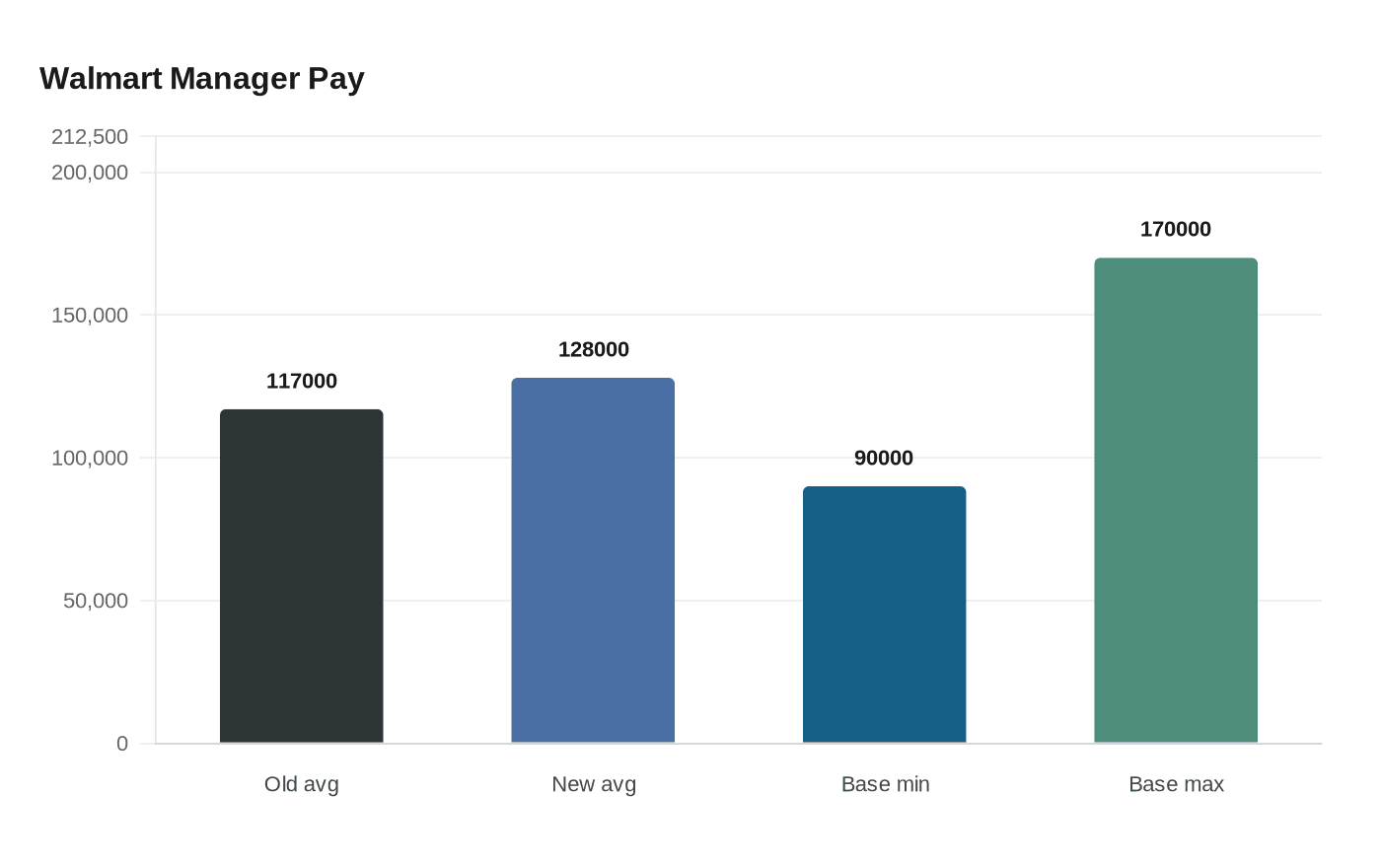
That pitch got even louder when Walmart raised the average store-manager salary from $117,000 to $128,000, effective February 1, 2024, and set a new base-pay range of $90,000 to $170,000. The message to hourly workers is clear: the leap from front-line work to management can change your income dramatically, but the company is also making management look like a destination worth aiming for. For anyone deciding whether to stay, transfer or push for the next step, that pay structure is not fluff. It is the clearest sign of where Walmart wants its talent to go.
The training story is the other pillar of the company’s internal-mobility pitch. Walmart Academy launched in 2016, and the company says it has now reached more than 3.5 million participants globally. In the U.S., Walmart said associates completed more than 2.4 million trainings through its academies in the first six years, and more than 52,000 associates had graduated by April 2017. It later said associates logged nearly 5.5 million training hours through Walmart Academy in fiscal 2023, which suggests the program is no side project. It is part of how the company says it fills jobs from within.
That matters because the company is not limiting the story to store management. Walmart points to pathways such as Associate to Driver and Associate to Technician, plus roles in supply chain, trucking, maintenance, pharmacy and technology. It also highlights Live Better U, which pays 100% of tuition and books for eligible associates pursuing college degrees, certificates or high school diplomas. That is one of the few benefits in the pitch that can genuinely change a worker’s options outside the store, especially for someone trying to move from hourly work into a certified trade or a credentialed role.
The scheduling message may be the most practical part of the whole recruiting pitch. Walmart says U.S. store associates know their schedules two weeks in advance, and full-time associates can sign up for set schedules of up to 40 hours per week, with the same shifts on the same days each week. In a business where last-minute callouts, split shifts and hour swings can blow up childcare, second jobs and school plans, that promise is not just a perk. It is one of the main reasons a retail job feels sustainable or impossible.
The Me@Walmart app is part of that system. Walmart says associates can use it to view schedules up to two weeks ahead, pick up extra shifts, trade shifts, request time off and clock in from their phones. On paper, that gives workers more control over their week than the old paper-schedule model ever did. In practice, the key question is whether the predictability holds store by store, department by department and manager by manager.
That is where the company’s own history matters. Walmart has long faced pressure from unions, activists and politicians over erratic schedules and sudden changes, and it has used scheduling systems like Customer First Scheduling as a response to that criticism. So when the company now markets set schedules and advance notice, it is doing more than advertising convenience. It is trying to answer a longstanding workplace complaint that has shaped retail organizing and worker expectations for years.
For job seekers, the useful way to read Walmart’s message is to separate concrete benefits from broad ambition. The concrete parts are the ones with numbers: nine months to a first promotion on average, two-week schedule visibility, set schedules for full-time associates, more than 3.5 million Academy participants, and tuition and books covered for eligible workers. Those are the pieces that can affect your pay, your time and your mobility.
The broader claim is that a frontline Walmart job can become a career. That may be true, but it depends on store conditions, staffing, manager support and whether you actually get access to the training path you need. A worker trying to move up should ask which role leads to which academy, whether the schedule promise applies to the specific position, and how long internal moves usually take in that location. The company’s own language suggests that the intended answer is yes, but the value only shows up when the next step is visible and real.
Walmart’s current pitch is not about romance or culture fit. It is about structure: a short runway to promotion, a training system meant to build skills, and a schedule model meant to make life outside work more predictable. For hourly associates, department managers and assistant managers, that is the part worth watching, because it is the difference between a retail job that just pays this week and one that can actually change the next few years.
This article was produced by Prism’s automated news system from verified source data, official records, and press releases, then run through automated quality and moderation checks before publishing. The system is built and supervised by the people who set the standards it runs under. Read our full AI policy.
Know something we missed? Have a correction or additional information?
Submit a Tip