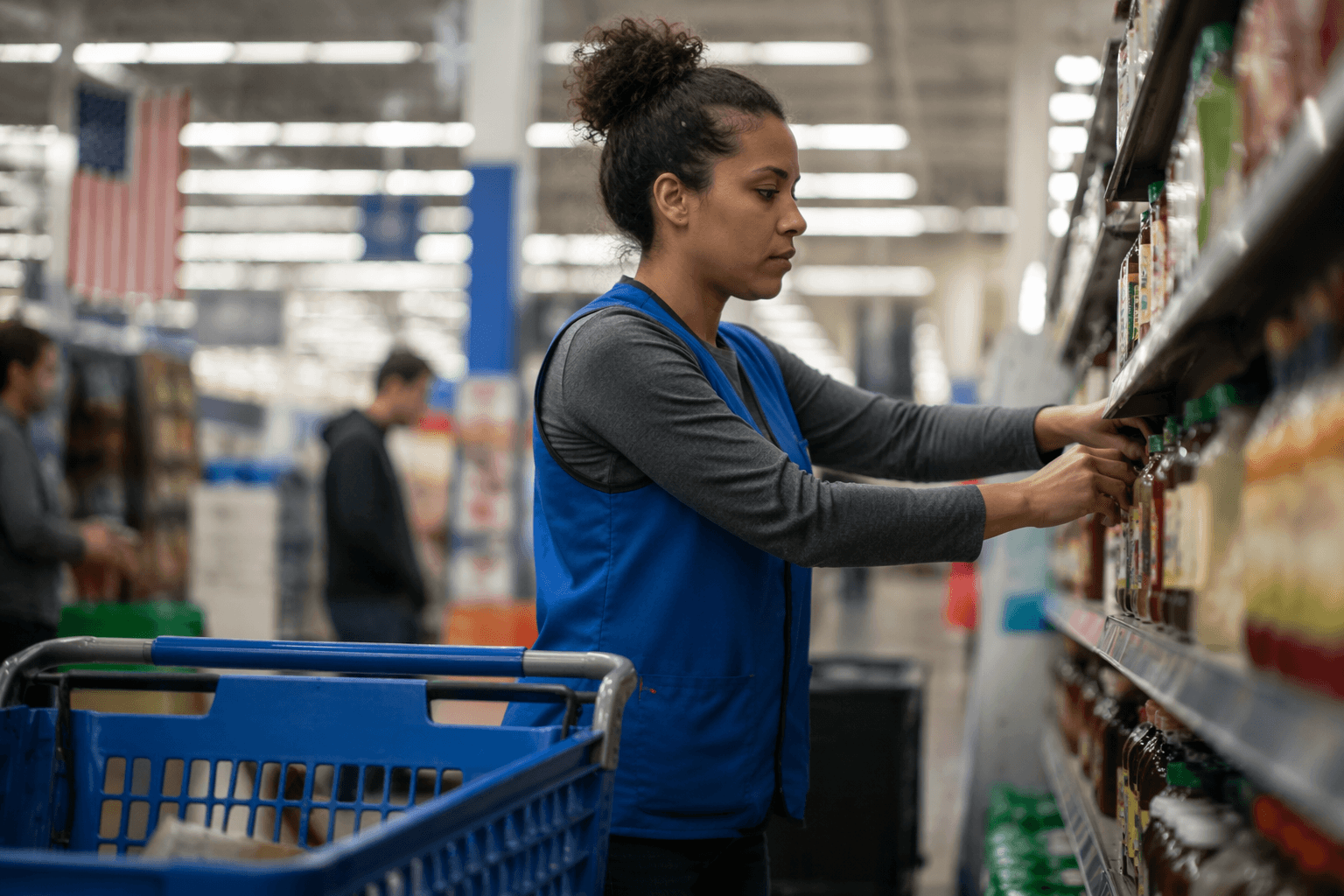
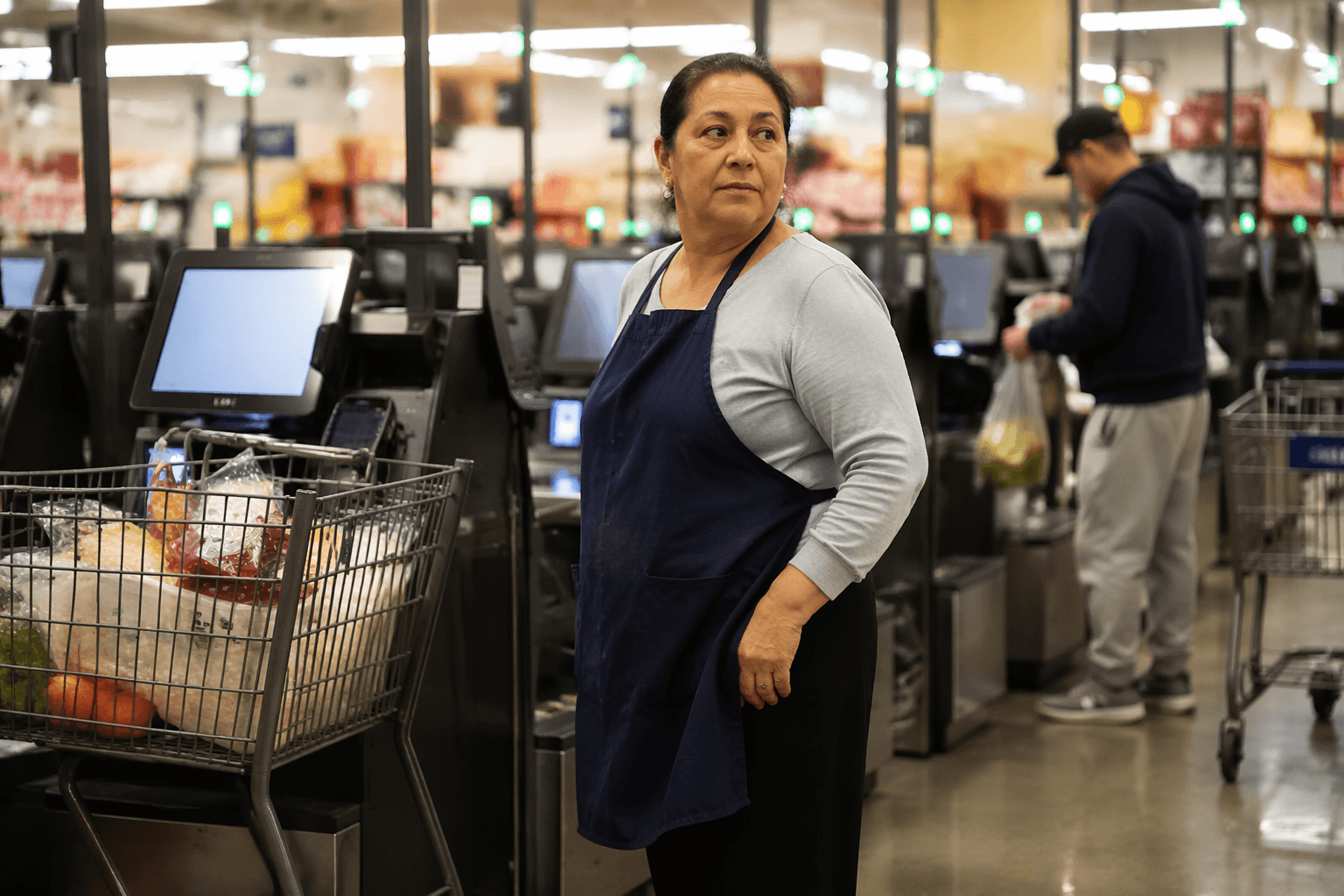
Walmart Worker Blocks Entry During Tornado Warning, Sparking Safety Debate
A viral video reignited debate after Walmart workers blocked entry during a tornado warning, with Code Black policy leaving the call entirely to the manager on duty.
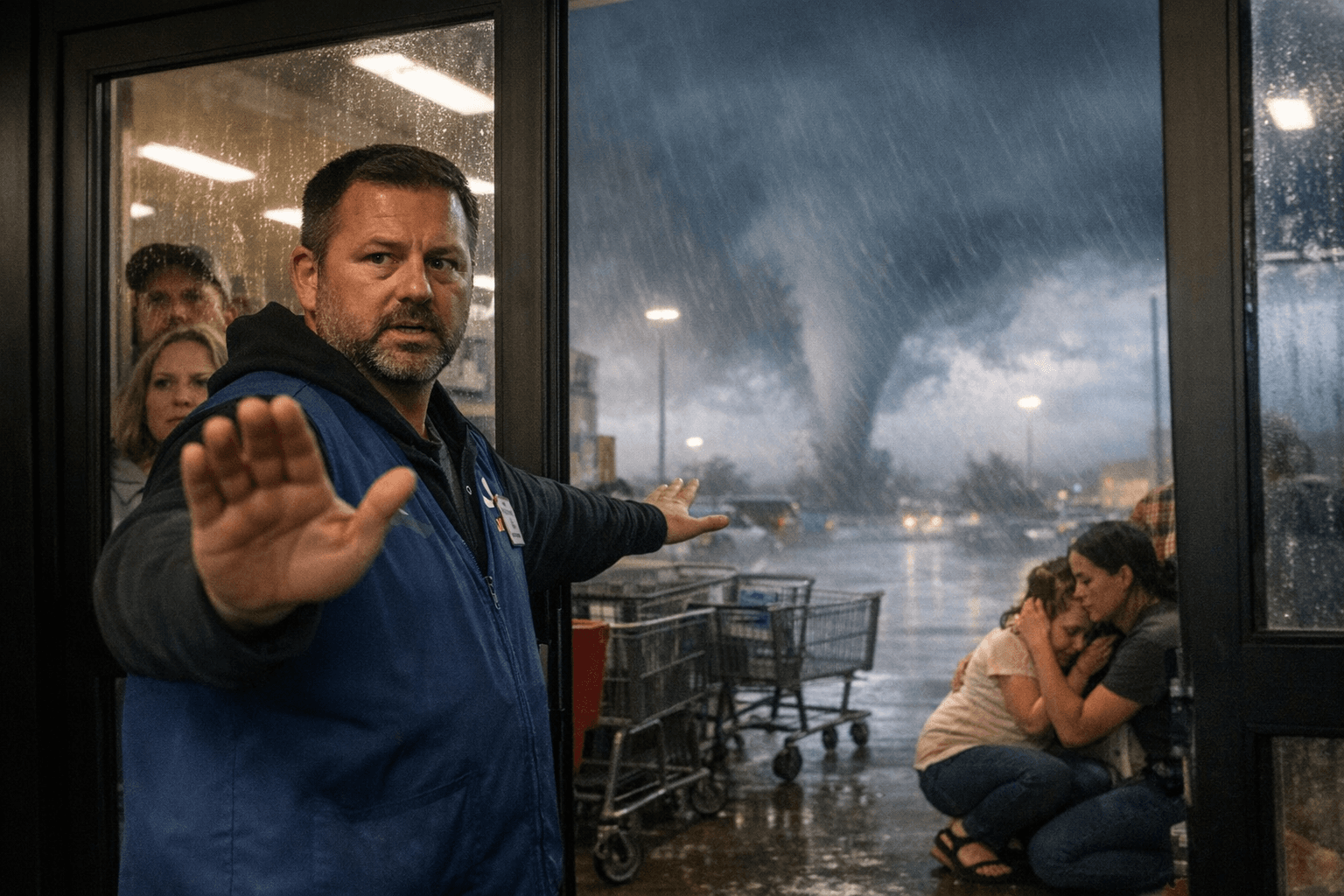
Cody Frizzell was still on the phone with his mother when he reached the Walmart entrance at 2200 Brookmeade Drive in Columbia, Tennessee. The sky had gone dark. Heavy rain had started falling. And a Walmart associate in a blue vest stepped in front of him and said: "No, you can't come in. There's a tornado warning. We're not letting anyone in."
That moment, which became one of the more visceral flashpoints in the recurring debate over what stores owe the public during severe weather, captures a real tension associates face every time sirens go off: follow the procedure as communicated in the moment, or trust instinct and let people in.
Frizzell's mother, Sandy Goff, had been watching baseball-sized hail fall in her front yard in Hohenwald, Tennessee, when she called her son to warn him. She stayed on the line as he and his fiancé approached the store. "I couldn't think of them being out in it. That's what scared me," Goff said. Frizzell had asked her where they should go. "Where's the best place where we could stop and seek shelter? And she said Walmart," Frizzell said.
Instead, the associate told Frizzell's fiancé they could not enter. When Frizzell asked where they were supposed to go, the response was: "I don't care, but you can't stay here." A couple behind them was turned away under the same instruction. Frizzell said he and his fiancé ran to a nearby store, whose manager confirmed she opened her doors and sheltered the group inside. The manager at the Columbia Walmart declined to comment and referred all questions to corporate communications.
What Walmart's Code Black actually requires
Walmart's emergency weather protocol, called Code Black, is widely misunderstood, and that gap in understanding sits at the center of every incident like the one in Columbia.
A Code Black designation covers severe weather situations, including tornado warnings, where a facility may be in danger. But the protocol does not automatically trigger the moment a warning is issued. According to Walmart, all stores are set up to receive a phone call as soon as the National Weather Service issues a tornado watch or warning. That call is designed to alert management to prepare, not to lock doors.
The critical mechanism is that activation is left entirely to the manager on duty. Walmart's corporate policy states that managers are expected to monitor local conditions and radar and activate emergency protocols if a tornado is imminent. The policy is explicitly "a list of procedures, not just one action," meaning no single step, including restricting entry, is automatic. A store manager in Tell City, Indiana, faced similar scrutiny after a 2:29 p.m. tornado warning was issued and no store-wide Code Black announcement followed.
That discretion cuts both ways. It protects managers from activating a disruptive full-shelter protocol for a warning that passes miles away. But it also means the associate standing at the front door, enforcing a decision they may not fully understand, becomes the visible face of a policy call they did not make.
The authority chain during a weather event
Associates blocking entry during a tornado warning are almost never acting alone. The door restriction typically comes from whoever is running the floor, whether that is an assistant manager, a co-manager, or a salaried manager on duty. Those employees receive the NWS notification call and are responsible for deciding whether local conditions warrant a full Code Black activation.
For hourly associates caught in the middle, the practical reality is uncomfortable: they are positioned at the entrance, given a directive they may not be able to explain in full, and facing customers who are frightened and sometimes carrying children. The associate in Columbia was following a direct instruction. The problem was not the associate's conduct but the absence of a clear and public alternative for people who had no shelter other than the parking lot.
Walmart's global communications director Brian Little stated after the Columbia incident that "the safety of our customers during weather events like what occurred recently in Columbia, TN is a priority," but the company stopped short of clarifying whether the door-restriction call was consistent with Code Black guidelines.
What to do if you are turned away
If you arrive at a Walmart during a tornado warning and are denied entry, the building still offers partial protection in its vestibule. The space between outer and inner doors, the lowest ground-level position away from windows, and any interior corridor are all preferable to staying in a car. Vehicles are among the most dangerous places to be during a confirmed tornado.
For associates who want to escalate a decision they believe is wrong in the moment, the manager on duty is the only person with authority to reverse a door restriction during an active weather event. Documenting the exchange, including the time, the manager's name, and what was communicated, matters if the situation later becomes a subject of internal review or media attention, as it did in Columbia.
Associates who shelter customers without a manager's authorization can face internal discipline, but several store employees have done exactly that without legal consequence. The manager at the nearby store where Frizzell eventually found shelter confirmed she let the group in without hesitation.
The viral moment that keeps recurring
The Columbia incident is not isolated. Similar clips surface every spring tornado season, each one reigniting the same argument about whether a large-format retailer has a moral obligation to open its interior to the public when conditions outside are life-threatening. Walmart stores are among the most structurally reinforced commercial buildings in most communities they serve, built with wide interior spaces and interior walls that make them genuinely safer than most alternatives available to someone caught in a parking lot.
The debate will not resolve itself through social media. It resolves, store by store, through how managers on duty interpret their Code Black responsibility when the NWS call comes in and sirens are audible from the parking lot. That is where the policy either works as written or fails the people outside the door.
This article was produced by Prism’s automated news system from verified source data, official records, and press releases, then run through automated quality and moderation checks before publishing. The system is built and supervised by the people who set the standards it runs under. Read our full AI policy.
Did this article answer your question?