Walmart's ESL Rollout Sparks Union Pushback Over Grocery Worker Jobs
ESLs are eliminating tag-change hours from Walmart grocery shifts at 2,300 stores already live, but new audit duties and pricing disputes are landing on associates before the system is fully understood.
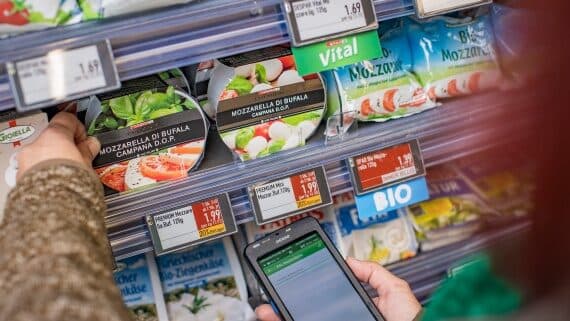
Every week inside a Walmart Supercenter, associates have historically walked grocery aisles with handfuls of printed paper tags, updating prices shelf by shelf across more than 120,000 individual products per store. That task is now being systematically eliminated. Walmart is replacing every paper price tag in every U.S. location with electronic shelf labels (ESLs, which the company calls digital shelf labels or DSLs) by the end of 2026. Roughly 2,300 of its approximately 4,600 U.S. stores are already running on the system, making this the largest operational shift to hit the grocery aisle since the barcode arrived. For associates who work it, the question is not whether the change is coming but what actually happens to your shift when it does.
What Disappears from Your Aisle
The most immediate change is the elimination of the paper-tag walk. A Walmart spokeswoman described the old scale of the work directly: "Walmart stores carry tens of thousands of items with thousands of weekly price updates from new inventory rollbacks and markdowns, which can take hours or even days to complete manually. Digital shelf labels eliminate the manual task of changing prices. What once took multiple associates days to complete can now be done in minutes. This means our associates spend less time fixing tags and more time helping customers."
In the grocery department, where produce pricing, rollbacks, and markdown cycles shift most frequently, associates carried a disproportionate share of that tag burden. Price updates now push through an app and update labels remotely across every aisle simultaneously. For anyone whose Tuesday or Wednesday shift involved a multi-hour tag-change run through dairy, dry goods, or frozen, that block of time is gone once the system goes live in your store.
The New Responsibilities That Replace It
Two workflow tools built into the ESL platform will reshape daily routines in concrete ways:
- Stock to Light: An associate uses a mobile device to trigger a flashing LED on a specific shelf tag, pinpointing exactly which shelf location needs restocking. In a store with over 120,000 products, that eliminates a significant amount of aisle-walking guesswork during replenishment shifts.
- Pick to Light: For associates fulfilling online grocery orders, the system guides workers directly to the product's exact shelf location rather than relying on memory or aisle-walking. During high-volume pickup and delivery windows, the time savings are measurable.
Both features shift the associate's function from searching and locating toward verifying and executing against what the system already flags. That is a real efficiency gain. But it introduces a new category of responsibility: device maintenance. ESL units require periodic battery replacements, and any label that goes dark or throws an error code creates an immediate pricing accuracy problem visible to every customer in that aisle. In stores already operating on ESLs, associates have added label-condition audits to their routines, walking their sections at shift start to flag malfunctioning units before customers encounter blank or frozen prices.
Pricing Accuracy and the Customer Conversation
The most consequential shift in daily associate experience may not be time saved but the disputes that follow price changes. When a paper tag was wrong, the error was typically static and obvious. ESLs update remotely, and the speed with which they can technically change means associates should expect more shelf-versus-register discrepancies in customer complaints during the learning curve, not fewer.
Walmart has stated clearly that prices are identical for every customer in every store, that the labels operate on a closed system with no cameras or microphones, and that the company has no plans for dynamic pricing where rates fluctuate by demand or time of day. But the system's technical capability, noted in industry coverage, is that a price could update at 9 a.m., again at 2 p.m., and again before the dinner rush with no incremental cost to the company. Associates who face a customer pointing at a shelf price that doesn't match their receipt need a documented, manager-approved protocol for how to respond, not an improvised explanation.
Department managers who have not yet established a price-override and escalation process should do so before their store goes live. Associates should know who authorizes a correction, how to document an ESL error with a timestamp, and where the line is between explaining a discrepancy and absorbing a conflict that belongs to a manager or corporate policy.
The Legislative Fight Running Alongside the Rollout
The UFCW has made ESL restriction the centerpiece of its Affordable Groceries and Good Jobs Campaign, and the legislative map is expanding fast. Lawmakers in New York, Oklahoma, Washington, Arizona, Nebraska, Maryland, Tennessee, Minnesota, Georgia, and Iowa have introduced bills targeting the technology, with the UFCW's model legislation requiring analog or paper shelf pricing in stores larger than 10,000 square feet, which includes every Walmart Supercenter operating today.
At a Minnesota State Capitol press conference in late March, Diana Tastad-Damer, secretary-treasurer of UFCW Local 1189, captured the union's two-front concern: "Corporations want you to believe that ESLs will only help the customer. With surveillance pricing and ESLs powered by AI, mass data collection and automation, consumers don't stand a chance, and they won't be alone. Workers will suffer, too." UFCW International Vice President Ademola Oyefeso has argued that the technology gives retailers the power to move prices based on real-time conditions, including weather events and peak shopping hours, in ways that leave hourly workers explaining corporate decisions to frustrated shoppers.
At the federal level, Senators Ben Ray Luján and Jeff Merkley have introduced the Stop Price Gouging in Grocery Stores Act, targeting surveillance pricing by large grocery chains. Walmart and the National Retail Federation have pushed back, with the NRF characterizing ESLs as a communication tool rather than a decision-making system, and citing a University of California San Diego working paper that found no evidence of ESLs driving price spikes during periods of elevated inflation.
Whether state legislatures act this spring will determine whether stores currently mid-rollout face a reversal in certain markets. Associates in states with active legislation should monitor local developments; an installation already underway could pause depending on what happens in their statehouse.
What Shifts for Hourly and Merchandising Roles
For associates whose hours have historically included tag-change tasks, the recaptured time creates a real scheduling question. Walmart's stated position is that those hours redirect into customer service, stocking, and fulfillment. But if your department's tag runs have accounted for a consistent block of weekly scheduled hours, watch whether your hours adjust after the system goes live. That is a data point worth tracking from the day of installation.
Cross-training into pickup and delivery fulfillment, where Pick to Light creates a concrete new skill set, is the most durable repositioning available to associates navigating this transition. Merchandising and pricing roles specifically may see their core duties change; those who can demonstrate ESL audit capability, catching dark or misfiring labels before customers encounter them, are adding measurable store-level value that did not exist in the paper-tag era.
A Checklist for Associates as Your Store Goes Live
Use this as a working reference from the shift your store's ESL system activates:
- Audit your section at the start of every shift. Walk your assigned aisles before the store opens. Flag any label that is blank, displaying an error code, or showing a price that doesn't match the system. Report before customers arrive.
- Know the override protocol before you need it. Ask your department manager now how to handle a customer disputing a shelf price against the register. If possible, get the steps in writing.
- Track your scheduled hours. If tag-change tasks have historically built into your weekly schedule, note whether hours shift after ESL installation. Document it.
- Get hands-on with Stock to Light and Pick to Light. Both features reduce location-search time during replenishment and fulfillment shifts. Proficiency makes you more valuable on lean shifts.
- Timestamp every ESL error report. If a label is wrong during your shift and a customer disputes the price, a time-stamped report protects you from absorbing the dispute and supports any override or correction.
- Watch your state's legislature this spring. Active anti-ESL bills in ten-plus states could affect whether your store's rollout continues, pauses, or reverses depending on how votes land in the coming months.
The ESL transition is arriving store by store through the end of 2026. For most associates, the first day feels invisible: one shift involves printing tags, and on the next, the tags are already updated before anyone walks the aisle. The real adjustment comes after that, in the audits, the customer pricing questions, and the scheduling decisions made around hours that no longer go toward a task the system now handles in minutes.
Know something we missed? Have a correction or additional information?
Submit a Tip