Walmart workers can legally discuss wages, hours with coworkers
Walmart associates can talk about pay and schedules, and the law protects more than just union talk. The risk is when a manager, policy, or warning message chills that conversation.
What Walmart workers can say about pay and hours
A Walmart associate comparing hourly rates in the break room is not doing anything illegal just by asking, answering, or listening. Under the National Labor Relations Act, employees covered by the law have the right to discuss wages with coworkers, labor organizations, worker centers, the media, and the public. The National Labor Relations Board says wages are a vital term and condition of employment, and that talks about pay are often where broader workplace action begins.
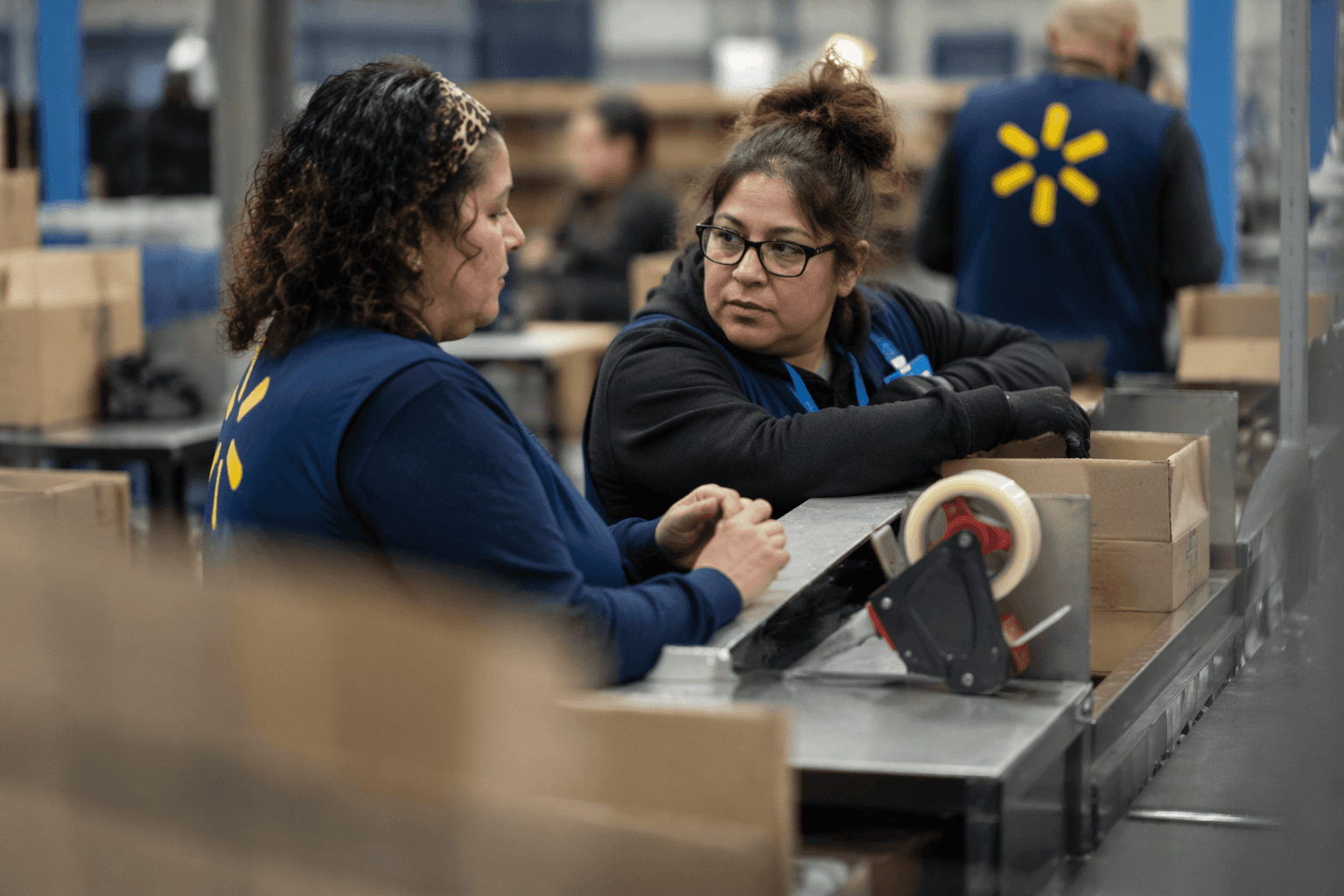
That matters at Walmart because pay and scheduling are not abstract issues. They shape whether a cashier can cover rent, whether a stocking team member gets enough hours to stay above water, and whether a department manager can build a stable crew. The law recognizes that reality: private-sector workers have a right to join together to improve wages and working conditions, with or without a union.
Why the law protects these conversations
Congress passed the NLRA in 1935 to encourage collective bargaining and protect workers’ freedom of association. The NLRB says that protection reaches more than formal organizing drives. It can cover conversations about wages and benefits, petitions for better hours, refusal to do unsafe work, and group complaints to a manager, a government agency, or the media.
That is the line Walmart workers need to understand. Protected activity does not start only when a union card appears. If several associates compare schedules, talk about why one person is getting more hours than another, or agree to bring the issue to management together, that can be protected concerted activity. The same is true when workers talk about supporting employees at other workplaces or discuss workplace issues like minimum wage and right-to-work laws.
There is also a hard limit worth keeping in view: protection is not a shield for threats, harassment, or false statements. The law protects shared workplace concerns, not intimidation.
Where Walmart’s own system makes the issue feel urgent
Walmart has long sold itself as a company that can offer structure through scheduling and pay growth. Its scheduling materials say full-time associates can be given set schedules of up to 40 hours a week, which the company says helps people know what to expect in their paycheck. At the same time, Walmart’s own pay messaging has shown how much attention the company pays to its wage image.
In 2024, Walmart said its U.S. average hourly wage for frontline associates was $17.50. Later company materials said the average was “close to $18” and then $18.25 in 2025. For workers, those figures make direct comparisons even more important. If the company is publicly touting wage gains and schedule stability, associates still want to know what their own store, department, and shift really look like on the floor.
That is especially true in a company run from Bentonville, Arkansas, where corporate decisions ripple through thousands of stores and millions of work hours. A set schedule on paper means little if hours are cut without warning, shifts are constantly rearranged, or associates are left guessing how a paycheck will look from week to week.
Real-world scenarios that are protected, and where pressure can cross the line
A Walmart cashier asks a coworker, “What are you making an hour?” That is protected discussion if the worker wants to compare pay. A stocker texts a few teammates about whether everyone got the same number of hours this week. That can fall within protected activity too, especially if the conversation is about schedule fairness or staffing.
A group of associates decides they want to ask for better hours and puts their concerns in writing together. That is exactly the kind of concerted activity the NLRB says can be protected. If they circulate a petition asking for more consistent schedules, that is also on the protected side of the line. If they decide to raise the issue together with a supervisor, they are not suddenly stepping outside the law just because the conversation is uncomfortable for management.
The more dangerous point comes when a company policy or supervisor message goes beyond preference and becomes a warning against talking. The NLRB says policies that specifically prohibit wage discussion are unlawful. It also says policies that chill wage discussion can be unlawful too. That means a rule does not need to flatly say “do not discuss pay” to create a problem. A handbook, coaching comment, or supervisor’s tone can still cross the line if it reasonably discourages workers from talking about wages or working conditions.
Why organizing pressure at Walmart is part of this story
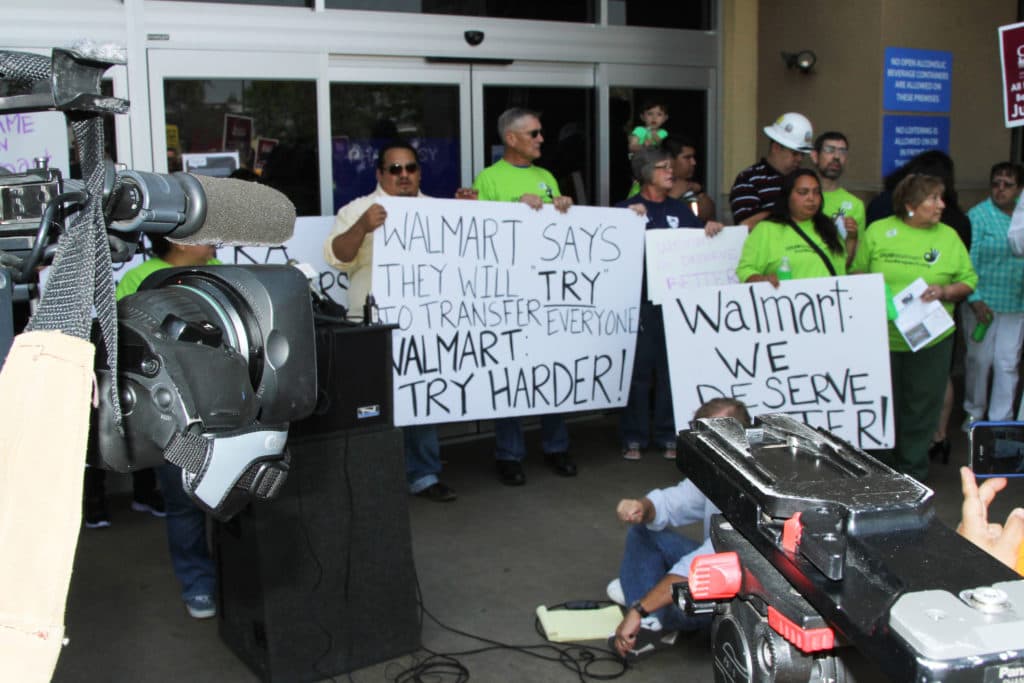
Walmart’s labor history helps explain why wage talk and scheduling talk matter so much inside its stores. In January 2024, the NLRB said it had issued a complaint alleging Walmart interrogated workers at its Eureka, California store about union activity, removed pro-union flyers from a break room, and threatened workers who distributed union literature. That is not just a dispute about union preference. It shows how quickly routine conversations about rights, organizing, and workplace conditions can become a conflict over power.
The United Food & Commercial Workers International Union has also been part of the broader conversation around Walmart labor activity for years, reinforcing that these issues do not sit on the fringe of retail. They sit right at the center of how workers try to bargain for better hours, steadier staffing, and fairer treatment.
There is a reason these fights do not always disappear quickly. A separate Walmart-related case in Baden, Pennsylvania, remained active into 2026, showing that disputes over employee rights can stretch on long after the original flashpoint. For workers, that is a reminder that a warning from a manager is not always the end of the story.
What to do if a manager pushes back
If a supervisor tells an associate not to talk about pay, hours, or scheduling, the key question is whether the message is trying to stop protected discussion. A manager can enforce ordinary workplace rules about conduct, but they cannot lawfully silence conversations about wages simply because the company would rather not hear them.
The safest response is calm, factual, and documented. Keep copies of the message, the date, the time, and the names of anyone who heard the warning. Save texts, emails, schedule notices, and any policy language that was cited. If the issue turns into discipline, note whether the punishment came right after workers compared pay, asked for better hours, or raised the issue together.
That paper trail matters because the law often turns on patterns: what was said, who said it, whether others were involved, and whether the company rule or supervisor behavior would reasonably make workers afraid to speak. At Walmart, where pay, hours, and scheduling shape daily life on the floor, those records can make the difference between a vague complaint and a credible protected-activity case.
This article was produced by Prism’s automated news system from verified source data, official records, and press releases, then run through automated quality and moderation checks before publishing. The system is built and supervised by the people who set the standards it runs under. Read our full AI policy.
Did this article answer your question?