Whole Foods benefits page highlights medical, leave and career support
Whole Foods workers now have a clearer map for health coverage, leave, emergency aid and stock, if they know where eligibility starts and what to check before a life change.
Whole Foods’ benefits pages are more useful than a corporate checklist. They show which workers qualify, what support exists for health care and leave, and where Amazon’s stock and career tools fit into a longer plan for staying afloat and building toward something bigger. For a store employee trying to balance scheduling, family obligations, and long-term money decisions, the details matter because access is tied to hours, job status, and timing.
What the package actually covers
Amazon says many of its U.S. benefits begin on day one for regular full-time employees, and the list is broader than medical coverage alone. It includes health care that starts at $5 per week with $5 copays, paid parental leave, prepaid college tuition, a 401(k) plan with company match, paid time off, and company-paid holidays. Amazon also says it offers paid and unpaid leave options for major life events, including caring for a new child or an ill family member.
That mix matters for Whole Foods workers because it connects short-term stability with long-term planning. Health coverage protects the monthly budget, leave protects a job during family crises, and the 401(k) and tuition support point toward staying in the workforce and advancing. Restricted Stock Units for many employees add another layer: ownership can become part of the compensation picture, especially for people who expect to stay and move up over time.
Who can enroll, and when to check the fine print
Whole Foods Market’s benefits FAQ says full-time team members who regularly work 30 or more hours per week can enroll for benefits, or 20 or more hours per week in Hawaii. The company’s benefits site also says all full-time Team Members have access to health insurance. That is a concrete threshold, not a vague promise, which makes hours and status part of the benefits conversation from the start.
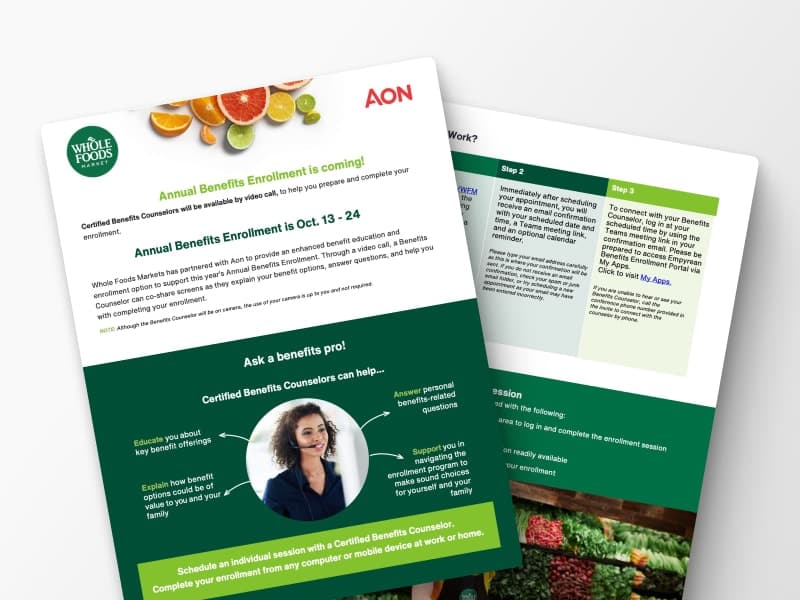
The company’s 2026 Benefits Guide shows the program is updated annually, so open enrollment is not the only moment that matters. A job change, a move between departments, a change in weekly hours, or a family event can affect what you should review right away. Before you assume anything, the practical move is to check eligibility, payroll deductions, and whether your current role still fits the enrollment rules.
Whole Foods also points workers to the Benefits Service Center at 888-681-2249, available 7 a.m. to 7 p.m., for questions about eligibility, deductions, and enrollment. That matters because benefits questions at retail companies often turn on small but important details: whether a role is considered full-time, how a deduction changes after a life event, or whether a move between stores affects coverage timing.
Leave, family needs, and the emergency fund
The leave language is where the benefit package starts to look like a real-life support system instead of a list of perks. Amazon’s paid and unpaid leave options cover major transitions, including caring for a new child or an ill family member, while paid parental leave and company-paid holidays create room around the moments when retail schedules are least forgiving. Paid time off gives workers another tool, especially when a school calendar, caregiving duty, or health issue does not line up neatly with a posted shift.
Whole Foods also has a Team Member Emergency Fund for immediate financial assistance after unforeseen disaster or personal hardship. That is the kind of benefit people often overlook until they need it, but it can be the difference between absorbing a shock and falling behind on rent, transportation, or child care. The Employee Assistance Program adds another layer of support for work-related or personal issues, including anxiety, legal or financial questions, and caregiving referrals.
For workers, the key point is that these benefits are related. A family emergency can trigger leave needs, financial strain, and mental stress at the same time, so the best move is to understand the package as a set of overlapping tools. The emergency fund handles immediate hardship, the EAP helps with triage and referrals, and paid or unpaid leave can protect a job while life is getting complicated.
Stock, transfers, and the long game
Amazon’s benefits and stock framework also matters because Whole Foods is part of a much larger employer ecosystem now. Amazon agreed to acquire Whole Foods Market on June 16, 2017 in a $13.7 billion all-cash transaction, and the deal closed on August 28, 2017. Since then, Amazon has kept folding Whole Foods more tightly into its retail and corporate systems, including Amazon Fresh and Amazon Go.
That integration has continued to shape compensation and career paths. In August 2025, Amazon said it would align pay, benefits, and programs for Whole Foods Market corporate employees with Amazon U.S. corporate employees by December 2026. For workers, that signals that the benefits picture is still moving, especially for people who want to compare a store role with a corporate or support-function job later on.
Amazon also says internal transfer opportunities and career development programs can help employees build their careers. That matters in a company as large as Amazon because a grocery job is not necessarily a dead end inside the system. Someone can think about a move from the store floor into a different department or a support role, and the benefits package becomes part of that decision, not just the paycheck.
What to review before open enrollment or a major life change
The smartest way to use Whole Foods’ benefits is to treat them as part of a planning checklist, not a background perk. If you are coming up on open enrollment, a new child, a family illness, a change in weekly hours, or a move inside the company, review health coverage, leave options, emergency support, retirement savings, and whether RSUs or other stock-related pay are part of your compensation.
For Whole Foods workers, the useful question is not just whether benefits exist. It is whether the hours you work, the role you hold, and the life event you are facing line up with the coverage, leave, and support that Amazon has built around the job.
This article was produced by Prism’s automated news system from verified source data, official records, and press releases, then run through automated quality and moderation checks before publishing. The system is built and supervised by the people who set the standards it runs under. Read our full AI policy.
Did this article answer your question?