Whole Foods FAQ helps applicants find the right jobs faster
Whole Foods’ FAQ does more than answer basics: it steers applicants toward the right role, cutting false starts for stores juggling 2,742 openings.

Whole Foods Market’s FAQ page works like a small but useful gatekeeper in a hiring system that can get messy fast. By telling applicants to search by department, location, role, or keyword, it helps people narrow the field before they disappear into the wrong posting, the wrong store, or the wrong part of the company. For team members helping a friend, relative, or neighbor apply, that matters because fewer mismatched applications usually means fewer repeated questions, fewer dead ends, and a cleaner handoff to store leadership.
Why the FAQ matters before anyone clicks “apply”
The practical value starts with how the company tells candidates to search. Whole Foods says, “Type in a department, location, specific role, or keyword and we’ll show you careers related to that search.” That instruction sounds simple, but it addresses one of retail hiring’s most common failure points: applicants browsing too broadly and never getting specific enough to match what a store actually needs.
That kind of early narrowing helps both sides. Applicants save time by seeing relevant openings faster, while stores get candidates who have already thought through location, schedule, and job type. In a company with a large store footprint and a wide mix of roles, that early sorting is not cosmetic. It is the difference between a focused application and one that lands nowhere.
The company is not just hiring store workers
Whole Foods’ careers site makes clear that the application flow is broader than front-end retail. The careers page separates work into Stores, Support Offices, and Non-Retail Facilities, which is the first clue that applicants often miss if they assume every job is a cashier or shopper-facing slot. The support-office page goes further, saying those positions include Human Resources, Finance, Merchandising and many others.
The listings reflect that range. At one point, the jobs page showed 2,742 open jobs, including roles such as Assistant Plant Operations Manager - Fresh Food Manufacturing, Prepared Foods Order Writer, Grocery Team Member, and Customer Service Supervisor. That variety creates opportunity, but it also creates confusion for applicants who do not know whether they want to work in a store, at an office, or in a non-retail facility.
For store leaders and team members helping applicants, this is the first mistake to prevent. If someone wants culinary work, inventory work, or leadership responsibilities, the FAQ can steer them toward the right category before they default to the wrong search terms and miss openings that fit better.
How to steer candidates so the application actually sticks
The best use of the FAQ is as a pre-application filter. If you are guiding someone through the process, the conversation should start with availability, location, and the kind of work they can realistically do, not just with enthusiasm.
- confirm whether they want store, support office, or non-retail facilities work
- narrow the search by department and location
- match the role to their actual schedule, commute, and experience
- use specific keywords tied to the job, not vague terms like “food” or “retail”
- make sure they understand the difference between part-time and full-time openings before they apply
A better first pass looks like this:
That kind of coaching prevents a common retail-hiring problem: a candidate gets through the early paperwork, then realizes the shift pattern, commute, or job expectations do not fit. The FAQ does not just reduce friction for the applicant. It reduces avoidable follow-up for store leadership and keeps the hiring pipeline cleaner.
What Whole Foods is signaling about culture and recruiting
The FAQ sits inside a broader recruiting message that emphasizes food, service, and internal pathways. The Amazon-hosted Whole Foods page describes the brand as “a community committed to nourishing people and the planet, one delicious bite at a time.” The careers site also points applicants to a dedicated Apprenticeships page, which suggests the company wants early-career pathways to look like part of the job offer, not an afterthought.
That matters because it frames the interview process. Applicants should expect more than a basic check on availability and prior retail experience. Whole Foods is likely looking for customer service style, teamwork, attention to detail, and comfort working in a high-standard retail environment where food quality and presentation matter. In other words, the FAQ is part of a larger recruiting culture that tries to sort for fit, not just fill shifts.
Benefits and country options are part of the same funnel
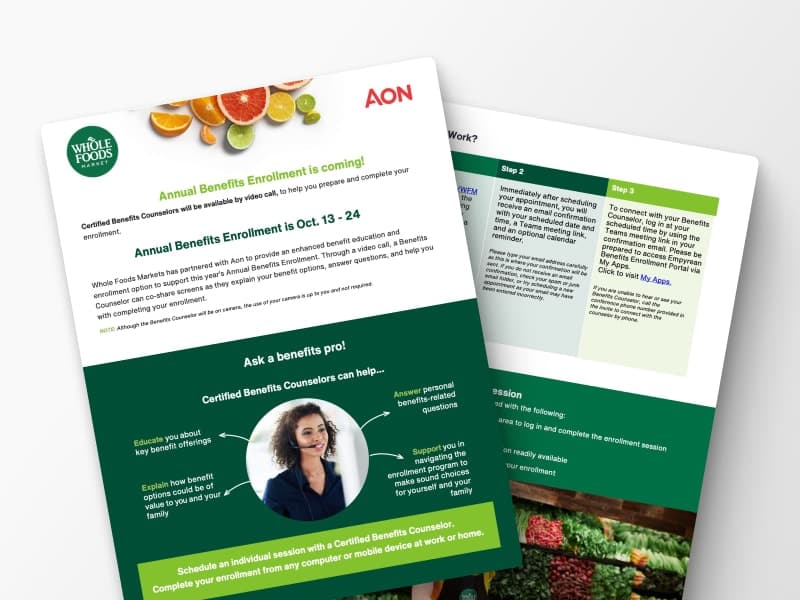
Whole Foods also uses its careers pages to reinforce the employer pitch. The benefits page says the company is committed to team-member well-being and offers comprehensive health benefits and wellness programs. That message matters because it shows up alongside the search tools, the role categories, and the job listings, creating a single entry point for someone who is deciding whether to apply at all.
The site also includes UK, Canada English, and Canada French country options, which tells applicants the careers flow is not limited to the United States. For workers inside the company helping someone navigate the process, that is useful context. It means the right starting point depends not just on the job, but also on the country-specific site and the correct hiring lane.
What this means inside the store
In practical terms, the FAQ is a small tool with a large operational payoff. It helps the person applying understand where they fit, and it helps the store avoid spending time on candidates who never wanted the role in the first place. That is especially valuable in a system that spans Stores, Support Offices, and Non-Retail Facilities, and that can show thousands of openings at once.
For team members and store leaders, the most useful move is to use the FAQ before the application, not after a confusion spiral has already started. The cleaner the first search, the smoother the rest of the hiring process becomes, and in a busy Whole Foods operation, that kind of basic clarity saves time on both sides of the counter.
This article was produced by Prism’s automated news system from verified source data, official records, and press releases, then run through automated quality and moderation checks before publishing. The system is built and supervised by the people who set the standards it runs under. Read our full AI policy.
Did this article answer your question?