Whole Foods Market explains how its quality standards shape store shelves
Whole Foods’ standards decide what reaches the shelf, and store teams are the ones who have to explain the gaps, the substitutions, and the higher bar.
Whole Foods Market bans more than 550 ingredients across food, beverages, supplements, body care, and household cleaning products. Employees research ingredients, read labels, and audit sourcing practices, turning the standards into a floor-by-floor tool for stocking, selling, and answering questions in departments where customers care most about what is in the product and where it came from.
What the standards filter out
The clearest way to understand Whole Foods’ shelf strategy is to look at what it will not carry. In food alone, the standards cover more than 300 ingredients and specifically reject hydrogenated fats, high-fructose corn syrup, aspartame, sucralose, and saccharin.
That filter reaches far beyond grocery staples. Whole Foods’ supplement standards ban more than 150 preservatives, flavors, colors, and other ingredients, while its beauty and body-care standards bar more than 240 ingredients. For a store team member, that means a product can be a strong seller elsewhere and still fail the Whole Foods test because of a single additive, formula choice, or ingredient source. It also explains why ingredient lists matter so much on the floor, especially when customers compare a national brand against a private-label option or ask why one version is stocked and another is not.
The company has been building this playbook for decades. Its timeline starts with bans on added hormones in meat in 1981 and on sub-therapeutic antibiotics for meat sold in its meat department that same year. It later banned added MSG in 1992, foie gras in 1997, hydrogenated oils in 2003, and high-fructose corn syrup in 2011.
How sourcing rules change the way departments look
The standards also shape the store visually. Meat, seafood, and prepared foods often look more detailed than their counterparts at other grocers because the assortment is built around certification, traceability, and sourcing claims that have to be verified before a product gets a spot. All fresh beef, pork, chicken, turkey, goat, and lamb in Whole Foods’ meat department must be Global Animal Partnership Animal Welfare Certified.
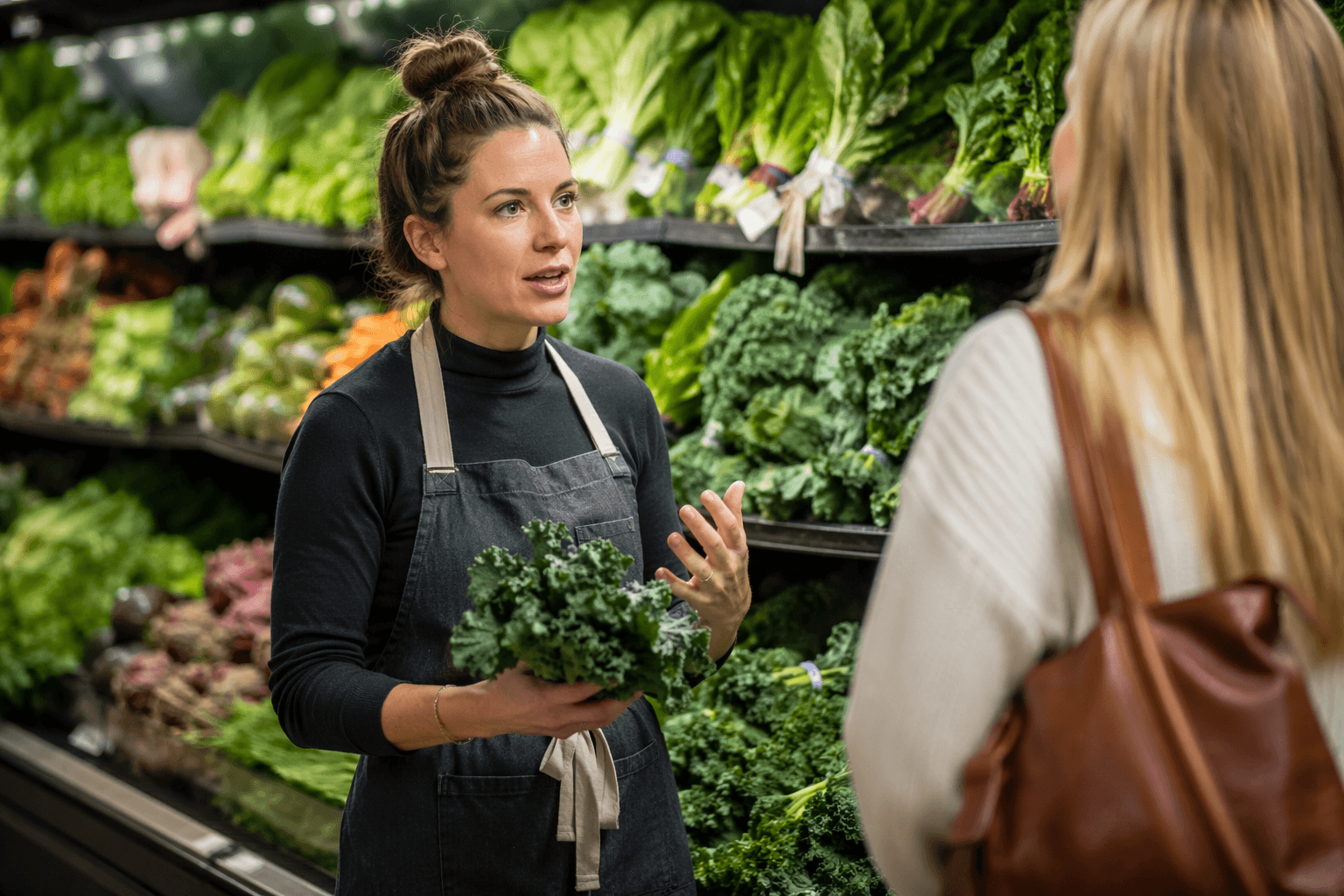
That requirement got broader in 2024, when the company expanded third-party certification across the entire meat department. It had already started requiring third-party certification for the most-purchased butcher-case species in 2011.
Eggs follow a similar logic. Whole Foods has gone beyond cage-free for laying hens since 2017, after hundreds of farm visits and consultations with farmers, pullet growers, poultry geneticists, and animal welfare scientists. That level of sourcing work affects both the product mix and the customer conversation, because shoppers who ask why an egg item costs more are often really asking why the store’s standard is different.
Seafood is handled the same way. Whole Foods’ seafood program requires sustainable wild-caught or Responsibly Farmed seafood, and those farmed seafood standards apply worldwide. For workers in seafood cases, that means the category is not simply organized by species or price point. It is organized by whether the product can meet the company’s standards on origin, farm practices, and sustainability claims.
Why organic and non-GMO claims matter on the floor
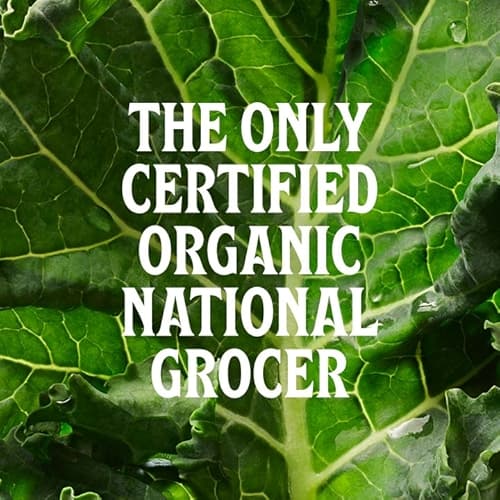
Whole Foods’ organic identity is one of the biggest reasons its assortment looks different from mainstream grocers. After the USDA’s National Organic Standards launched in 2002, Whole Foods says it became the first certified organic national retailer and remains the only certified organic national grocer. Whole Foods says it stocks more than 44,500 organic products.
That organic focus reaches into private label and shelf tags too. All 365 by Whole Foods Market brand items are formulated to avoid bioengineered ingredients. Non-GMO label claims in its stores must be backed by third-party standards such as the Non-GMO Project or USDA Organic. In practical terms, store teams are helping maintain a claims system where the label, the supplier documents, and the store’s own standards all have to line up.
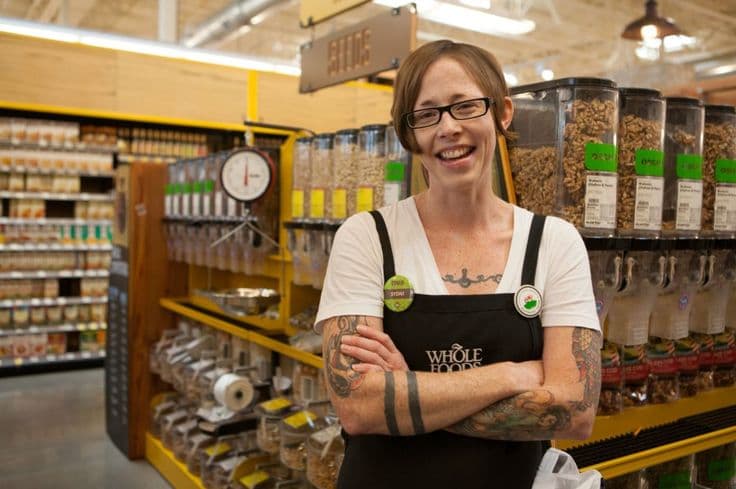
A customer asking why a product is missing from the assortment, why a private-label version uses a different ingredient list, or why a body-care item is absent from a category endcap is usually asking a standards question, not just an inventory question. Whole Foods says customers should know where products come from and how they are grown.
What workers have to explain when shelves do not match expectations
The standards also create a different kind of labor on the sales floor: explanation work. In meat, seafood, supplements, body care, and prepared foods, team members often have to walk shoppers through ingredient rules, sourcing claims, and certification requirements that do not exist at other chains. That can make the job more technical, but it can also give workers a cleaner answer when a shopper wants to know why the store carries one product and not another.
Researching ingredients, reading labels, and auditing sourcing practices is not just a back-office function. It affects what gets purchased, what gets rejected, and how confidently a team member can explain the assortment without improvising.
In June 2025, a cyberattack on United Natural Foods Inc., Whole Foods’ primary distributor, disrupted deliveries and contributed to empty shelves.
This article was produced by Prism’s automated news system from verified source data, official records, and press releases, then run through automated quality and moderation checks before publishing. The system is built and supervised by the people who set the standards it runs under. Read our full AI policy.
Did this article answer your question?