Whole Foods union drive shows how labor law can stall bargaining
A 130-100 win at Philadelphia Whole Foods still got stuck in a long legal fight, showing how labor law can drain momentum before bargaining begins.
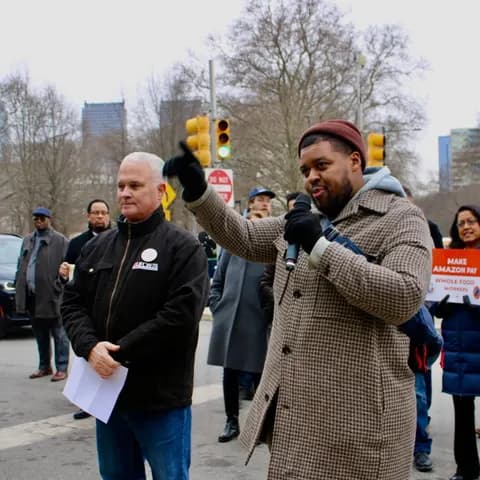
The vote at Philadelphia’s Center City Whole Foods did not turn into a bargaining table overnight. Workers won union representation 130-100 on Jan. 27, 2025, but the store’s path after that showed how a victory on paper can still get bogged down for months, even years, before a contract is in reach.
A win that did not end the fight
The store in Philadelphia’s Center City, near Spring Garden, became the first unionized Whole Foods store in the United States and the first unionized location in Amazon’s grocery chain. The union was United Food and Commercial Workers Local 1776, and the campaign centered on scheduling, pay and staffing concerns that workers said were shaping daily life on the floor.
Ed Dupree, a Whole Foods produce clerk, emerged as one of the visible worker organizers in the campaign. His role matters because the Philadelphia vote was not just a headline about a chain store in a major city; it was a test case for whether workers at a nationally watched Amazon-owned retailer could turn discontent into an organizing win that actually leads somewhere.
Why the law slowed what happened next
Whole Foods challenged the election after the vote, turning the case into a reminder that NLRB procedure can matter as much as the ballot count. Reuters reported the result the next day, and later coverage showed the dispute moving through the National Labor Relations Board as the company pressed objections and workers waited for the certification process to run its course.
The labor board’s own posture became part of the delay. Coverage of union cases at the time noted that the NLRB was operating without a full quorum, a problem that can leave workers in limbo while objections, certifications and review requests pile up. In Philadelphia’s case, the board’s Philadelphia-area office recommended moving ahead with certification in 2025, but the broader agency delay meant the store still was not at a clean bargaining stage.
By June 2026, the NLRB rejected Whole Foods’ challenge and declined to review the certification vote, saying the company had raised “no substantial issues warranting review.” That outcome closed one layer of the dispute, but it also showed how long a successful election can sit inside the machinery of labor law before the first bargaining session ever happens.
What that delay does on the sales floor
For Whole Foods workers elsewhere, the Philadelphia case is less about one store’s ballots than about timing. A union win can cool quickly when the months after an election are filled with legal briefs, board vacancies and appeals instead of contract talks. That lag gives management more time to keep running the store under the same rules, while workers who voted yes are left explaining to co-workers why the result has not yet changed pay, schedules or staffing.
That gap matters in a company like Whole Foods, where the tension between a polished premium-retail image and Amazon’s tightly managed corporate structure already shapes workplace expectations. Workers have long argued about scheduling, pay, benefits, workloads and how much voice they actually have on the sales floor. The Philadelphia fight shows that even when those issues are strong enough to produce a union vote, the legal system can still slow the shift from complaint to negotiation.
How to read the Philadelphia case if your store is organizing
The practical lesson is not that a vote is meaningless. It is that workers should expect the legal process to be part of the campaign, not an afterthought. Once an election is won, objections and certification issues can become the next battleground, and the timeline can stretch long enough to change morale, staffing, and the level of pressure workers face inside the store.
A Whole Foods campaign that lasts through the legal phase needs staying power on three fronts:
- Keep communication tight. If the store wins, workers need a way to explain why the result is still moving through the board and what the next steps are.
- Keep records. Scheduling changes, staffing shortages and pay disputes were central to the Philadelphia campaign, and those issues often become central again if bargaining ever starts.
- Keep expectations realistic. A yes vote is not the same thing as a contract, and Philadelphia showed how quickly the law can separate the two.
The NLRB case involving Whole Foods, case 04-RC-355267, also shows why the board itself matters to organizing strategy. A labor board with a full quorum can move cases faster; one without it can leave workers waiting while legal and political fights play out above the store level. That is not an abstract problem for employees trying to organize around schedules or staffing. It changes whether momentum builds or bleeds away.
Why Philadelphia still resonates inside Whole Foods
The Philadelphia store’s win hit harder because Whole Foods has long been seen as resistant to unionization, and because the company sits inside Amazon’s broader labor ecosystem. A union victory there was symbolic well beyond one grocery department: it suggested that even a chain with a strong corporate identity and a powerful parent company can be organized when workers lock onto concrete workplace grievances.
The case also helps explain why Whole Foods workers elsewhere should not assume that a successful election will immediately change conditions at work. The legal system can stall bargaining long enough to frustrate workers, test organizing committees, and force campaigns to become store by store, not just chain wide. In Whole Foods’ case, the vote was the beginning of the fight, not the end of it.
This article was produced by Prism’s automated news system from verified source data, official records, and press releases, then run through automated quality and moderation checks before publishing. The system is built and supervised by the people who set the standards it runs under. Read our full AI policy.
Did this article answer your question?