Whole Foods workers weigh 401(k), emergency savings, and HSA options
Whole Foods gives team members three savings paths, but the real test is how much you defer, whether you get a match, and how fast you sign up.

Whole Foods Market says its more than 105,000 workers across 535 U.S. stores, 12 U.K. stores, and 12 Canada stores have access to a 401(k) plan, an emergency savings account, and HSA options. Those benefits make more sense when you turn them into paycheck math.
Start with the 401(k) in plain English
A 401(k) is a feature of a qualified profit-sharing plan that lets employees contribute part of their wages to individual accounts, usually before taxes, and employers can also contribute to those accounts. That means every paycheck can do some of the work for you, instead of waiting for you to remember to move money later.
For 2026, the elective deferral limit is $24,500, according to the IRS. Most workers who are eligible for catch-up contributions can add another $8,000, and employees who turn 60, 61, 62, or 63 during 2026 may be allowed a higher catch-up limit of $11,250. The compensation limit used for contributions is $360,000, which matters most for higher earners but is also a reminder that these plans have annual guardrails.
The practical question for a Whole Foods worker is not whether to maximize everything on day one. It is what percentage you can keep contributing through a busy retail schedule, a slow sales week, a schedule change, or a season when household expenses spike. A small deferral that stays on consistently is usually more valuable than a bigger rate you have to turn off after two paychecks.
What to check in your Whole Foods account
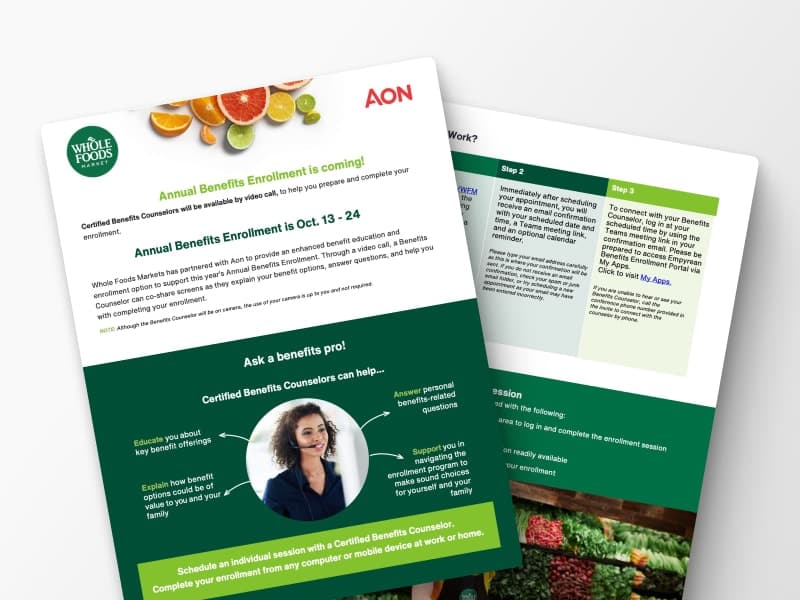
Eligibility for Whole Benefits is determined under the terms of the applicable plan at a person’s date of hire, so the first move is to see what applied when you were brought on. Current job postings list health insurance, retirement plan benefits, paid time off, and access to other benefit programs under Whole Benefits, a clue that the details are plan-specific rather than one-size-fits-all.
Inside Workday or the benefits portal, look for four things: your contribution rate, whether the plan offers a company match, the vesting schedule, and how soon your payroll deductions start. The contribution rate tells you how much of each paycheck is going into the plan. The match, if your plan has one, is the money you do not want to leave unclaimed. Vesting rules tell you when employer dollars become yours to keep.
If you cannot find those details quickly, ask HR for the plan summary and the enrollment deadline.
The cost of waiting is real
Waiting to enroll has a price, even when the amount seems small. Every pay period you sit out is one fewer chance for contributions to go in, for investment returns to build, and for employer money to land in the account if a match is offered. In a grocery operation where schedules can change and hourly pay is the norm, delays are especially expensive because people often intend to start “next check” and then let months slip by.
The IRS framework makes the tradeoff clearer. Traditional pre-tax deferrals reduce taxable income now, while Roth contributions are taxed up front and can be useful if you expect your future tax situation to be different.
Where the emergency savings account fits
Whole Foods points team members toward an emergency savings account, and it solves a different problem than a 401(k). Retirement money is meant for later. Emergency savings is for the broken tire, the medical bill, the rent gap, or the shift cut you did not see coming.
What an HSA can do if your health plan allows it
Whole Foods lists HSA options as available. An HSA, or health savings account, is not just a spending account for a doctor visit today. Used properly, it can be another tax-advantaged bucket that helps employees cover qualified medical costs while preserving flexibility over time.
For workers comparing benefit choices, the HSA matters most when it is paired with a health plan that makes sense for your household. If you expect regular medical expenses, the account can help with those bills. If your health costs are lighter, the account can become part of a broader savings strategy.
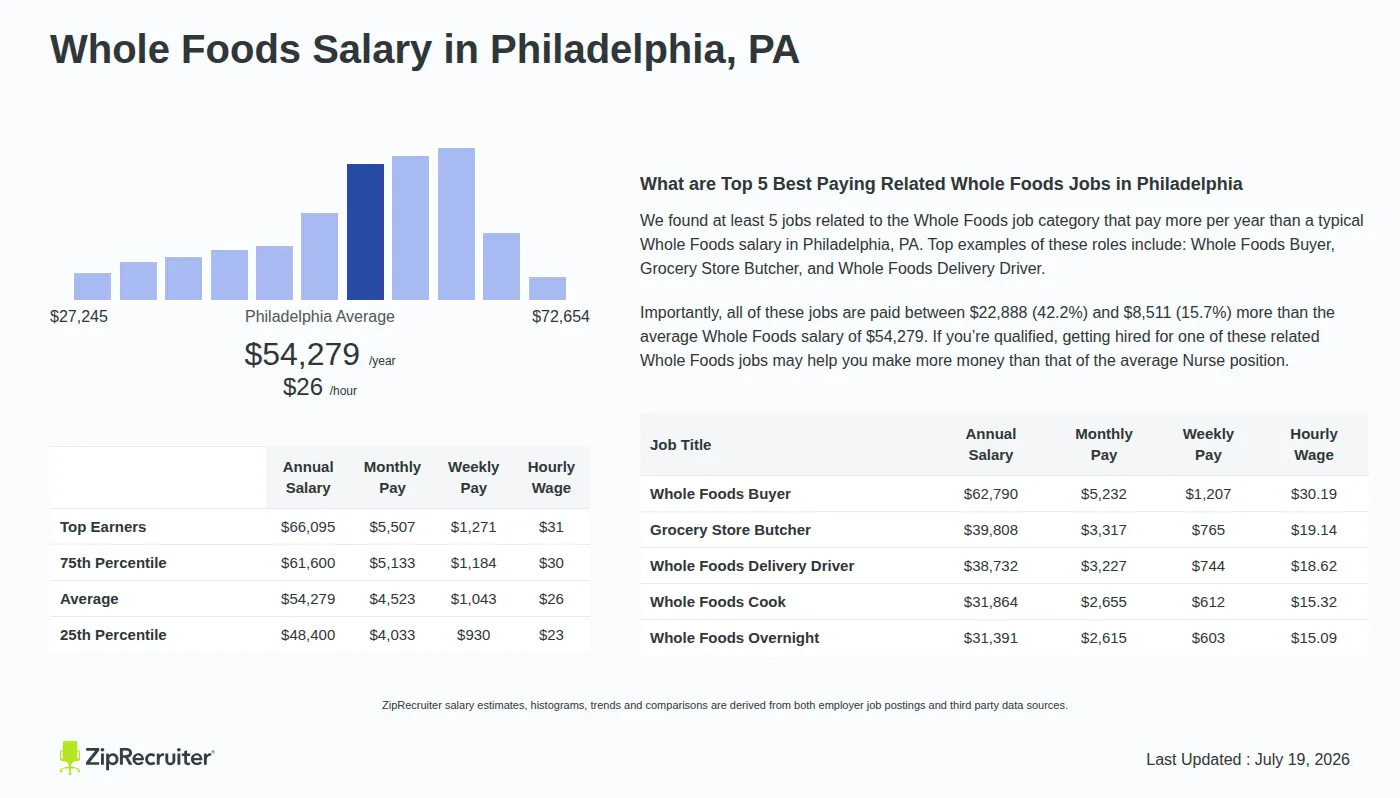
Why the company’s pay history still hangs over the benefits conversation
Whole Foods’ benefits pitch lands in a workplace with a long memory. On November 2, 2006, John Mackey announced that the company’s salary cap would rise from 14 times average pay to 19 times average pay, and a Whole Foods archive page says he cut his own pay to $1 that year.
Two actions worth taking now
1. Open your benefits page in Workday and find your 401(k) election, your emergency savings option, and any HSA enrollment link.
2. Ask HR or your team leader for the plan summary that shows the company match, vesting rules, and the date your contributions start.
This article was produced by Prism’s automated news system from verified source data, official records, and press releases, then run through automated quality and moderation checks before publishing. The system is built and supervised by the people who set the standards it runs under. Read our full AI policy.
Did this article answer your question?