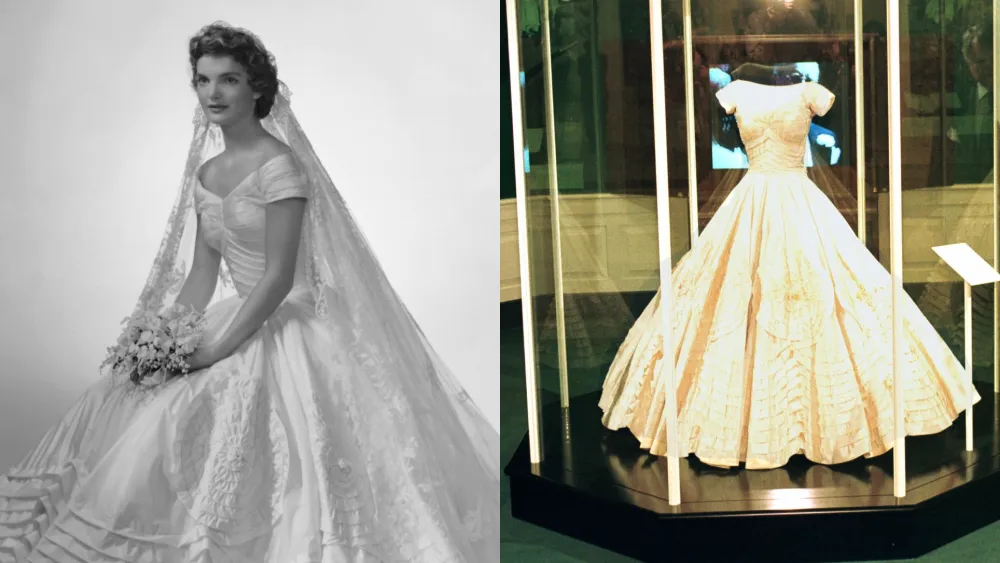
Charles James made bridal gowns into architectural sculpture
Charles James turns the bridal gown into engineering: corseted waists, sculpted volume, and museum-grade construction that still defines modern bridal drama.
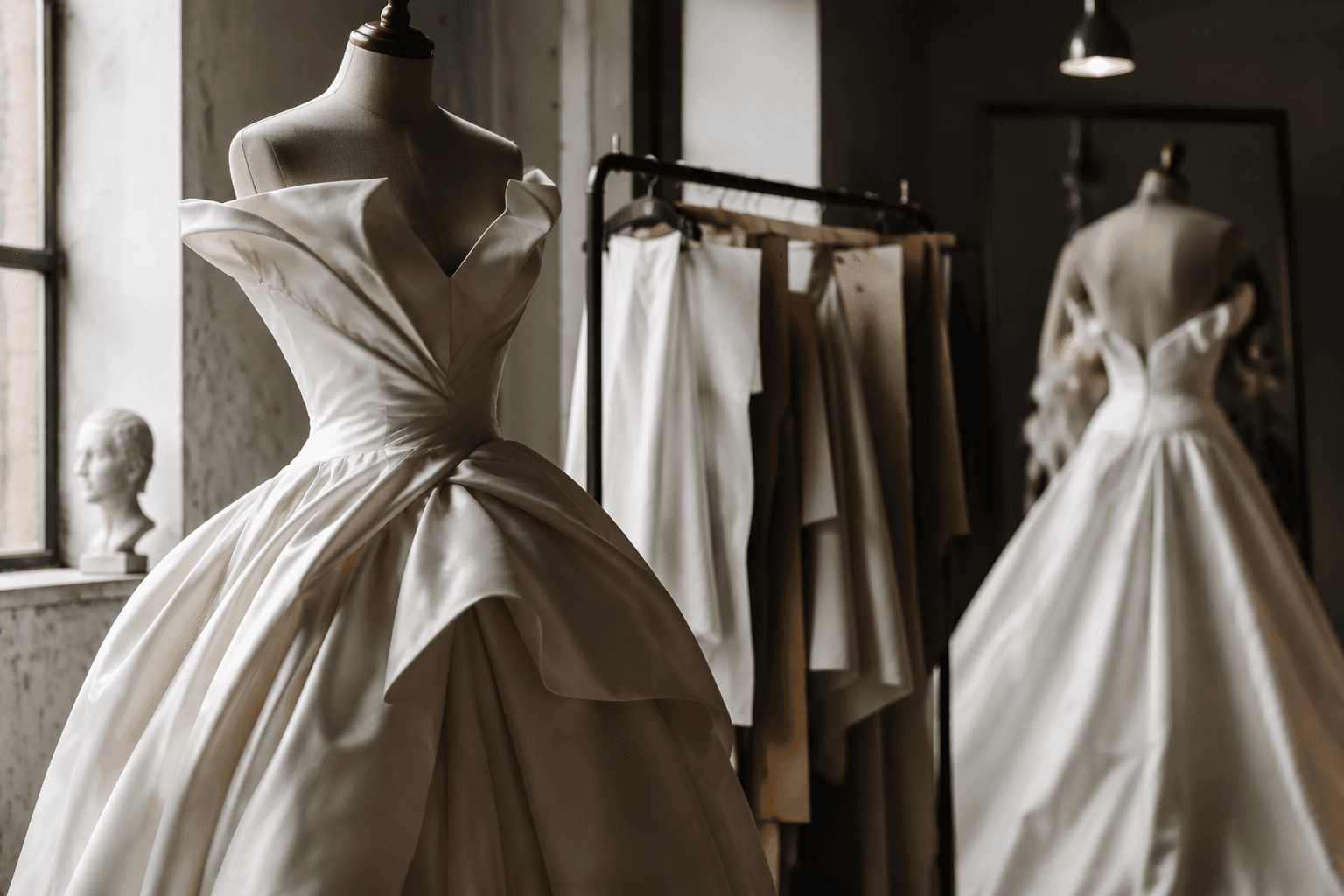
Charles James made bridal dressing feel less like decoration and more like a feat of structure. The Metropolitan Museum of Art calls him an Anglo-American couturier and, in its own words, America’s first couturier, and that framing is exactly why his wedding gowns still read as radical: the silhouette is the point, not the frosting.
The bridal gown starts with the bones
James was born in 1906 and died in 1978, but the clothes look like they were drafted yesterday by someone obsessed with line, weight, and balance. The Met describes him as one of the most original postwar American designers, a man who embraced the New Look silhouette while developing a highly personal aesthetic and technical approach. That combination is the whole lesson for bridal now: take the romance of volume, then control every inch of it.
His wedding dress, in the Met’s collection, gets an almost jewel-like comparison, “a John Singer Sargent pearl” if it were a little less seashell-pink. That single image tells you everything about the way James worked. The gown is soft in tone, but hard in construction, and its sculptural presence comes from the fact that it is engineered to hold shape, not just drape prettily.
What the engineering actually does
Bridal fashion loves to talk about lace, sparkle, and trains because those are the visible flourishes. James makes you look underneath. His gowns depend on internal structure, layered foundation garments, and exacting control of volume, so the body is shaped before the outer fabric even lands. The waist gets defined, the skirt takes on architectural weight, and the whole dress is built to move in a specific way.
That is why his work still feels so current in salons full of corseted bodices, dramatic skirts, and sculpted hips. A Charles James gown does not just sit on the body. It creates a body-language all its own. The Met’s own language around his work points to this too, noting the sculptural presence and highly technical construction of his designs, and describing some of his gowns as having an affinity for biomorphic forms typical of 1950s architectural and decorative arts.
The most useful way to read James is to stop thinking about bridal fashion as surface. He turns the dress into a piece of spatial design. The bride is not only wearing a silhouette; she is entering one.
Why the museum keeps putting him at the center
The Met’s presentation of Charles James: Beyond Fashion ran from May 8 to August 10, 2014, and it was shown in two parts of the museum, the Anna Wintour Costume Center and the first-floor Special Exhibition galleries. That split matters because James was treated as both fashion history and object study, not just a designer with pretty archives. The exhibition included 75 of his notable designs across the two galleries, which is a serious amount of room for a designer whose reputation rests on precision.
The catalogue deepens that picture with 315 illustrations and contributions from Harold Koda, Jan Glier Reeder, Ralph Rucci, Sarah Scaturro, and Glenn Petersen. That roster makes sense for James because his work sits at the intersection of design, conservation, and garment construction. You do not just admire a Charles James piece. You study how it was made, how it was stored, and how it survives.
The museum’s own collection materials make the point even harder. In 2009, the transfer of the Brooklyn Museum costume collection to the Costume Institute created what the Met calls an unrivaled representation of James’s work. James had encouraged clients to donate examples of his designs to the Brooklyn Museum so a working collection could inspire fashion students, which tells you he understood these gowns as teaching tools as much as trophies. His legacy was never only about ceremony. It was about method.
Why his bridal logic still shapes modern taste
James’s wedding gown is a reminder that the best bridal statement is not always the loudest one. Sometimes the power is in proportion, in the exact relationship between waist and skirt, in how a dress catches air, and in whether the structure underneath is disciplined enough to make the surface look effortless. That is the same tension driving the most compelling sculptural bridal gowns now, the ones that feel architectural without looking stiff.
If you are reading a gown like a fashion person, James gives you a better checklist than sparkle ever could:
- Look at the waist first. If it is truly controlled, the rest of the silhouette will have authority.
- Check the volume. A real James-inspired shape does not puff randomly; it is calibrated.
- Notice the foundation. Corsetry, internal boning, and layered underpinnings are where the drama starts.
- Read the dress in motion. James cared about how a gown occupied space, not just how it photographed front-on.
That is why his bridal work still feels relevant in the age of the architectural wedding dress. A good sculptural gown is not just a prettier version of a classic silhouette. It is a structure with emotional force, built so that every seam, curve, and contour lands with intent. Charles James understood that long before bridal fashion made it a trend.
This article was produced by Prism’s automated news system from verified source data, official records, and press releases, then run through automated quality and moderation checks before publishing. The system is built and supervised by the people who set the standards it runs under. Read our full AI policy.
Did this article answer your question?