How Queen Victoria made the white wedding dress a bridal standard
Victoria did not invent bridal white, but her 1840 satin court train turned a privileged choice into a fashion rule. Today, white reads as etiquette, fantasy, or refusal.
Queen Victoria did more than choose a dress in 1840; she turned white into a visual code that still shapes bridal style today. The myth says white has always belonged to weddings, but the history is much sharper: before Victoria, brides wore color, best dresses, and whatever matched their circumstances. What changed was not taste alone but status, ceremony, photography, and the power of a royal image that could be repeated until it looked inevitable.
The wedding that made white legible
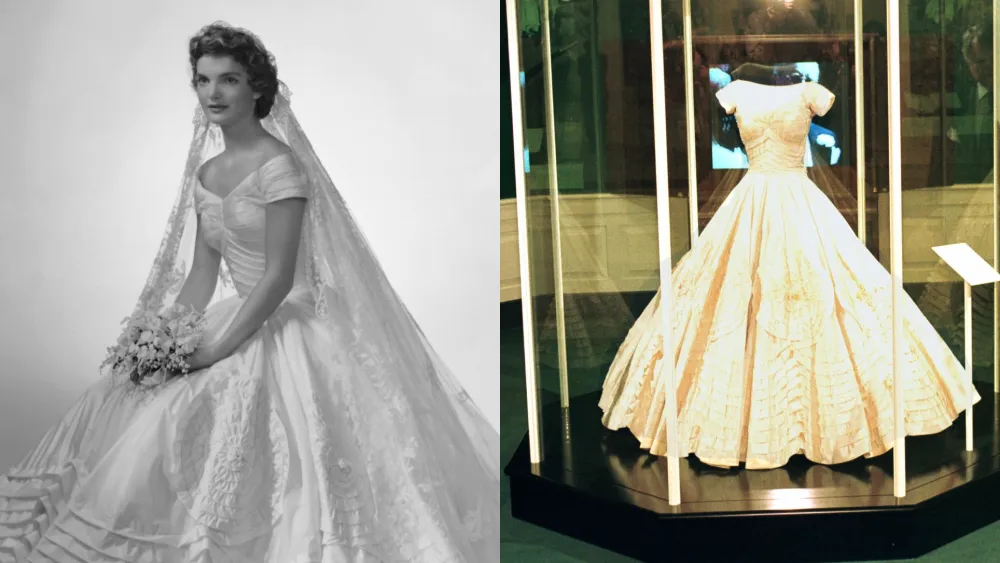
Queen Victoria married Prince Albert on 10 February 1840, and the choice that still echoes through bridal culture was not a plain white gown but a white satin court train bordered with orange blossom. The V&A notes that the orange blossom symbolized virtue and fertility, and that Victoria chose to appear as Albert’s future wife rather than in her role as monarch. That detail matters: the dress was not just pretty, it was a statement about femininity, marriage, and rank.
Fashion history has made that dress a touchstone. Vogue uses Victoria’s wedding as a key reference point for the modern white-gown tradition, the Fashion Institute of Technology’s Fashion History Timeline marks it as a milestone, and Tatler identifies the date with precision. The reason the look stuck is simple enough for fashion to understand and complicated enough for history to explain: royal imagery travels, and a single elegant silhouette can harden into expectation when enough people keep seeing it.
White was never the only bridal language
Before 1840, Western brides wore many colors, and the V&A says colorful wedding dresses persisted for reasons as practical as economics and circumstance, as well as cultural influences and a desire to go against the grain. The Smithsonian Institution notes that brides historically married in white, blue, green, or black depending on preference and situation, which is a useful reminder that bridal style was once far more flexible than the modern aisle suggests. White was one option among many, not the default the industry later made it.
If the white dress feels ancient, Ohio State University offers a deeper origin story: the practice of brides wearing white likely traces back more than 2,000 years to the Roman Republic. That does not mean Victoria invented the color association, only that she gave an old idea a new social stage. Her wedding moved white from a possibility to a symbol with enough prestige to survive far beyond one court portrait.
How a luxury choice became a social standard
White was not only symbolic, it was expensive. A white dress is harder to keep clean than a darker one, which meant the look also signaled access, leisure, and the ability to reserve a garment for one highly staged day. Over time, that kind of maintenance transformed into meaning: purity, formality, and the polished composure that wedding photography loves.
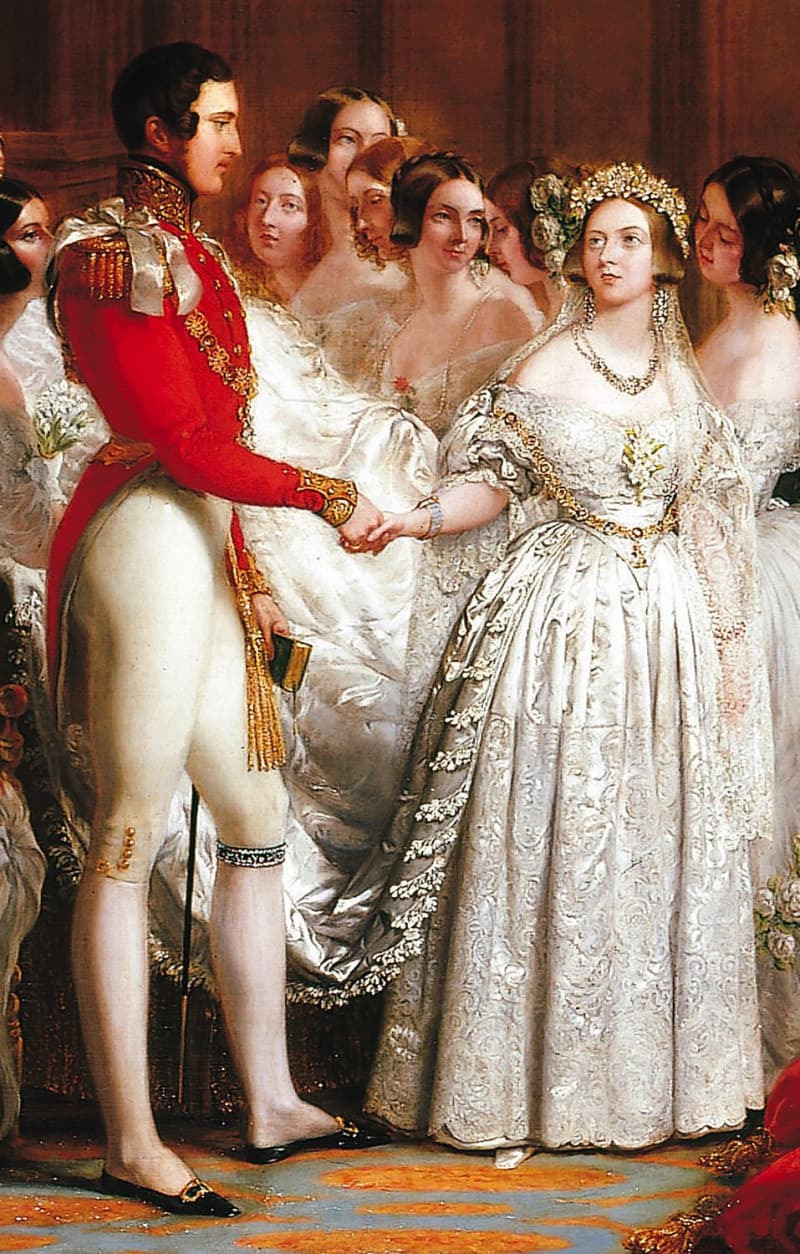
The shift to widespread adoption was slower than the legend. Smithsonian says most people did not broadly embrace white wedding dresses until the 1950s, which means nearly a century passed between Victoria’s ceremony and the look becoming normalized for ordinary brides. Royal weddings helped, celebrity weddings helped, and so did magazine culture and photography, which made one highly readable image travel farther than any handwritten etiquette rule ever could.
White now arrives in shades, not rules
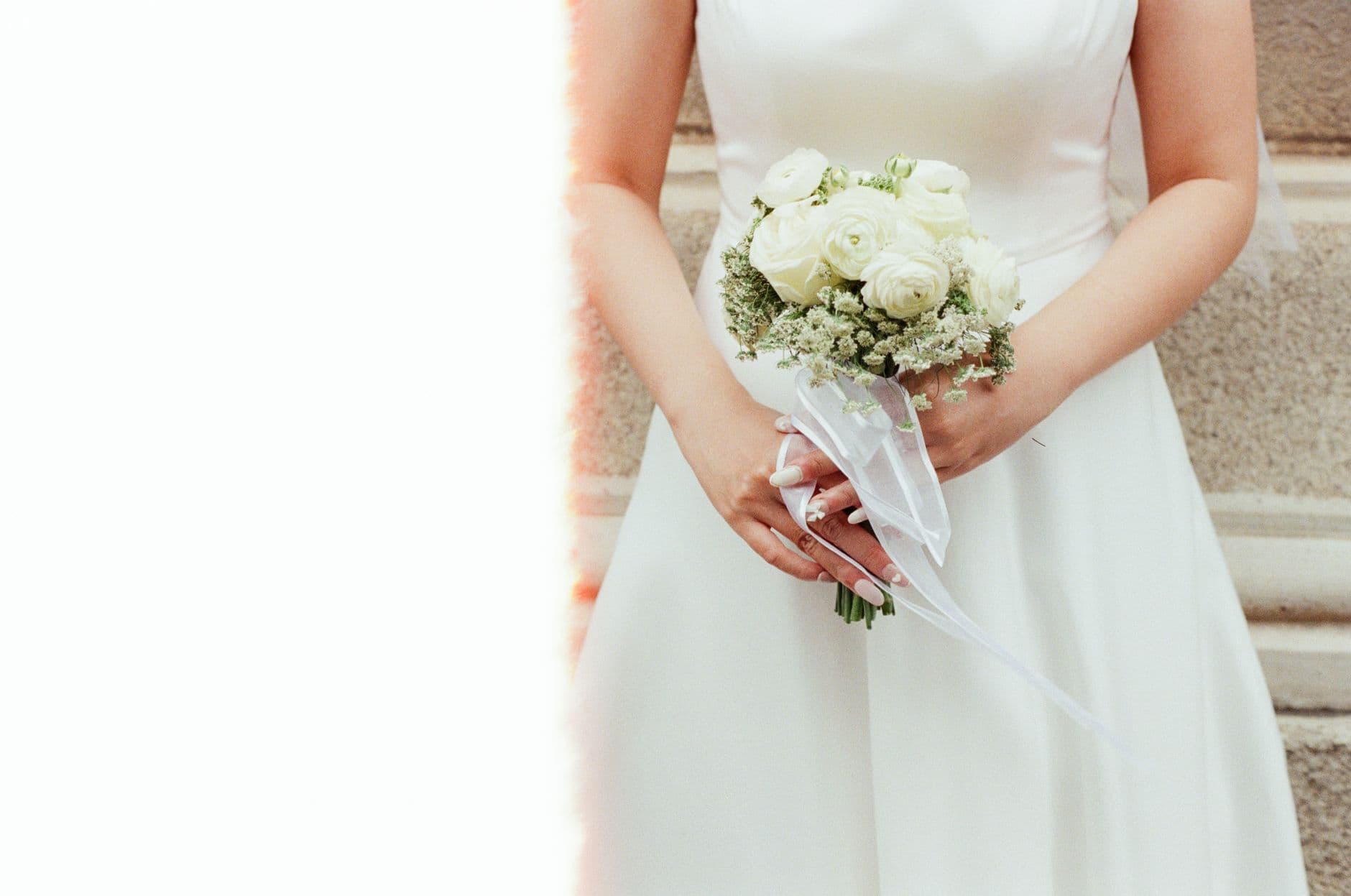
The modern bridal market no longer treats white as one color. Ivory has become the practical favorite in many shops because it reads softer, flatters more skin tones, and photographs beautifully, while true white feels sharper and less common. That distinction matters because bridal white is now less a single mandate than a spectrum of off-whites, from ivory and cream to blush-white, pearl, and the clean brightness of diamond white.
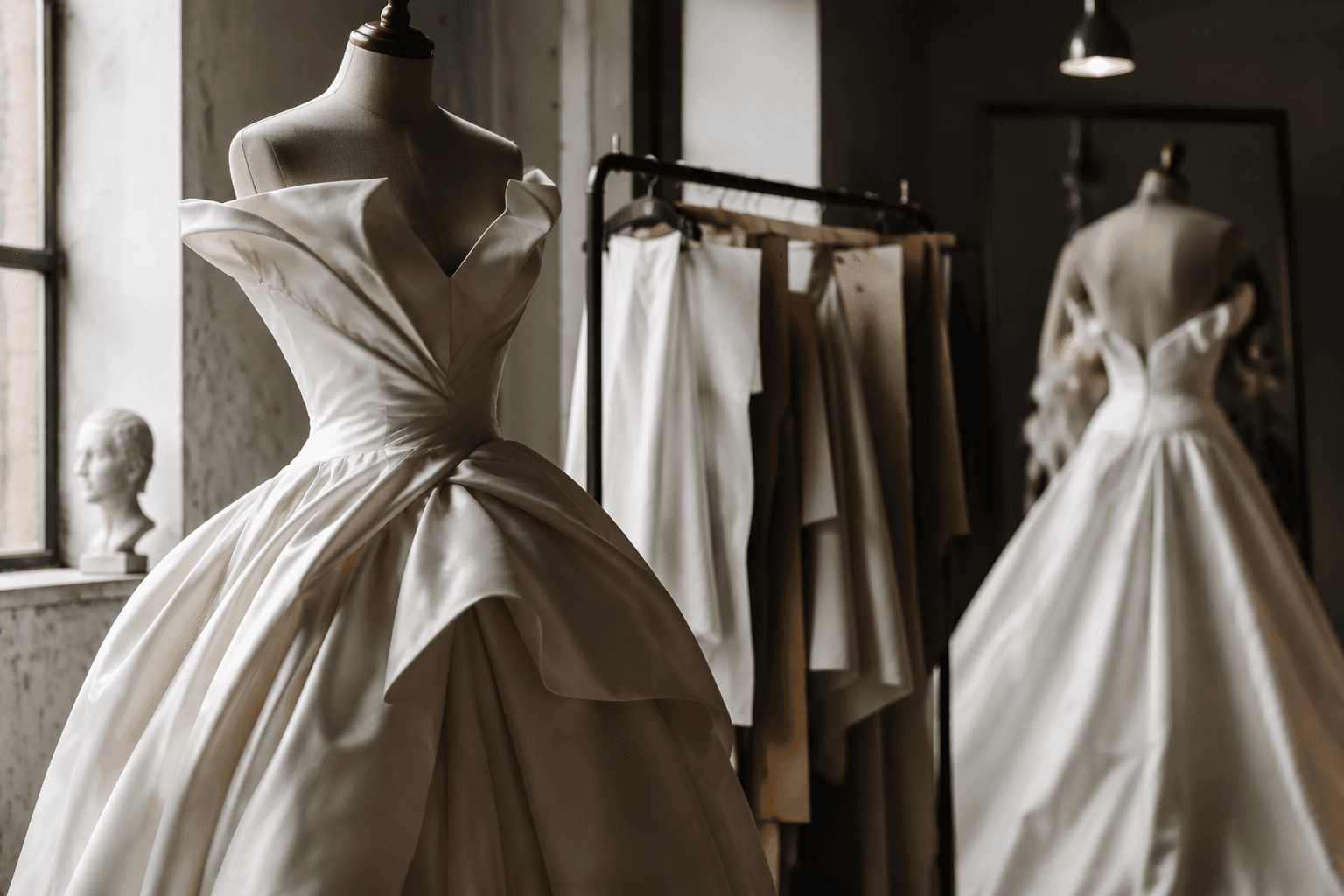
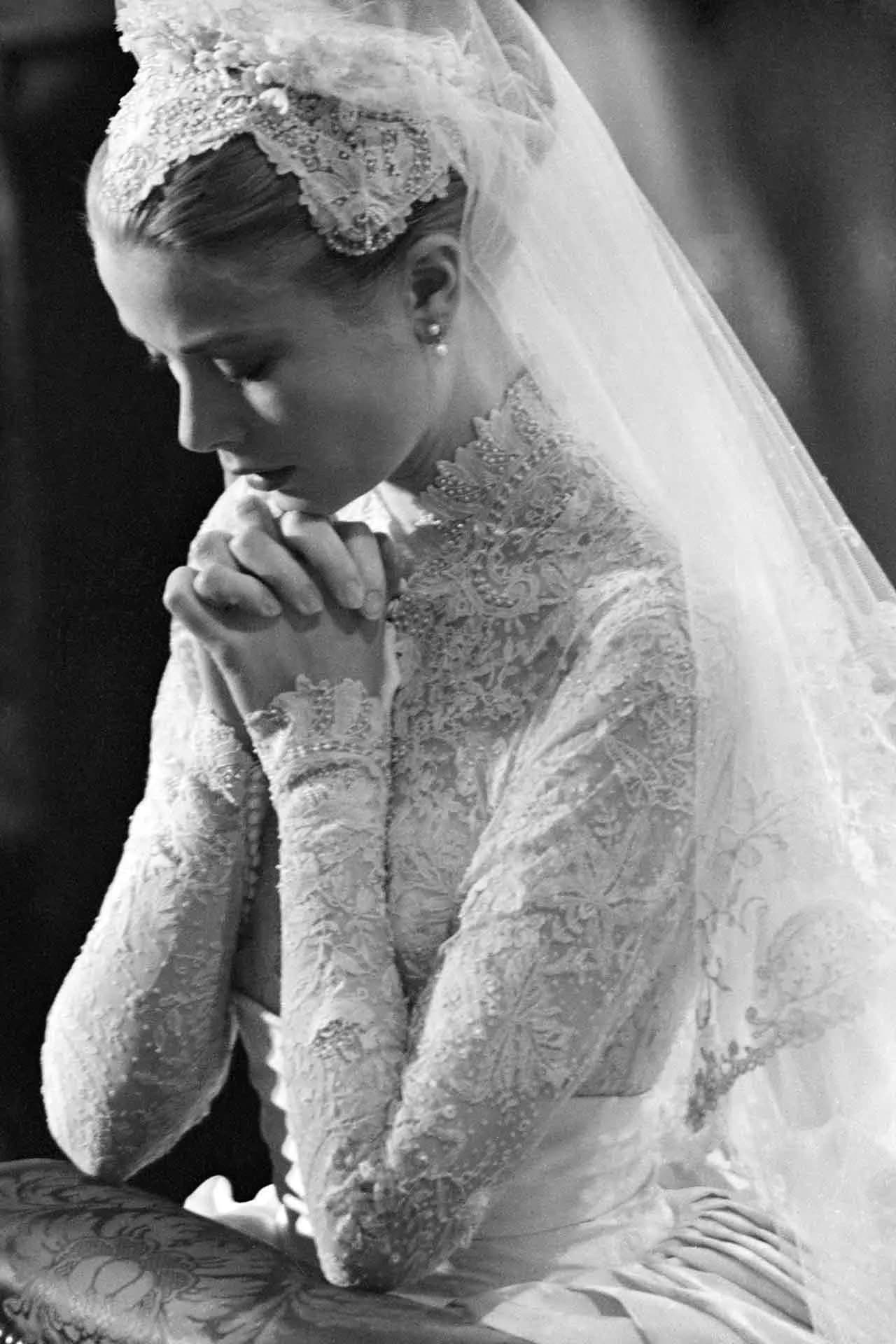
Fabric changes the mood just as much as shade. Satin gives white a formal, reflective finish; lace softens it; tulle makes it float; mikado and crepe sharpen it into something more architectural. If you want the look to feel traditional, satin and a controlled silhouette do the work. If you want it to feel editorial, crepe or mikado with a lean line keeps the color from swallowing the dress in sentimentality.
How to wear white without wearing the myth
The easiest way to modernize white is to treat it like styling, not doctrine. A veil can turn ivory into ceremony, but a heavy veil with a highly polished satin gown can quickly feel overworked; the same dress with pared-back jewelry and a cleaner shoe line looks sharper. Lace and tulle invite softer accessories, while matte fabrics can handle a stronger earring or a more sculpted neckline without tipping into costume.
White also becomes more interesting when you remember what it replaced. Before Victoria, brides wore white, blue, green, and black, and color was common in Western Europe for reasons that had nothing to do with breaking tradition and everything to do with real life. That older flexibility is the real modern lesson: white can still signal etiquette, but it can just as easily become fashion fantasy, and for many brides the most stylish choice is to treat it as optional rather than ordained.
This article was produced by Prism’s automated news system from verified source data, official records, and press releases, then run through automated quality and moderation checks before publishing. The system is built and supervised by the people who set the standards it runs under. Read our full AI policy.
Did this article answer your question?