Embellished dupattas refresh bridal looks, and invite post-wedding reuse
One embellished dupatta can turn a wedding wardrobe into three new looks, from pag phera to a sibling’s sangeet, without buying another full outfit.
The dupatta does the heavy lifting
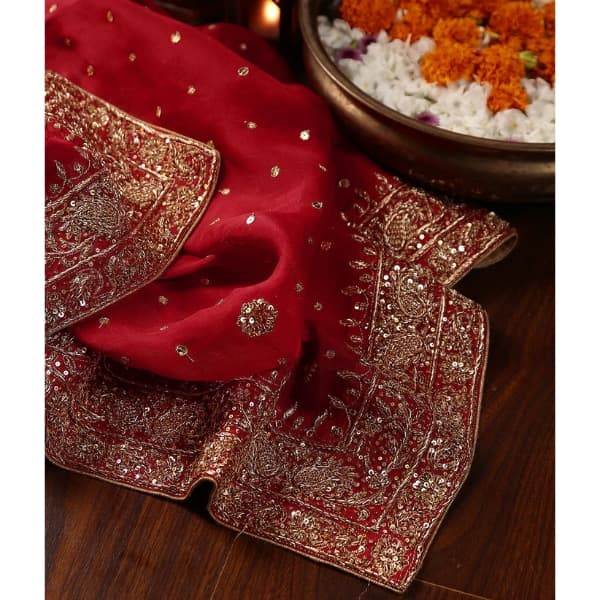
A single embellished dupatta can do the work of a second outfit. In a wedding season projected to bring about 46 lakh ceremonies and roughly 6.5 lakh crore in business, the smartest bridal purchase is often the one that keeps paying off after the baraat has gone home. That is why the most interesting bridal styling right now is not louder lehengas, but smarter layers.
This is also where the mood around bridal dressing has shifted. Fashion coverage has been putting real emphasis on caring for and preserving wedding outfits, while styling guides increasingly treat the dupatta as a flexible tool that can recast a lehenga, sari, kurta, or sharara without replacing the whole ensemble. The result is a more practical kind of glamour, one that feels designed for real calendars, not just one ceremony.
Why one statement layer changes the whole outfit
The genius of an embellished dupatta is that it changes the eye line first. Over a lighter base, it can sharpen the silhouette, add movement, and make a familiar outfit feel newly formal. Over an already ornate lehenga, it can add restraint or a more regionally specific character, especially when the drape itself carries craft weight.
That matters in a market where the numbers are already enormous. WedMeGood’s 2025 annual wedding report, based on more than 2,000 couples and 500-plus wedding professionals, put the average wedding budget at INR 39.5 lakh, with destination weddings averaging INR 58 lakh. When the spend is that high, repeat wear stops looking like compromise and starts looking like intelligence.
For pag phera, choose softness with one clear focal point
Pag phera calls for something that feels reverent, photogenic, and not overworked. A richly embellished dupatta over a familiar lehenga does exactly that, especially if the base outfit is simpler than your wedding look and needs a lift rather than a complete redesign. Think of it as the difference between dressing up and dressing anew.
The best version for this occasion is usually one with a strong border, defined edge, or concentrated embroidery that reads clearly in movement and in family photographs. A lighter lehenga underneath lets the dupatta lead, which makes the look feel intentional rather than recycled. The mood should be polished and warm, with enough sparkle to signal the occasion but not so much that it competes with the emotional setting.
For festive dinners, let the dupatta carry the evening mood
A festive dinner is where a lighter dupatta earns its keep. Pair it with a kurta set or sharara you already own, and the outfit immediately feels dressed for evening without the burden of a full bridal ensemble. This is the simplest way to make a post-wedding wardrobe feel current again, especially if the base piece has been sitting unused because it feels too plain on its own.
For this kind of setting, the most effective dupattas are the ones that bring shimmer without stiffness. A softer net, a fine sequin scatter, or a lightly embroidered panel can change the tone of a solid silk kurta or jewel-toned sharara in an instant. The mood becomes festive, easy, and social, which is exactly why this is a smarter repeat-wear investment than buying an entirely new look for one dinner.
For a sibling’s wedding, lean into heritage and structure
When the occasion gets bigger, the dupatta should feel more architectural. This is where the khada dupatta becomes especially compelling: a stiff, heritage-linked drape associated with gold brocade and Deccani history, rooted in Hyderabad’s bridal vocabulary. Its verticality makes the body look elongated and composed, and its formality can make an existing lehenga or sari feel newly ceremonial.
Nita Mukesh Ambani’s antique gold Manish Malhotra look offered a high-profile homage to that tradition, and it reminded everyone how potent a regional drape can be when it is handled with conviction. The khada dupatta does not merely decorate the outfit; it gives it lineage. For a sibling’s wedding, that kind of presence is more useful than buying another look that only repeats the same silhouette in a different color.
How to choose the right dupatta for the base outfit
The smartest styling starts with the garment you already own, not the fantasy outfit you wish you had. A dupatta should solve a specific problem: too simple, too familiar, too light, too plain, or too bridal to wear again without a reset.
- If your lehenga is heavily worked, choose a dupatta with structure and a strong border rather than all-over competition.
- If your kurta or sharara is minimal, choose sparkle, zari, or dense embroidery so the layer becomes the statement.
- If you want repeat wear beyond the wedding circuit, prioritize a color that can move across occasions, such as antique gold, deep jewel tones, or a neutral that still catches light.
- If the base outfit is soft and fluid, a more structured dupatta can create drama; if the base is already sculptural, a lighter drape keeps the look from feeling heavy.
The essential rule is balance. Too much weight can flatten a softer outfit, while too sheer a dupatta can disappear over a richly worked one. The best embellished dupatta feels like a clever edit, not an afterthought.
Why reuse now feels like the most modern bridal move
The bridal conversation in India is increasingly tied to sustainability and circularity, but it is also about common sense. Vogue India has been among the voices emphasizing both care for wedding outfits and the enduring power of the khada dupatta, while broader Indian fashion coverage keeps returning to the idea that garments should live beyond one night. That is not a limitation on romance. It is a way of respecting craftsmanship, cost, and memory at once.
The point is simple: one strong dupatta can turn a closet of once-worn wedding separates into a rotation of useful, elegant looks. In a season defined by lavish budgets and elaborate celebrations, the most elegant flexibility may be the ability to wear the best part again, and wear it differently.
This article was produced by Prism’s automated news system from verified source data, official records, and press releases, then run through automated quality and moderation checks before publishing. The system is built and supervised by the people who set the standards it runs under. Read our full AI policy.
Did this article answer your question?