Ruffles, corsetry, and sage green reshape Indian bridal style
Indian bridal style is getting softer, smarter, and easier to wear. Ruffles, corsetry, sage green, and ivory are now about movement, support, and better photos, not just drama.
The new bridal brief
The smartest Indian bridal looks right now are not shouting. They are sculpting, softening, and moving with the bride, which is exactly why ruffles, corsetry, sage green, and ivory have taken over the mood board. Across the bridal conversation, from Sharmi Adhikary and Rumela Sen to Danielle Veitch, Tarun Tahiliani, Amitabh Malhotra, Ridhi Mehra, Abhishek Sharma and Vani Vats, the same question keeps coming up: how do you make a bride look unforgettable without trapping her in her outfit?
That is the real shift. WeddingWire India’s 2026 forecast points to quiet luxury and emotional storytelling, with pastel romance and corset blouses sitting right at the center of the look. The fantasy is less about spectacle for its own sake and more about clothes that feel intentional, photograph beautifully, and survive a long day of ceremony, applause, and dancing. Even the wider decor mood, with its Rococo revival and goddess-core energy, is leaning into romance with a little restraint.
Ruffles are back, but they are behaving
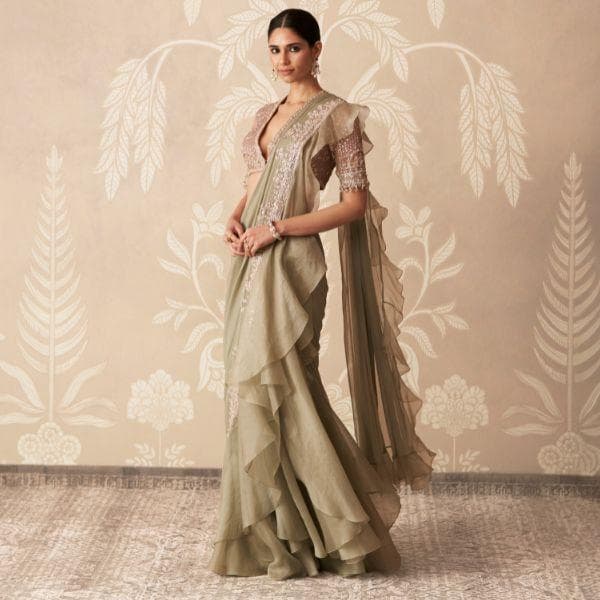
Ruffles are the easiest way to add romance without reaching for heavy embellishment. Brides Today treats them less like froth and more like structure with movement, which is exactly how they should be used. A ruffled hem catches light, sways on camera, and gives a lehenga a sense of motion that looks expensive instead of busy.
They flatter brides who want softness around the body, especially if the silhouette is otherwise clean. If your frame is narrow, straight, or athletic, ruffles can create curve and visual volume where you want it. If you are petite, keep the ruffles lower on the skirt or concentrated at the dupatta edge so the outfit does not swallow you whole.
Use them where movement matters most. Mehendi, sangeet, and cocktail hours are where ruffles earn their keep because they look alive in motion and read beautifully in photos. The trick is to let one area do the talking, not every seam at once.
- Best for: brides who want romance, movement, and softer lines
- Best ceremonies: mehendi, sangeet, cocktail, welcome dinner
- Best intensity: a ruffled dupatta border, a single layered hem, or a full sculptural skirt if you want drama
Corsetry is the sharpest thing happening in bridalwear
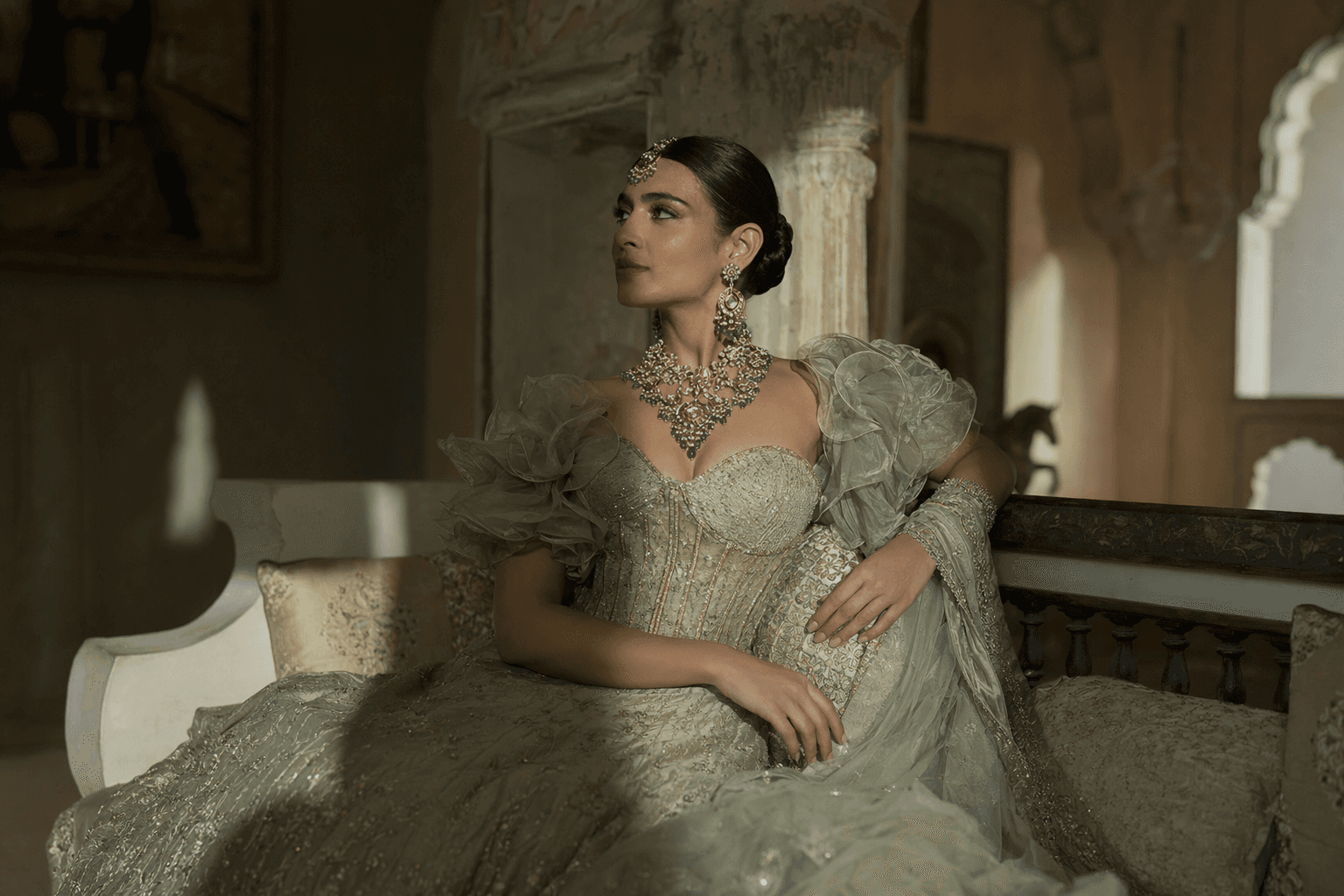
Corsetry is not a costume move anymore. WeddingWire India calls the corset blouse an Indian fashion concept inspired by a Victorian-era European silhouette, and that is exactly why it works now: it gives shape, support, and attitude without feeling like borrowed theater. Brides Today’s Banarasi corsets pushed the idea even further, turning heritage weaving into a modern bridal statement that still respects the craft.
This is the trend for brides who want their blouse to do real work. A corset-inspired fit flatters the waist, anchors heavier skirts, and gives the upper body enough structure that the bride does not spend the night adjusting straps or tugging at a neckline. Devangi Nishar Parekh has said that bridal fashion has shifted "from predictability to personalisation," with brides prioritizing flattering fits, individuality, sustainability, and wearable design, and corset-inspired blouses fit that brief almost too well.
The key is not stiffness. A good corset blouse should hold you, not armor you. Think structured blouses, elongated cholis, and clean side lines, the kind of shape that lets you sit, stand, and dance without losing the silhouette.
- Best for: brides who want definition, lift, and a polished waistline
- Best ceremonies: reception, engagement, pheras if the construction is flexible, and any evening event where the blouse needs to anchor the look
- Best intensity: corset-inspired paneling for a subtle read, or a fully corseted reception lehenga when you want the blouse to be the headline
Sage green and ivory are the color reset brides actually need
Sage green is the quieter flex of the season. Brides Today calls it a go-to bridal hue because it lets embroidery and craftsmanship stand out instead of competing with a loud base, and that matters for brides who care about handwork as much as color. It also makes sense for destination weddings, where cooler tones sit naturally against water, trees, stone, and sky.
Ivory is the other big move, and it has more edge than people expect. Tied to Pantone’s 2026 "Cloud Dancer," it shifts white-toned bridalwear away from plain minimalism and toward architecture, where structure, texture, and embroidery become the real decoration. If sage green says fresh, ivory says composed.
Together, these colors explain why cooler palettes are winning. They photograph cleanly, they feel calmer in daylight, and they allow the work of the outfit to show up. For brides who are tired of being drowned in red or gold, this is the release valve.
- Best for: brides who want elegance without heaviness
- Best ceremonies: daytime mehendi, garden pheras, destination weddings, intimate civil or registry celebrations, and refined receptions
- Best intensity: sage as a full look if you want a softer statement, ivory if you want structure and embroidery to lead
How to wear the trend without overcommitting
The smartest way to shop this mood is by ceremony, not by category. A bride does not need to wear full corsetry and full ruffles at every event. Pick one hero element and let the rest breathe. That is how these looks stay modern instead of turning into costume.
For mehendi, a sage green lehenga with a light ruffled hem or a delicately structured blouse keeps the mood fresh and easy. For sangeet, corsetry gives you support while you move, and a skirt with enough swing makes the night feel kinetic rather than precious. For the wedding ceremony, ivory is the cleanest canvas if you want embroidery and construction to read as the luxury. For the reception, this is where the fully corseted lehenga earns its place, especially if you want a sharper, more sculpted finish.
Devangi Nishar Parekh’s point about wearability is the one to keep in mind. Brides want flattering fits, individuality, sustainability, and clothes that do not fight the body, and that is why this trend cluster has legs. It is not about looking softer or more romantic for the sake of it. It is about building a bridal wardrobe that can carry the actual day, from first ritual to last dance, without losing its shape or its nerve.
That is the real promise of this season: Indian bridal fashion is finally dressing the bride for her life inside the wedding, not just her entrance.
This article was produced by Prism’s automated news system from verified source data, official records, and press releases, then run through automated quality and moderation checks before publishing. The system is built and supervised by the people who set the standards it runs under. Read our full AI policy.
Did this article answer your question?