Wedding Guest Style Beyond Dresses, Suits, Trousers, and Statement Looks
When a dress feels too expected, the smartest guest moves are tailoring, fluid trousers, and sculptural separates that respect the dress code.
The case for skipping the dress
The easiest way to look polished at a wedding is not always a dress. Sometimes the smarter move is a sharp suit, a pair of silk trousers, or a set that feels more deliberate than another floral midi floating through the room. The newest wedding-guest conversation is making room for clothes with structure and personality, and that shift matters because dressing well now means balancing the couple’s dress code, your own comfort, and the reality that a good outfit should do more than survive one ceremony.
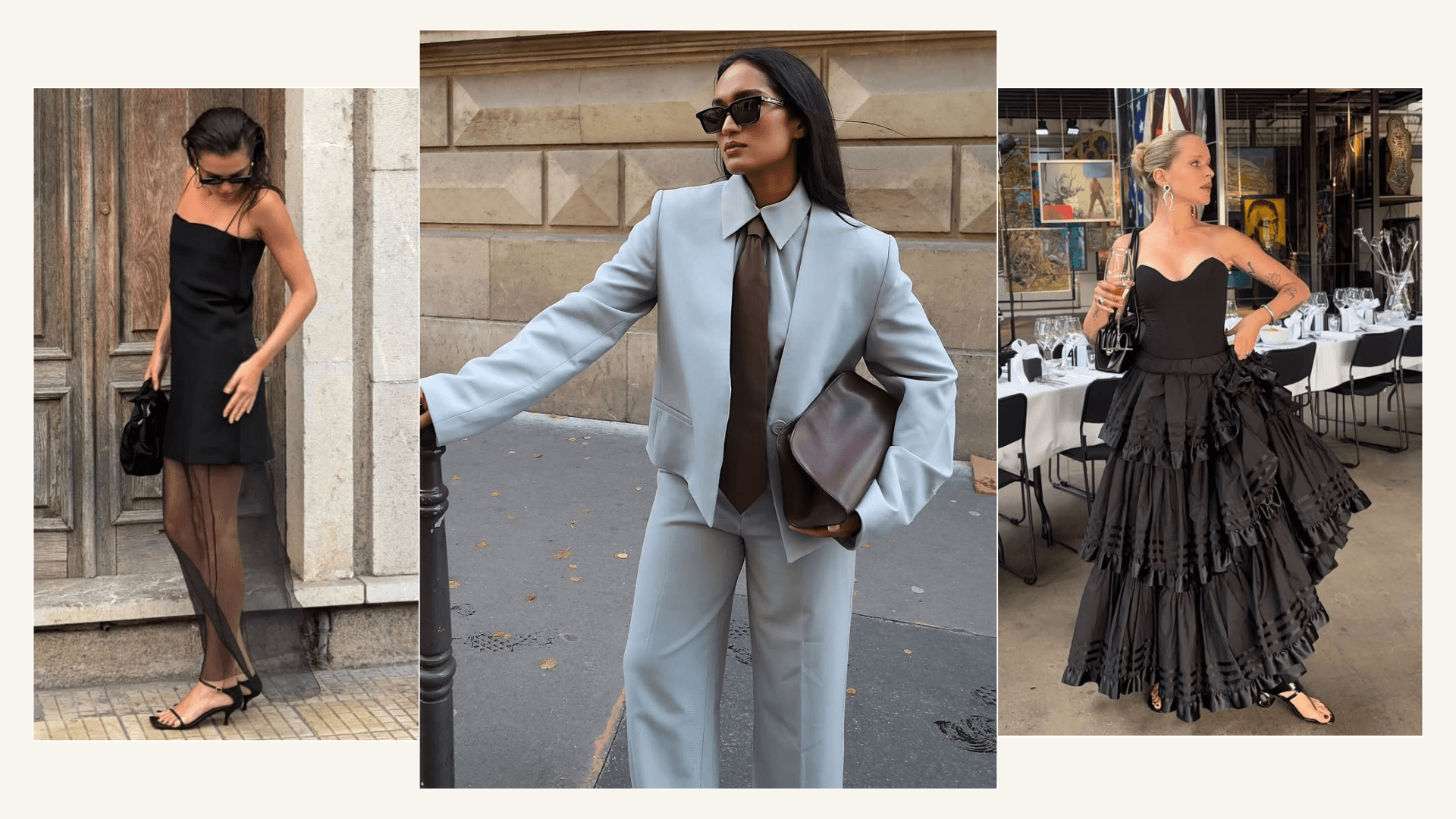
Who What Wear’s latest alternative guest edit leans into that exact idea, moving beyond floral dresses and into power suits, statement black dresses, silk trousers, blazers, scarf dresses, two-piece sets, sheer skirts, and bubble-hem tops. It is a useful signal: the modern wedding guest wardrobe is no longer built around one safe silhouette. It is built around options that can flex from ceremony to reception without looking like an afterthought.
When a suit is the right answer
A suit is the cleanest solution when a dress would feel either too fussy or too exposed for the venue. Marie Claire has tied women’s suiting to a broader shift in how people think about businesswear and personal style, and that same energy now reads beautifully at weddings, especially when the tailoring is softened with satin, a fluid drape, or a lean, slightly oversized cut. Oversized suits are also part of 2026’s top fashion directions, which makes the look feel current rather than borrowed from the office.
Choose a suit when you want polish without cliché, or when you prefer clothes that create a strong shoulder line and a longer, uninterrupted shape through the body. It is especially smart for city weddings, cool-weather celebrations, and evening events where the dress code calls for formality but not necessarily a gown. If you want the look to feel festive, swap the expected white shirt for a silk cami, a lace shell, or a tonal top with a little shine.
What to wear with a suit
• A sculptural heel or pointed slingback keeps the look elegant • A satin or silk top makes tailoring feel wedding-appropriate • Jewelry should be intentional, not heavy, because the suit already does the work
Silk trousers and blazers for guests who want ease
If a full suit feels too structured, silk trousers are the graceful middle ground. They move beautifully, skim the body instead of clinging to it, and look especially refined with a matching blazer or a sharp, minimalist top. This is the kind of outfit that suits guests who want coverage without stiffness, and who like clothes that will not fight them across a long dinner, a crowded dance floor, and a late-night exit.
The Knot is clear that women can absolutely wear pants to a wedding, as long as the look fits the dress code and feels respectful of the occasion. That opens the door to tailored trousers, relaxed but polished wide legs, and formal separates that can read more evening than office depending on the fabric. If the invitation says formal, pants can sit neatly between cocktail polish and black-tie grandeur.
Best pant silhouettes for weddings
• Fluid wide-leg silk trousers for movement and ease • Tailored ankle-length pants for a sharper, modern line • A coordinated blazer for ceremonies where you want structure from shoulder to hem
Black dresses, but make them sharp
A black dress still has power, but the new version is less about default and more about silhouette. Who What Wear’s edit points to statement black dresses, including sleek options paired with sheer skirts, which is exactly how to keep black from feeling flat. The key is texture: chiffon over a lining, a glossy finish, or a cut that introduces movement.
This is where black works best for guests who want a reliable base that can be styled up or down. It is also a useful choice when you want something slimming without feeling body-conscious, since clean black lines can create length and visual calm. The important detail is that black should look intentional, not like you grabbed the nearest cocktail dress and hoped for the best.
The Knot also notes that black-tie does not require a black dress specifically, which gives guests permission to wear color at formal events without breaking etiquette. That matters because the best formal looks often feel more alive in jewel tones, metallics, or deep saturated shades than in a strict blackout palette.
Scarf dresses, two-piece sets, and the new softness
For guests who want something more fashion-forward than a standard dress but less severe than suiting, scarf dresses and two-piece sets are the sweet spot. A scarf dress brings motion around the neck or shoulder and can make the entire outfit feel editorial with very little effort. Two-piece sets, meanwhile, solve a common guest problem: they create the polish of a dress while giving you a little freedom in shape and proportion.
These options are especially strong for summer weddings, destination ceremonies, and events where you want to feel dressed up without being locked into one rigid silhouette. They also help if you prefer to show a bit of skin in controlled ways. A cropped top with a high-waisted skirt or tailored separate can feel more balanced than a fitted mini or bodycon dress.
Choose these when you want:
• A look that feels more personal than a standard cocktail dress • Flexibility across ceremony, cocktails, and dancing • A silhouette that lets you emphasize waist, shoulder, or leg without overexposing all three at once
Sheer skirts and bubble-hem tops for a little drama
Sheer skirts and bubble-hem tops are for the guest who wants fashion interest, not just correctness. Sheer layers can soften a structured outfit and add dimension without requiring loud prints or heavy embellishment. Bubble hems, meanwhile, bring volume in a way that feels playful and architectural, especially when balanced with a fitted waistband or a slim shoe.
These pieces are best when the invitation leaves room for style experimentation, or when you are attending a wedding where the crowd tends to dress with a bit of personality. The trick is proportion. If the skirt is sheer and floating, keep the top simple. If the top is bubble-shaped, let the bottom half stay lean and clean so the outfit does not tip into costume.
The dress-code map still matters
A strong outfit only works if it respects the setting. The Knot’s dress-code guidance is useful because it reminds guests that formal attire sits between cocktail and black tie, while black-tie optional means you can choose black-tie dressing or formal attire such as a suit or long dress. That clarity makes non-dress options easier to navigate, because the question is not whether pants or tailoring are allowed. The question is whether they match the tone of the event.
For black-tie weddings, The Knot says women can wear a formal jumpsuit or women’s tuxedo, and a floor-length evening gown is still appropriate, especially in darker colors or richer fabrics. That is a helpful nudge for anyone who thinks black-tie means one very specific dress formula. It does not. It means refined, elevated, and deliberate.
Why this shift feels so current
The broader fashion picture explains why this wedding-guest turn is happening now. Women’s tailoring has been on a steady rise, and 2025 to 2026 coverage has kept suits, blazers, trousers, and oversized tailoring firmly in view. At the same time, Who What Wear’s wedding-guest trend coverage points to icy pink, Bambi-inspired prints, peep-toe shoes, and the growing role of rental fashion, all signs that guests want pieces with novelty, not sameness.
That rental shift matters. It reflects a real change in how people dress for one-day events: they want repeat wear potential, but they also want the pleasure of looking unmistakably current. A wedding guest outfit now has to do two jobs at once. It should feel respectful in the room and useful in the wardrobe afterward.
The smartest non-dress choice, then, is not about rebellion. It is about precision. Whether you reach for a power suit, silk trousers, a scarf dress, or a sheer-layered set, the point is the same: choose the silhouette that makes you feel composed, dressed for the room, and still entirely yourself.
This article was produced by Prism’s automated news system from verified source data, official records, and press releases, then run through automated quality and moderation checks before publishing. The system is built and supervised by the people who set the standards it runs under. Read our full AI policy.
Did this article answer your question?