Petite wedding-guest dresses that flatter shorter frames beautifully
Petite wedding guest dressing is mostly about proportion: raised waists, shorter hems and sharper necklines keep shorter frames looking long and balanced.
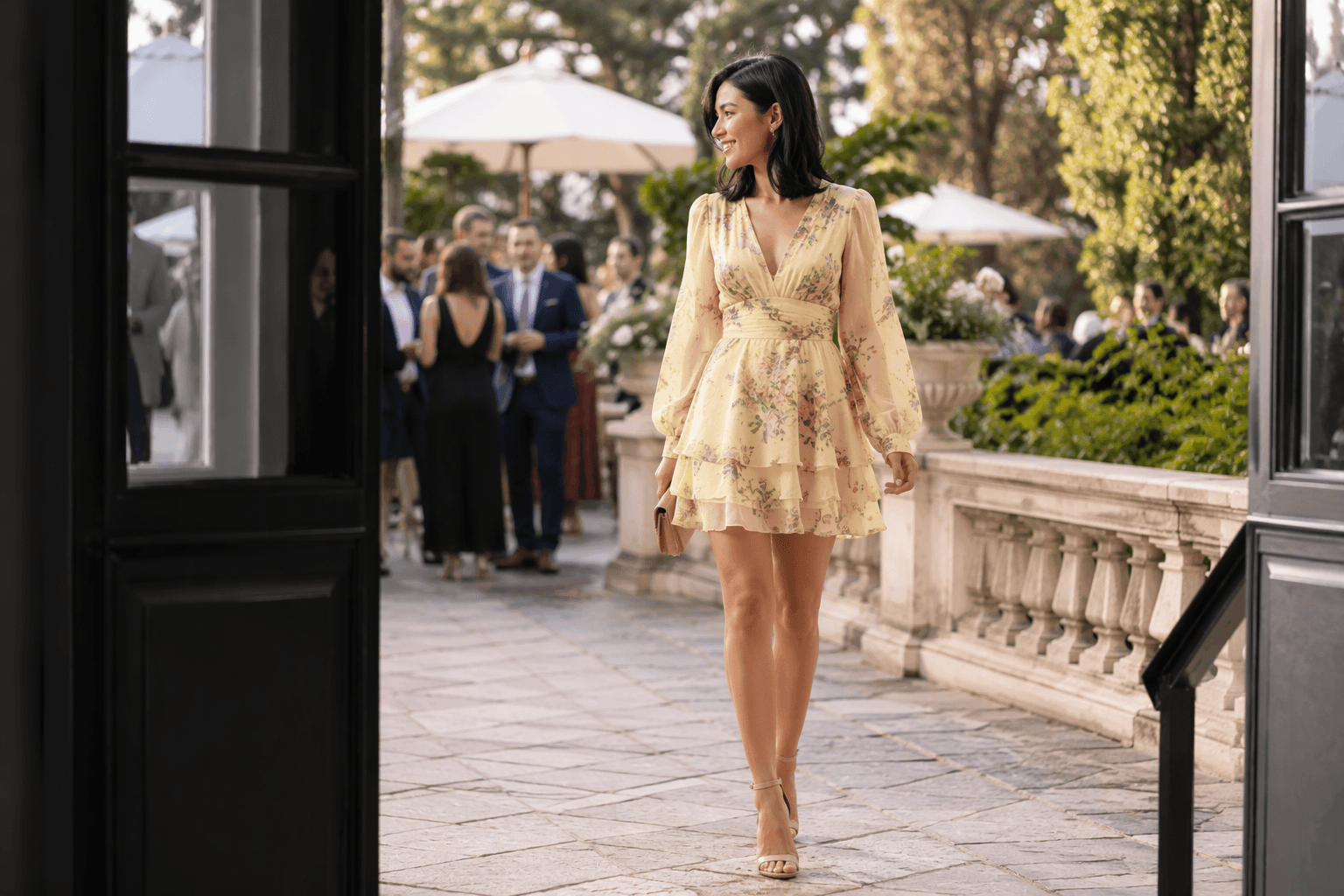
At 5'2", Malia Griggs knows the wrong hem, a low waist, or too much fabric can swallow a shorter frame before the color or print even gets a chance to register. She treats occasion dressing as a fit problem first, then a style question, which is exactly how petite women shop when a ceremony, cocktail hour, or summer reception is on the calendar.
What petite really means
Petite sizing is not simply smaller sizing. Stitch Fix and Nordstrom both define petite as tailoring for women 5'4" and under. Macy's frames the category as a fit-and-proportion issue rather than a scaled-down version of standard clothing. Lands’ End’s petite guide defines petite pieces as designed for a smaller frame with a shorter height.
The average adult female height in the United States is roughly 5'3.5" to 5'4.3". That overlap leaves many women with the same frustrations: hems brushing the floor, waist seams landing too low, straps that sit awkwardly, and silhouettes that look elegant on a hanger but heavy once they meet a shorter body.
The details that change everything
The most flattering petite wedding-guest dresses get the architecture right. Griggs, Azazie, Jovani, and other style resources focus on the same variables: the right length, waistline placement, and overall proportion can create a longer line without looking forced.
A raised waist is one of the easiest tricks, because it visually resets the body at a higher point and keeps the skirt from starting too low. Jovani’s petite formal gown guide points to A-line and fitted column silhouettes, both of which work because they skim rather than overwhelm. A V neckline helps for the same reason: it opens the chest and draws the eye vertically, which is far more flattering than a heavy, closed neckline that chops the frame in half.
Hem length is just as important. Adrianna Papell’s petite wedding-guest guide highlights ankle-length dresses, a smart choice because that length can look polished without dragging the eye downward. On a shorter body, a hem that stops cleanly above the ankle or at the slimmest part of the leg reads intentional; a hem that lands a few inches too low starts to look borrowed.
Silhouettes that work for weddings, not just photos
For petite wedding guests, the most reliable silhouettes are the ones that create shape without excess volume. A-line dresses flare from a more contained waist, so they give movement without adding bulk. Fit-and-flare styles do something similar, but with a bit more waist emphasis, which can be especially useful for a shower brunch or a daytime reception where you want ease with polish.
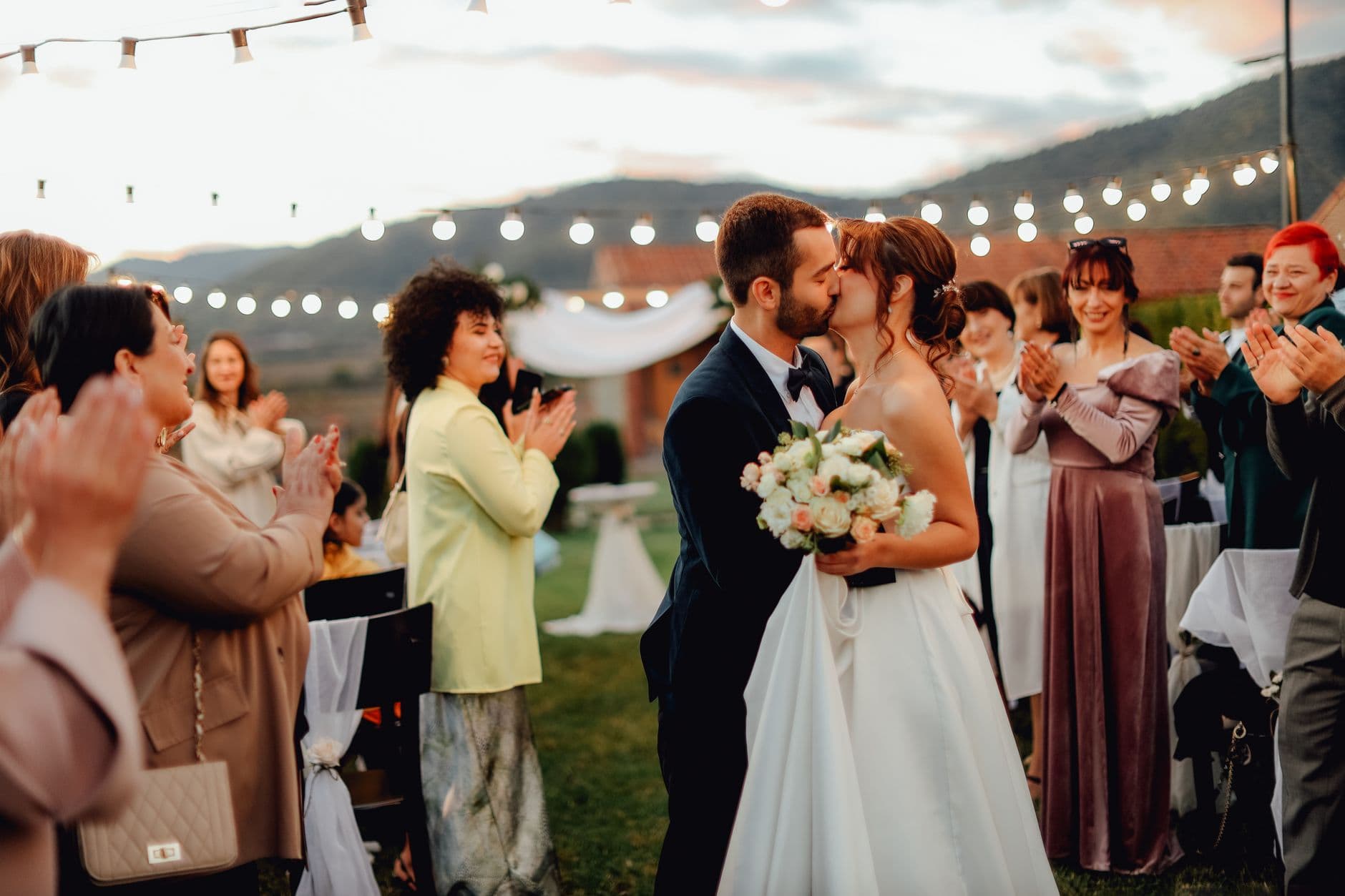
Column dresses can work beautifully too, especially when they are cut close to the body and not overloaded with ruffles or dense embellishment. Jovani also emphasizes fitted column silhouettes: a narrow, vertical shape reads lengthening on a shorter frame, especially when the fabric has enough structure to fall cleanly. Wrap dresses belong in the same conversation because the diagonal closure and defined waist create shape fast, without requiring elaborate tailoring.
Print scale matters as much as silhouette. Smaller or more controlled prints tend to sit better on petite proportions, because oversized florals or scattered patterning can overtake the body. The same is true of embellishment: a little sparkle or lace at the neckline feels deliberate, while ornament spread across the entire dress can make the garment look busier than it is flattering.
Why the right waist and strap placement matter so much
In petite dressing, the waistline is the point of no return. If it sits too low, the dress visually stretches the torso and compresses the legs, which is the opposite of what you want on a shorter frame. If it sits higher or is cut to hit at the smallest part of the body, the eye reads cleaner proportions immediately.
Strap width deserves equal attention. Too-wide straps can crowd a narrow shoulder and make the bodice look heavy, while very thin straps can feel delicate in a way that suits a slip dress or streamlined cocktail dress. The trick is balance: enough structure to support the silhouette, but not so much fabric up top that the dress starts wearing you.
That is why a simple slip dress can be surprisingly useful in the petite category. Griggs’ guide includes one priced at $30. If the cut is right and the proportions are disciplined, even a minimal silhouette can look polished enough for a rehearsal dinner or a courthouse ceremony.
Where these dresses fit in real wedding-season life
Shorter women need wedding-guest options that can move between settings without constant alteration anxiety. A raised-waist A-line dress feels right for a bridal shower or a garden lunch because it looks composed without being rigid. A fitted column or wrap dress can carry a cocktail hour because it keeps the line long and the body defined. An ankle-length style can work for a more formal evening event when the fabric is fluid and the hem is placed with precision.
The most useful wardrobe test is not whether the dress looks beautiful on a mannequin. It is whether it still looks intentional when you sit down, walk across a patio, or stand in a reception line. Petite-friendly design answers that test with details: hems that stop where they should, waistlines that land in the right place, and silhouettes that elongate instead of overwhelm.
This article was produced by Prism’s automated news system from verified source data, official records, and press releases, then run through automated quality and moderation checks before publishing. The system is built and supervised by the people who set the standards it runs under. Read our full AI policy.
Did this article answer your question?