Vintage Bridal Gains Momentum at Happy Isles, Where Modern Brides Find Nostalgia
Vintage bridal is where sustainability and style finally agree, and Happy Isles turns pre-owned gowns into the most convincing aisle choice.
Vintage bridal is having its cleanest, most persuasive moment
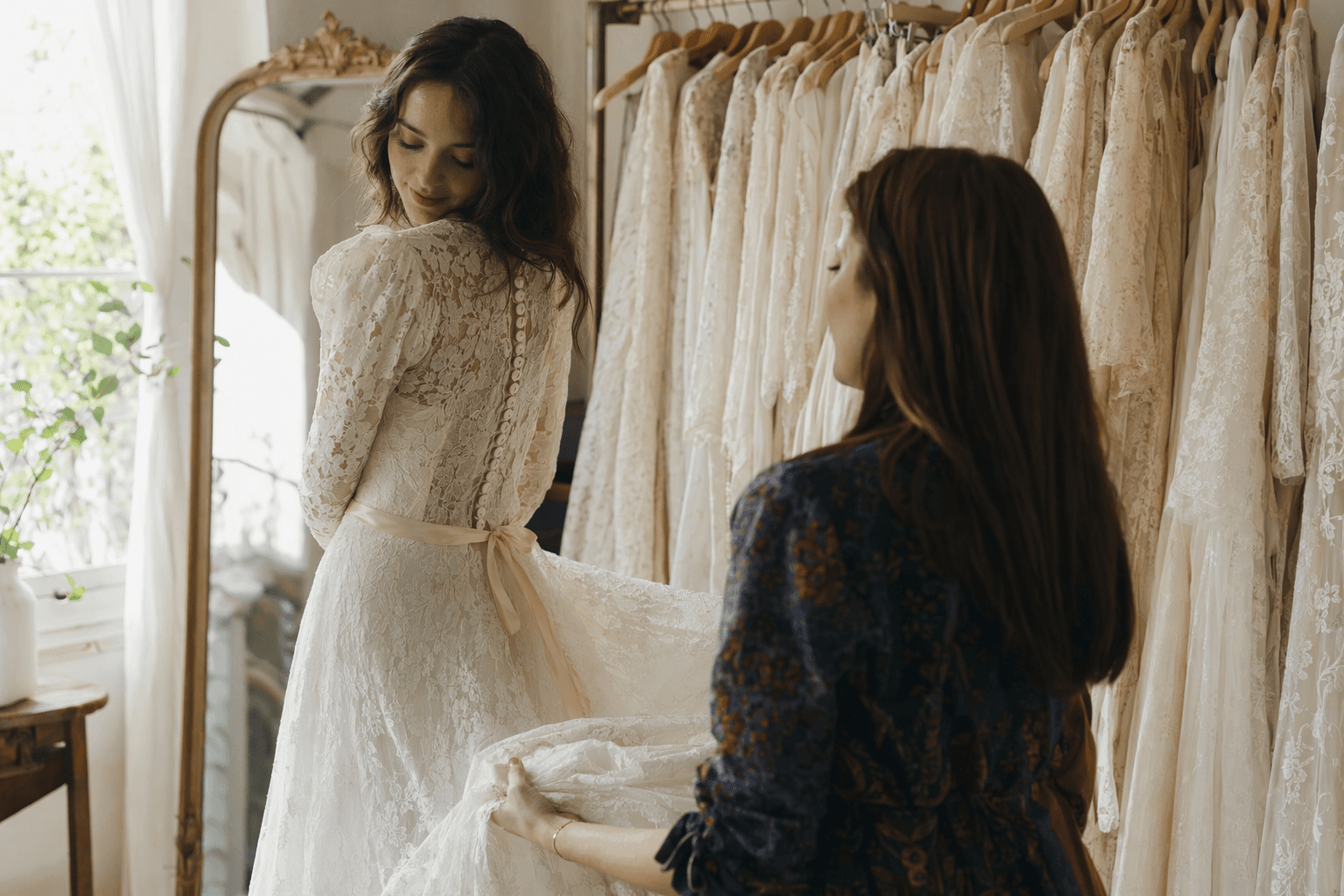
The smartest wedding dress move right now is also the least expected one: buying pre-owned. At Happy Isles, Lily Kaizer has built a case for vintage bridal as the rare sweet spot where sustainability, individuality, and craftsmanship all meet, and the appeal is immediate. You get a gown with personality, better fabric quality than the average mass-market option, and a lower-waste path to the aisle without sacrificing drama.
What makes the idea click is that it does not ask brides to choose between romance and restraint. It lets the dress do both at once, which is why a vintage silhouette can feel more modern than a brand-new gown stamped out for a crowd.
How Lily Kaizer turned a temporary fashion life into a lasting bridal business
Kaizer did not arrive at Happy Isles from bridal tradition. Before launching the salon, she worked in fashion event production between New York and Paris, moving from runway shows to brand dinners and pop-ups, and before that she worked in a vintage store. That was where the concept took shape: she realized she could build something permanent instead of endlessly setting up and breaking down temporary fashion worlds.
Her instinct for the business is also personal. Coveteur’s profile of Kaizer traces the salon’s spirit back to childhood movie costumes and vintage shopping, which she describes as a kind of fantasy closet she could not have when she was younger. That sense of play matters, because the best vintage bridal dressing always has a little imagination baked in. It is not about nostalgia for its own sake. It is about finding a dress that feels discovered, not manufactured.
Happy Isles says it opened in 2016 as the first luxury vintage bridal salon of its kind. Today it operates in New York and Los Angeles, with the Los Angeles salon describing itself as the city’s premiere vintage bridal salon.
What brides actually gain from shopping pre-owned
The value of vintage bridal is practical before it is poetic. A pre-owned gown can offer the kind of one-of-a-kind silhouette that is hard to find in a mainstream bridal floor, especially if the goal is to avoid looking like every other bride in the room. It also opens the door to richer construction and better fabric quality, the sort of details that show up in the way a dress moves, holds shape, and catches light.
Just as important, it offers a cleaner alternative to buying a generic new gown for one day of wear. For brides trying to shop more intentionally, that lower-waste logic is part of the appeal.
A vintage bridal closet also solves a styling problem that often lands awkward in execution: the wish to look distinctive without looking costume-y. Happy Isles gives that tension somewhere to go. Instead of forcing a trend-driven compromise, the salon offers gowns with history, which makes the look feel intentional from the first fitting.
- One-of-a-kind silhouettes that do not feel mass-produced
- Stronger construction and better fabric quality than many fast-turn options
- A lower-waste route to the altar
- A dress with a story, which matters more than ever in a photo-heavy wedding culture
Why the timing feels especially right now
The market is primed for this shift. Zola found that 89% of surveyed couples had already started wedding planning before getting engaged, which says a lot about how early the modern bride is thinking about every detail. Zola also reported that the average U.S. wedding cost in 2024 was over $30,000, a figure that helps explain why value-conscious and sustainability-minded choices are gaining traction.
The Knot’s 2025 Real Weddings Study, based on nearly 17,000 U.S. couples who married in 2024, gives the same picture from another angle: this is a large, actively evolving market, not a niche corner of bridal fashion. When planning starts this early and budgets are already under pressure, a pre-owned dress stops looking like a fallback and starts looking like strategy.
That is also why the emotional language around vintage bridal resonates. It is not simply cheaper or greener. It feels smarter, and in a wedding market this expensive, smart is stylish.
Happy Isles’ archive is the point
Happy Isles says its collection spans the 1930s through the early 2000s, and that range is part of the allure. It allows a bride to move through eras without leaving the luxury lane, from old-Hollywood softness to sharper, more recent shapes. The salon’s own story says the bridal market was once “bleak” for fashion-forward brides looking for a truly curated vintage experience, and Happy Isles answered that gap with a room that feels more rom-com fantasy than resale rack.
Coveteur and ELLE have both underscored the emotional pull of the store’s sourcing, including rare designer finds like a vintage Givenchy dress at the New York salon. That is where Happy Isles becomes more than a resale concept. It turns archival fashion into a bridal option with real desirability, the kind that appeals to a bride who wants provenance as much as she wants polish.
The result is a new kind of bridal confidence. You are not just wearing a dress. You are wearing taste, history, and a quieter form of luxury that does not need to shout to be memorable.
The broader bridal shift is already here
Vintage bridal fits into a wider move toward sustainability, individuality, and a less rigid idea of what a wedding dress should be. The Sustainable Wedding Alliance in the United Kingdom has helped formalize that lower-impact mindset across the industry, pushing the conversation beyond aesthetic preference and into practical responsibility.
That matters because bridal fashion has always carried symbolism. Choosing vintage now says something specific: the most meaningful dress does not have to be new to feel special. At Happy Isles, that idea is not theoretical. It is hanging on the rack, waiting to be tried on, and it is exactly why vintage bridal no longer reads as alternative. It reads as the sharpest choice in the room.
This article was produced by Prism’s automated news system from verified source data, official records, and press releases, then run through automated quality and moderation checks before publishing. The system is built and supervised by the people who set the standards it runs under. Read our full AI policy.
Did this article answer your question?