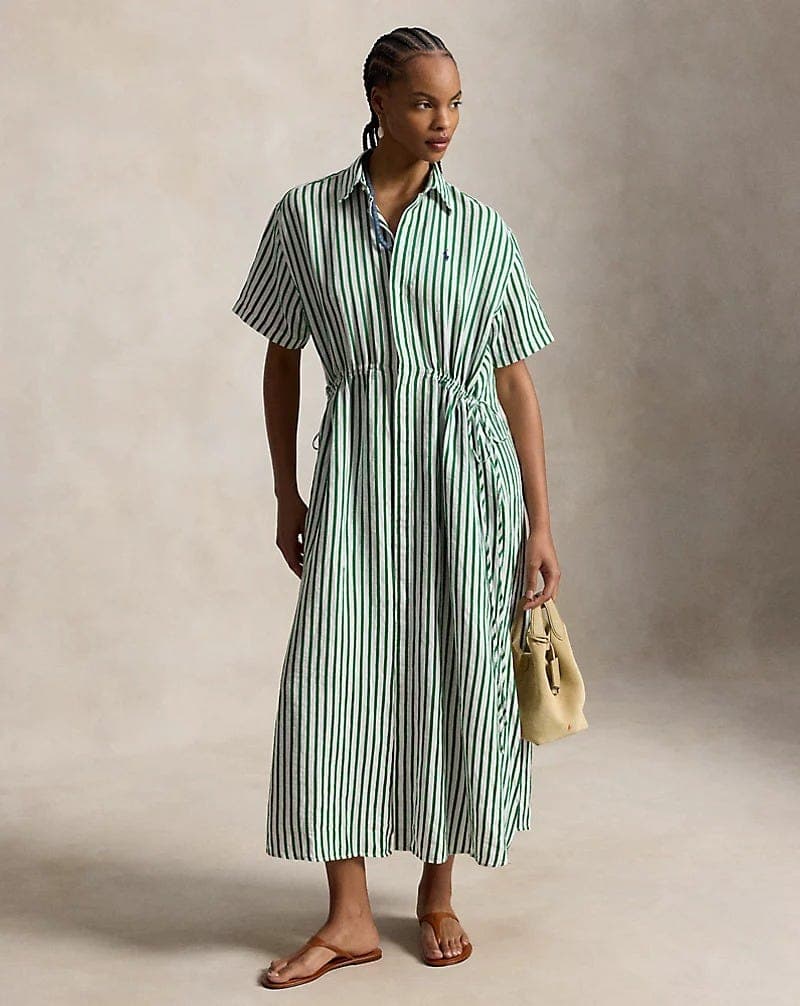
Holiday Packing Reveals Your Capsule Wardrobe Core, 12 Pieces Proven
Packing just 12 pieces for a holiday reveals the outfits you actually live in. Here's how to bring that clarity home.

There is a specific kind of getting-dressed confidence that only seems to happen on holiday. You open a half-full suitcase, pull out three things, and the outfit is done. No second-guessing, no abandoned alternatives piled on the bed. The secret isn't the destination. It's the constraint.
When you pack for a trip covering two climates and a week's worth of activities, from cobblestone sightseeing in the afternoon to candlelit dinners at night, you are forced to do something you never do at home: edit ruthlessly. The result is what stylists spend entire consultations trying to construct. A working capsule wardrobe, built in twenty minutes of luggage pressure.
The Constraint Is the Point
Holiday packing works as a style diagnostic because the rules are non-negotiable. You cannot bring the "just in case" blazer if it adds a kilo that tips you into checked-luggage fees. You cannot pack the shoes that don't go with three other things. Every item has to earn its place by pulling double or triple duty across different activities and temperatures.
The key to making a small travel wardrobe function is neutrals, which provide the most versatility and are easiest to dress up or down. Build your base from two to three bottoms in a single neutral family, navy, camel, or stone, and everything else becomes interchangeable. A tight palette turns new purchases into strategic investments instead of random additions, and the same logic governs your suitcase: when your five tops all work with your two pairs of trousers, you haven't packed 10 outfits; you've packed 10 decisions already made.
The Easter Escape Capsule framework operates on exactly this logic: 10 to 12 pieces that span two climates and cover daytime touring, evening dinners, and the kind of weather that turns on you mid-afternoon. That constraint, two climates, multiple occasions, finite space, is the same constraint you can impose on your closet at home. The holiday just makes it unavoidable.
The 20/80 Rule Your Wardrobe Is Already Telling You
Most wardrobes contain roughly four times more clothing than the wearer regularly reaches for. Decision fatigue occurs when the brain's decision-making resources are depleted by too many choices, leading to stress and lower-quality outcomes. The overstuffed closet isn't a resource; it's a tax. Every morning you pay it in minutes and mental energy before you've had coffee.
Packing exposes the 20 percent of pieces that do 80 percent of the work. When you're selecting a 10 to 12 piece pack for a week away, you instinctively reach for the things you actually wear: the trouser that fits, the knit that layers, the flat that can do a museum and a restaurant. The other 80 percent of your wardrobe stays home, and you don't miss it. That is your data.
A capsule wardrobe is a simple way to dress better with fewer clothes, built around a small, intentional collection that actually works together and fits your real life. The holiday forces you to build that collection under pressure. The task afterward is simply to replicate the pressure at home, deliberately.
Building the 12-Piece Cross-Season Capsule
The structure that makes a 10 to 12 piece travel capsule work across variable temperatures is layering logic, not individual statement items. For cool weather, thin knits, a cotton Oxford for layering, and loose, layerable sweaters are the workhorses; for warmer spells, the Oxford opens over a simple top and the knit ties around the shoulders or packs into a bag. Every piece needs to function in at least two temperature registers.
A practical 12-piece breakdown looks like this:
- Two bottoms in your neutral base (one tailored, one relaxed)
- One pair of dark-wash or straight-leg jeans
- Three tops: a fitted white or cream base, a fine-gauge knit, and one accent-color blouse
- One lightweight shirt or Oxford in a chambray or fine cotton
- One mid-layer: a blazer, a textured cardigan, or an unstructured jacket that dresses both up and down
- One heavier outer layer for cooler evenings
- Two pairs of shoes: one flat that walks all day, one that elevates to dinner
- One versatile bag that goes from market to table
Neutrals anchor any capsule wardrobe, but a single accent piece keeps things fresh, and that accent color should repeat at least twice across your 12 pieces so it reads as intentional rather than accidental. For spring travel, sky blue or soft coral against a stone neutral base creates a coherent palette without feeling matchy. For later in the year, a single burgundy or rust accent against navy reads effortlessly dressed.
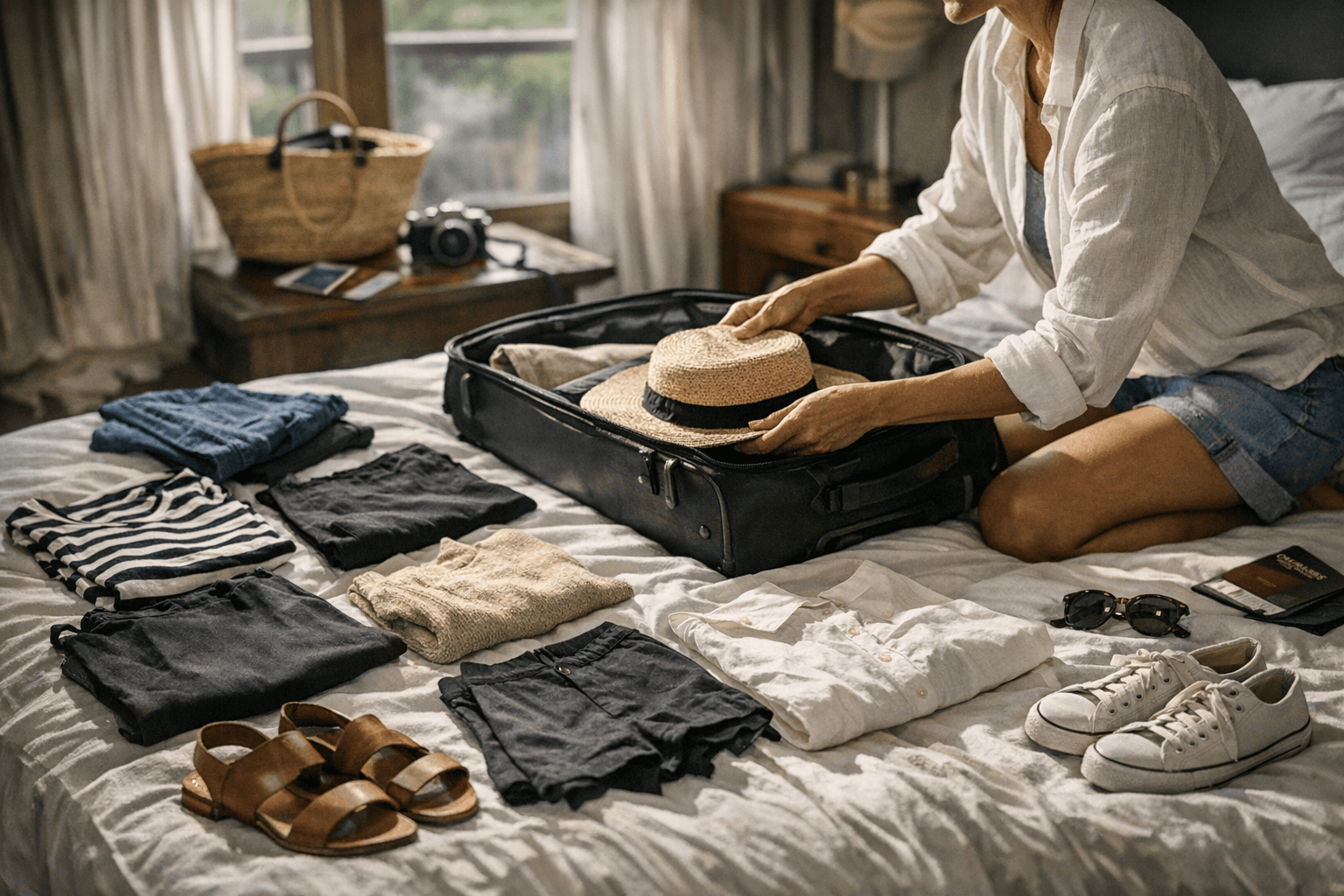
The Outfit Formula That Emerges
With a color-cohesive 12-piece pack, the outfit formula becomes almost automatic. Think about the top half of your outfits for color and variety, using two to three tops for every bottom, which means your three tops rotate against your three bottoms to yield nine distinct combinations before you've touched your mid-layers. Add the jacket or cardigan and the combinations multiply. This is the mathematics of a working capsule: not more pieces, but more intentional pieces.
The evening transition requires only a single swap: the flat for the heeled shoe, the relaxed bottom for the tailored one, and the Oxford closed with a single button over the knit. Dinner ready. The constraint of a small case trains you to see these transitions as the point rather than a compromise.
The Post-Trip Debrief: Your Capsule Diagnostic
The most valuable moment in any holiday packing experiment is not the packing itself. It's the unpacking. Before you send anything to the laundry or fold it back into the wardrobe, run this five-question debrief:
1. Which five pieces did every outfit rely on? These are your wardrobe core.
2. What came home unworn or worn only once? These are your "just in case" items, the ones costing you cognitive space at home.
3. What single outfit formula did you return to most? (Often: one bottom + one layering piece + one shoe.) That formula is your personal style signature.
4. Which piece surprised you by doing more than expected?
5. What was the one thing you wished you'd packed instead?
Live with your findings for 30 to 60 days. Take notes on which pieces you wear the most, what felt out of place, and where you struggled for variety or comfort. The holiday debrief gives you a head start on that data: two weeks of wear compressed into seven days, with no distractions and no alternatives to muddy the results.
Recreating the Constraint at Home: Your 7-Day Everyday Capsule
The insight from holiday packing only converts into lasting wardrobe change if you impose the same rules at home. The method is simple and slightly uncomfortable: pull your identified five core pieces, add seven complementary items from your existing wardrobe (applying the same two-climate, multi-occasion logic), and live from that 12-piece selection for one full week. Everything else stays in the wardrobe but is off-limits.
Your 7-day plan from the capsule framework works like this:
- Monday: Tailored trouser + fine-gauge knit + flat shoe. The week's baseline.
- Tuesday: Jeans + accent-color blouse + mid-layer jacket. Add the heeled shoe for any evening commitment.
- Wednesday: Relaxed bottom + fitted white base + Oxford open as a layer. The workhorse combination.
- Thursday: Return to the tailored trouser, now with the Oxford buttoned and the knit underneath for warmth. Same pieces, entirely different register.
- Friday: Jeans + knit + outer layer. Weekend-ready without introducing a single new piece.
- Saturday: Accent blouse over the relaxed bottom. One swap from the weekday formula reads as intentional weekend dressing.
- Sunday: The full layered look: fitted base, knit, jacket. A reminder that the capsule's most polished outfit requires no new thinking.
Your first capsule is a draft, not a final destination, and the 7-day home experiment will surface the same truths the holiday did: two or three pieces will carry everything, one or two will feel redundant, and one outfit formula will emerge so naturally you'll wonder why you ever needed more options. That formula is worth more than a full wardrobe. Build from it.
The most stylish people you've ever admired on a street corner or across a restaurant didn't get there by owning more. They got there by knowing exactly which pieces were theirs. Your last holiday already told you what those pieces are. The only question is whether you listen when you get home.
This article was produced by Prism’s automated news system from verified source data, official records, and press releases, then run through automated quality and moderation checks before publishing. The system is built and supervised by the people who set the standards it runs under. Read our full AI policy.
Did this article answer your question?