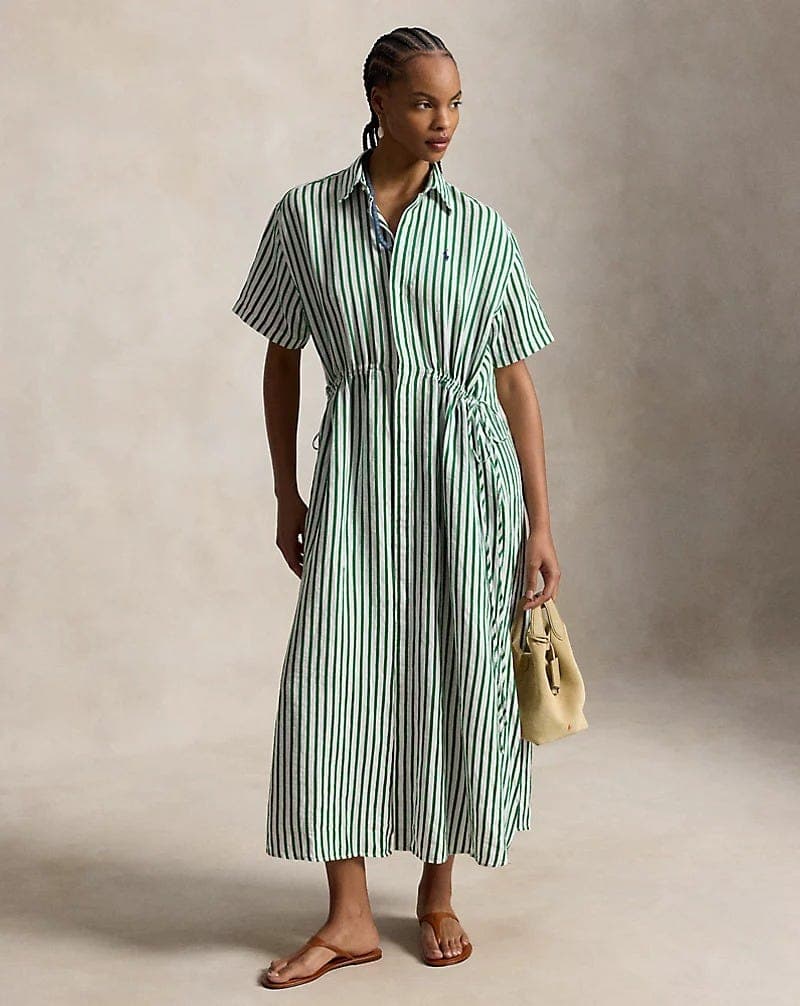
Tibi’s Travel-Inspired Essentials Build a Capsule Wardrobe with Ease
Tibi’s travel-minded basics turn capsule dressing into wardrobe math: fewer pieces, more outfits, and a cleaner answer for commuting, office days, and trips.
Why Tibi makes capsule dressing feel easy
A good capsule wardrobe should do more than reduce clutter. Tibi’s version has a sharper test: if a piece cannot move from commute to office to weekend travel without losing its polish, it does not earn space. That is exactly where the New York-based label lands so well. Founded by Amy Smilovic in 1997, Tibi is built on “Creative Pragmatism,” a philosophy that favors clothes that are chill, modern, and classic, then asks them to do real work across a closet.
That formula is why the brand keeps showing up in capsule conversations. Smilovic has said she wants clothes that act like “chameleons,” which is the whole point of a lean wardrobe done well. You are not buying a look for a single moment. You are buying pieces that can shift from a white-tablecloth dinner to a red-eye, or from a desk day to a weekend train ride, without asking you to start over each time.
The travel idea behind the clothes
The current collection, “Summer’s Where You Make It,” pulls from Smilovic’s memories of travel, and that matters because travel is where most wardrobes reveal their weaknesses. The pieces that survive packing are the ones with structure but not stiffness, personality but not fuss. Tibi’s long-running minimalist lean gives that idea a practical shape, and recent runway coverage makes clear that this minimalism keeps evolving instead of freezing into a familiar uniform.
That evolution is part of the appeal. Tibi does not sell minimalism as absence. It treats it as editing, which is a different, more useful proposition for anyone trying to build a smaller closet. The clothes are meant to be elevated essentials and versatile pieces, the kind that can sit between workwear and weekend wear without looking like a compromise.
What to wear, what to skip
If you are building a capsule around Tibi’s logic, invest in the pieces that change the most outfits. Think of the categories that can carry the sharpest styling burden: the polished layer, the clean-lined separate, the piece with enough shape to make a simple base feel considered. Those are the items that justify spending more, because they do the heavy lifting across multiple settings instead of disappearing into the background.

Skip the temptation to duplicate easy basics just because they feel safe. A capsule closet gets stronger when one or two directional Tibi pieces are paired with basics you already own, not when everything is bought new in the same neutral register. The smartest mix is usually one part character, two parts backbone: a more precise silhouette from Tibi, then familiar staples underneath it. That is how the closet becomes flexible instead of merely tidy.
Commute
For the commute, Tibi’s appeal is simple: the clothes look pulled together without looking precious. A travel-inspired capsule needs pieces that keep their shape after hours of sitting, standing, and moving through the day, and that is where the brand’s clean lines and practical bent earn repeat wear. You want something that reads polished from the front seat of a rideshare but still feels easy enough to live in once the day begins.
Office
For the office, the brand’s “Creative Pragmatism” is the real selling point. It gives you a wardrobe that can look intentional in a meeting and relaxed enough at lunch, which is the kind of balance modern workwear actually needs. Smilovic’s “chameleon” idea makes sense here: a single strong piece can anchor several combinations, so the capsule starts to work like a system instead of a collection of separate outfits.
Weekend travel
For weekend travel, Tibi’s travel inspiration becomes more than a mood board. Clothes inspired by memories of movement tend to be the ones that pack well, repeat well, and resist feeling overstyled when you wear them two days in a row. That is the sweet spot for a capsule closet: pieces that can be worn on arrival, worn again at dinner, and still feel fresh the next morning.

The brand behind the system
Tibi’s structure backs up the philosophy. A case study says the company was founded in Hong Kong and now has roughly 100 employees split between its New York City headquarters and its warehouse and fulfillment center in Brunswick, Georgia. That footprint gives the brand an unusually grounded feel for a label so closely associated with modern minimalism. It is not just designing clothes for an idea of real life. It is built to operate inside one.
The education piece matters too. Tibi runs weekly Style Class Instagram sessions every Wednesday at 2 p.m. ET, and it offers curated closet edits with Amy Smilovic and Tibi stylists at the New York flagship in SoHo and on St. Simons Island, Georgia. That tells you the brand is not only selling clothes, it is teaching a point of view: how to edit, how to repeat, and how to make fewer pieces feel like more.
Why this capsule approach works now
Capsule wardrobes stay relevant because they answer a problem most people actually feel: decision fatigue. Fashion and lifestyle coverage has long framed capsules as a way to save time and shop more intentionally, and Tibi fits that brief because it already thinks in systems. The brand’s mix of elevated essentials, travel-friendly logic, and adaptable silhouettes makes the wardrobe math easier.
That is the real reason Tibi matters in a closet built for less. It gives you a way to buy with more discipline and dress with more ease, which is more useful than chasing novelty. When a label can make one well-chosen piece work across half a week of real life, the capsule stops being an aesthetic and starts becoming a habit.
This article was produced by Prism’s automated news system from verified source data, official records, and press releases, then run through automated quality and moderation checks before publishing. The system is built and supervised by the people who set the standards it runs under. Read our full AI policy.
Did this article answer your question?