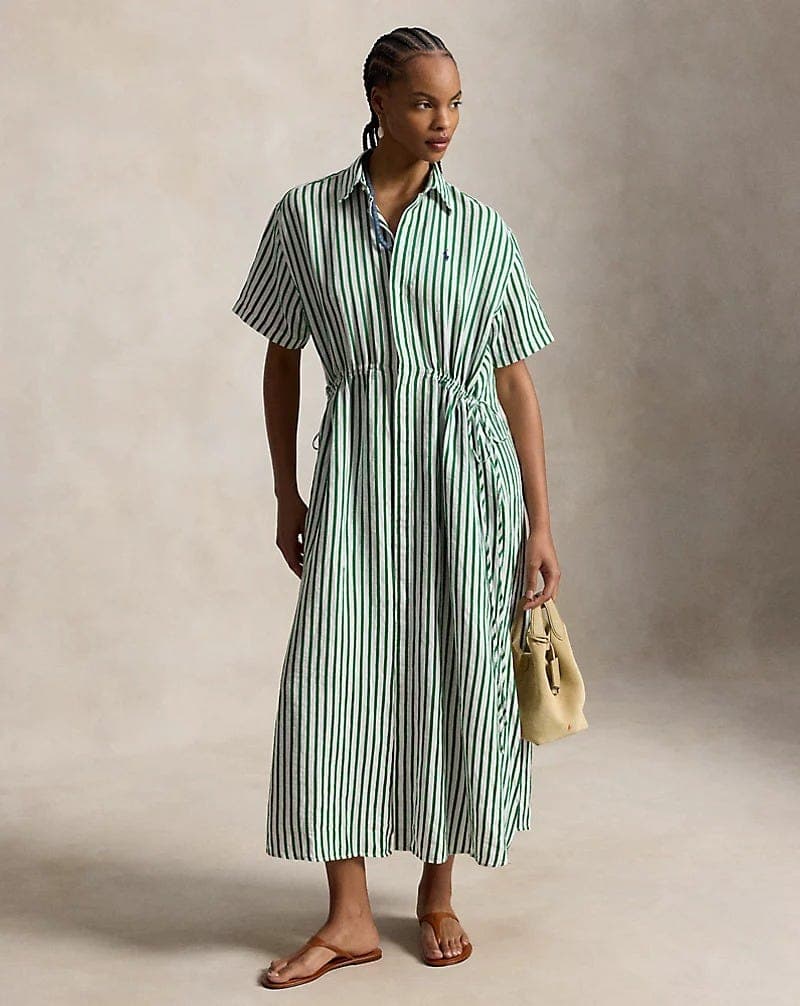
What to Keep and What to Shelve: How to Plan a Wardrobe Cleanout in 2026
Your spring cleanout is wasting its potential if it ends at the donate pile. Turn it into a capsule build with a four-bin system that eliminates morning decision fatigue for good.

The gap between winter and spring is where most wardrobes fall apart. Heavy coats have been pushed aside, but the lighter layers haven't surfaced yet. You're standing in front of a rail packed with clothes you haven't touched in four months, pulling out a blouse that no longer fits right and a jacket you bought for one specific occasion. The morning costs you fifteen minutes and still ends in a compromise. This is the exact moment a seasonal cleanout stops being optional.
The good news: a spring cleanout, done with a framework rather than a feeling, is the fastest route to building a capsule wardrobe that actually functions. The two are the same project.
Why Clutter Is a Style Problem, Not a Storage Problem
According to EPA data, the generation of textiles in the U.S. reached 17 million tons in 2018, representing 5.8 percent of total municipal solid waste that year. A GAO analysis of that same dataset found that 66 percent of textile waste was landfilled, putting roughly 11 million tons of clothing, footwear, and household textiles into the ground annually. That figure exists, at least in part, because most cleanouts treat the donate bin as a guilt-free exit, when the reality is far more complicated.
The average New York City household throws out 92 pounds of textiles per year. Scale that nationally and the arithmetic becomes uncomfortable. The answer is not to stop editing your wardrobe; it is to edit more deliberately, and to route what leaves your closet somewhere more useful than a landfill.
The Four-Bin Method: A Timed, Sequential Edit
The key word is timed. Doing this in a single afternoon, with everything removed from the rail at once and sorted into four clearly labeled bins, prevents the kind of object-level nostalgia that derails most cleanouts before the first hour is up.
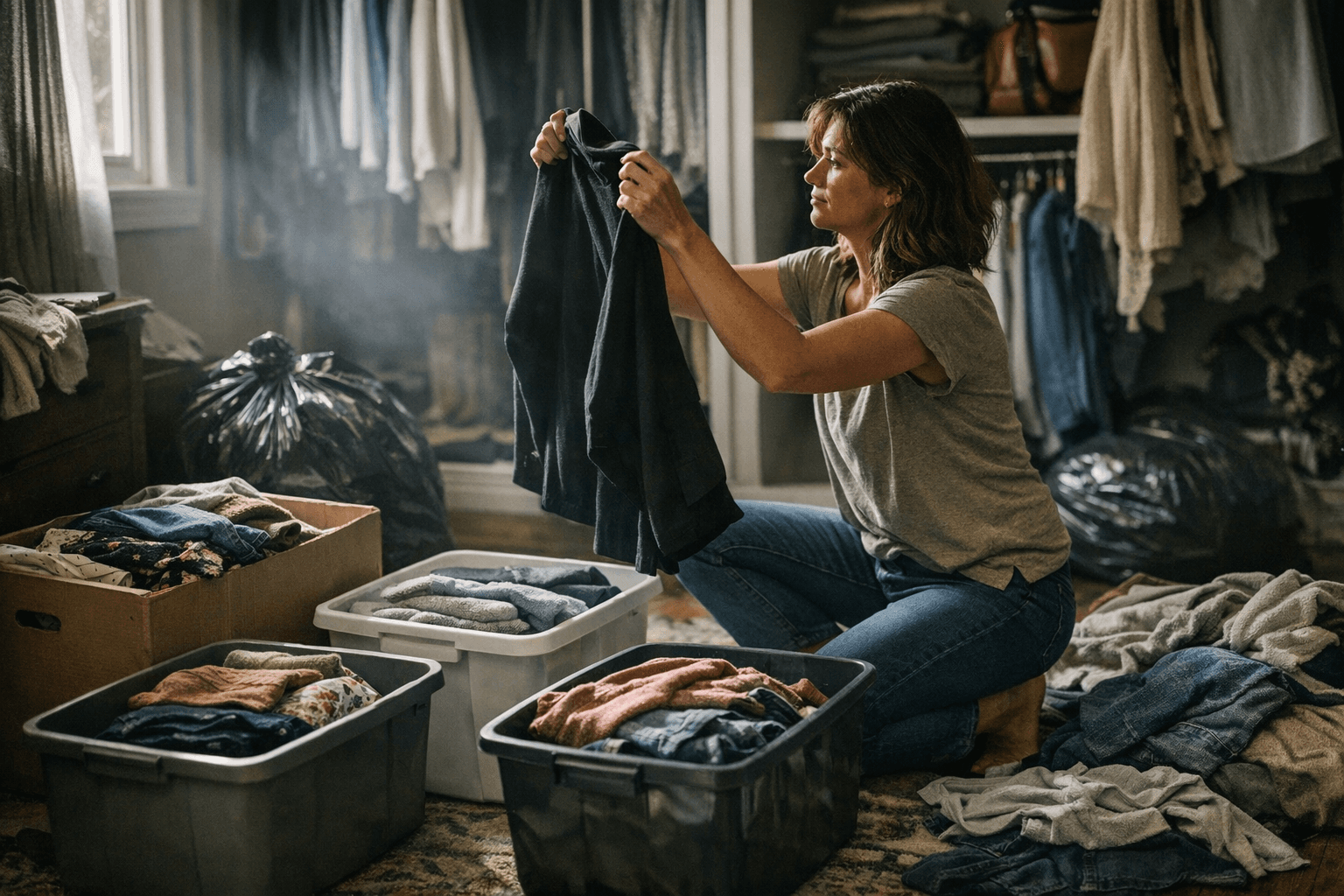
Set up your bins before you pull a single garment: Keep, Maybe, Donate/Resell, and Repair. Then work category by category, not item by item at random. Tops first, then bottoms, then outerwear, then shoes. Moving systematically prevents the mental reset that happens when you shift between categories mid-sort.
"I always say preparation starts mentally, not physically," advises one stylist featured in Who What Wear's 2026 cleanout guide. "Go in with a clear aim. Whether that is creating more space, building a more cohesive wardrobe or identifying gaps, having a goal keeps decisions focused and avoids unnecessary overwhelm."
That aim, for a spring cleanout, is specific: you are not just removing winter; you are designing the wardrobe you want to dress from for the next four months.
Decision Criteria: Three Questions Per Garment
Every piece that comes off the rail gets assessed against three criteria. Sentiment is not one of them.
1. Fit: Does it fit your body right now, as it is today? Not after a run of good weeks, not with a different undergarment. Now.
2. Wear frequency: Did you reach for this at least once in the last season it was appropriate? If it sat through its entire relevant season untouched, the "maybe" bin is a holding pattern, not a reprieve.
3. Versatility: Can it combine with at least three other pieces you are keeping? A garment that only works with one specific outfit is a costume, not a wardrobe component.
Anything that fails two of the three goes into Donate/Resell or Repair, no exceptions.
The Maybe Bin Has a Deadline
The Maybe bin is not storage. It is a thirty-day holding area. Box those pieces and set a phone reminder. If you haven't retrieved a single item from the box before the deadline, the decision has already been made for you.
Handling the Donate Pile Responsibly
This is where most cleanouts go wrong. Many of the locations that appear in a simple search for donation drop-offs are not charities at all; they are for-profit textile exporters. Only a small percentage of donated clothing is ultimately resold to the people the charitable framing implies.
Before anything reaches a donation bag, work through this hierarchy:
- Repair first: A broken zip, a missing button, a worn hem, these are fixable for less than the cost of a replacement. A tailor appointment for five pieces costs less than one new mid-range blouse.
- Resell second: Platforms that connect sellers directly to buyers give garments a far better chance of continued use than anonymous bins. Good condition pieces with recognizable labels will move.
- Donate to a verified charity third: Check that the organization holds a registered nonprofit status before donating. Avoid anonymous bins with no clear operator listed.
- Textile recycling as a last resort: For items too worn to wear or sell, look for brand take-back programs or municipal textile recycling schemes. DSNY in New York City, for example, partners with Helpsy, a public benefit corporation, to place textile collection bins outside buildings specifically to keep clothes out of the trash. Many cities have equivalents.
Building the Spring Capsule from What Remains
What is left in your Keep bin after a rigorous edit is the foundation. The goal is to identify gaps and fill them with pieces that do maximum outfit work, not to shop impulsively.
For spring 2026, the staples doing the most work are straightforward: a trench coat (the classic beige version or an updated iteration in a poplin silhouette or bolder print), a lightweight knit in a spring-appropriate hue, and a pair of straight-leg jeans, which are reclaiming their position as the go-to cut after years of baggier shapes. Linen pants, a white tee, and a denim button-up round out the foundation, with the button-up functioning as both a top and a light jacket on days when the weather refuses to commit.
The outfit replacement formula works like this: for every three low-utility items that leave (the single-occasion blazer, the poorly-fitting midi skirt, the trend piece that no longer trends), identify one versatile item that can replace all three combinations. A well-cut linen trouser worn with a white tee, a lightweight knit, or a denim shirt is doing the work of a dozen mediocre separates.
"Focus on quality over quantity and lean into your personal style rather than trends," the same guide advises. "A capsule wardrobe is built over time, and when done thoughtfully, it becomes effortless to maintain."
Seasonal Swap Checklist: Screenshot This
- What to store (pack with cedar, not mothballs):*
- Heavy wool coats and chunky knitwear
- Thermal underlayers and fleece-lined pieces
- Leather or suede pieces that won't be worn until October
- What to tailor before you wear it again:*
- Any "keep" item with a hem, zip, or lining issue
- Trousers that almost fit (waistband let-out is inexpensive and transformative)
- Blazers with shoulder seams that have drifted
*The 10 pieces that carry a spring capsule in most climates:* 1. Straight-leg or wide-leg jeans in a clean wash 2. White or off-white fitted tee (two if you run cold) 3. Linen trousers in a neutral 4. Trench coat, classic or updated 5. Lightweight knit in a spring tone (sage, cream, dusty blue) 6. Denim button-up shirt (doubles as a layer) 7. One relaxed blazer in beige or oatmeal 8. A printed or solid midi dress that works with trainers 9. White or tan leather sneakers 10. A structured tote that moves from desk to weekend
The spring cleanout is not an annual chore. It is the single best opportunity you have to build a wardrobe that makes getting dressed feel easy rather than exhausting. The closet you edit in April is the one that works for you in June. A seasonal switch-out, done consistently, builds an active capsule wardrobe that works harder over time, which is ultimately a more useful goal than a tidy rail that fills back up by July.
This article was produced by Prism’s automated news system from verified source data, official records, and press releases, then run through automated quality and moderation checks before publishing. The system is built and supervised by the people who set the standards it runs under. Read our full AI policy.
Did this article answer your question?