Courrèges’ Space-Age Revolution Returns in Fondation Maeght Exhibition
Peter Knapp’s 1965 Courrèges images are about to turn Fondation Maeght into a blueprint for modern minimalism, right as Cannes week begins.
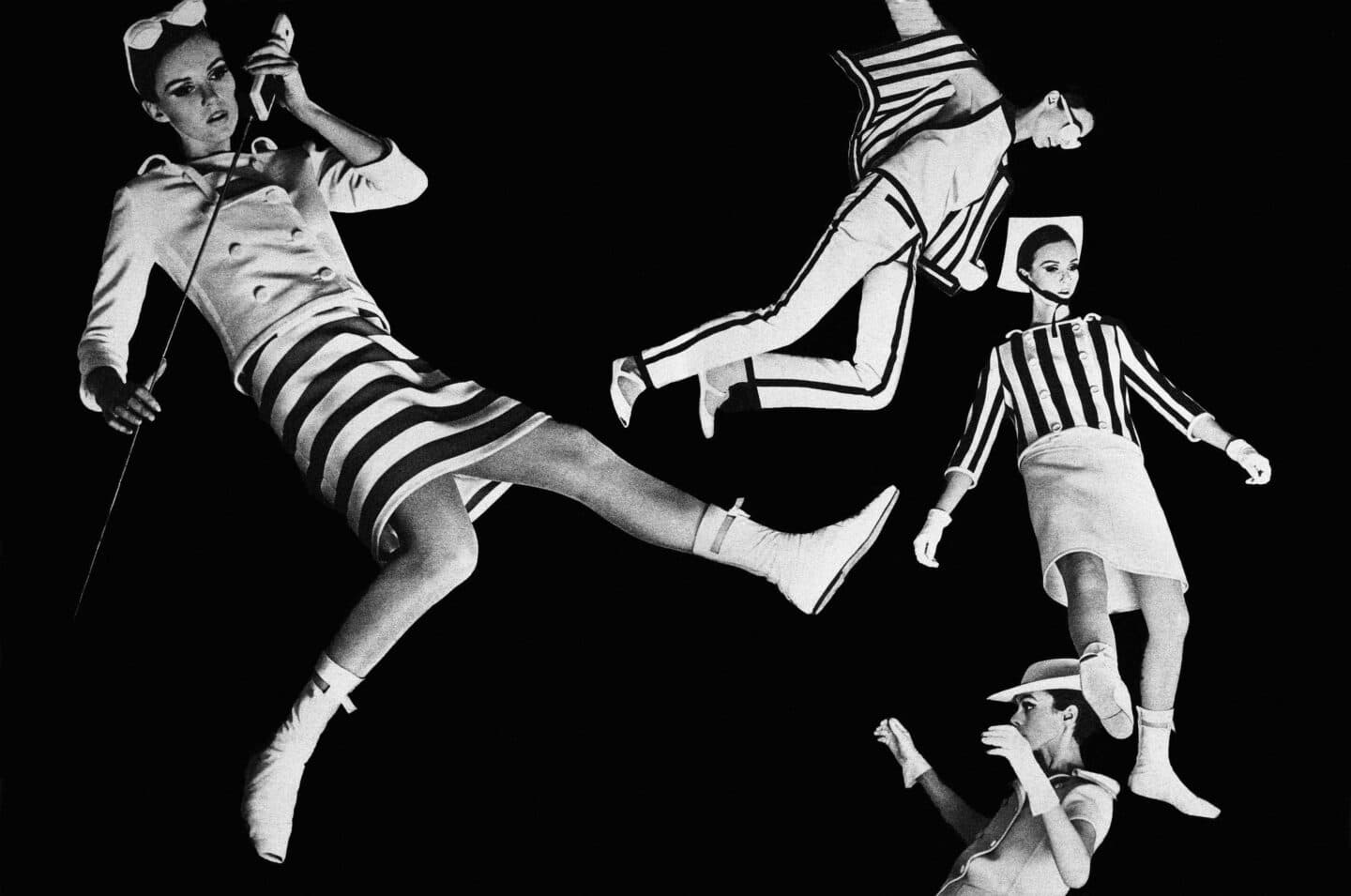
The cleanest clothes in the room were born in black and white. At Fondation Maeght, Peter Knapp’s images of André Courrèges’ 1965 breakthrough will hang in the Anny Courtade Gallery from May 14 through November 1, 2026, and the timing could not be sharper, landing just as Cannes fills with cameras and clothes that still owe something to Courrèges’ hard-edged ease.
“The Era of Courrèges” is the foundation’s first thematic exhibition to fuse art and fashion, and it does not treat the designer like a museum relic. It treats him like the man who drew the visual blueprint for the modern minimalist wardrobe. Knapp’s central source is his March 1965 ELLE No. 1002 photo series of Courrèges’ spring-summer haute couture collection, shot with unusual creative freedom, and the results still read like a shock to the system: geometric cuts, short hemlines, a stark white palette, miniskirts, and structured forms that made the body look engineered rather than decorated.
That was the point. Fondation Maeght says the press dubbed the collection the “bombe Courrèges,” and the label fit because Courrèges did more than shorten a hemline. He reshaped the female silhouette with rules that felt as architectural as they were sartorial, all while pushing a comfort-first idea of dress that now looks almost familiar. In 1961, after working as Cristóbal Balenciaga’s first assistant, Courrèges opened his own house. By 1964, he was already one of Paris’s most original couturiers, known for futuristic, youth-oriented clothes and for making white his signature.
The exhibition will also bring in archival materials, four large prints, outfits photographed by Knapp in 1965 and loaned by the House of Courrèges, plus later works made on the Fondation Maeght site in Saint-Paul-de-Vence. That site matters, because the foundation itself, inaugurated in 1964 by André Malraux, was France’s first foundation dedicated to modern and contemporary art. More than 150 exhibitions and a permanent collection of more than 13,000 works later, it still has the authority to make fashion look like culture, not sidebar.
Courrèges’ influence was never just aesthetic. Britannica notes that he tightened control over manufacturing in 1965 because the clothes were being copied everywhere, and the broader Space Age mood, shaped by the Space Race, had already put Pierre Cardin and Paco Rabanne in the same orbit. Today, with Nicolas Di Felice gone from the house in March 2026 and Drew Henry due to present his first collection at Paris Fashion Week in September, this show lands as both origin story and reset button. Courrèges still looks current because the logic never left: strip it down, sharpen it up, and let the silhouette do the talking.
This article was produced by Prism’s automated news system from verified source data, official records, and press releases, then run through automated quality and moderation checks before publishing. The system is built and supervised by the people who set the standards it runs under. Read our full AI policy.
Did this article answer your question?