FIT conference calls for realism on biofabricated fashion materials
FIT’s sustainability summit swapped biofabrication hype for manufacturing reality, spotlighting regenerated fiber, waste streams and the hard math of scale.

FIT used its 20th Sustainable Business and Design Conference to do something the fashion industry rarely does when a material story is glowing on the runway: it asked what biofabrication can actually deliver. Held April 8 and 9 at the Fashion Institute of Technology in New York City and framed under the theme Industry Disruptors, the two-day summit marked two decades since the conference began in 2007, but the mood was less utopian than practical.
That grounded note began with Nalleli Cobo, whose environmental-justice perspective set a firmer tone for the opening, and it carried through a roster that included FIT Sustainability Ambassador Amber Valletta and Noemi Florea, inventor of Cycleau. The names mattered because they pushed the conversation away from abstract innovation language and toward the people, waste streams and manufacturing choices that shape whether fashion can change at all. In a field still prone to romanticizing the lab-grown future, FIT made room for the messier questions.
The sharpest turn came in the biofabrication panel, where the old language of sweeping promises and speculative timelines gave way to reality. The central issue was no longer whether next-generation materials could inspire a runway look, but whether they could survive contact with factories, costs and supply-chain demands. That distinction matters. A material that photographs beautifully in a presentation still has to be spun, shipped, cut and sold in a world that buys basics far more often than concept pieces.
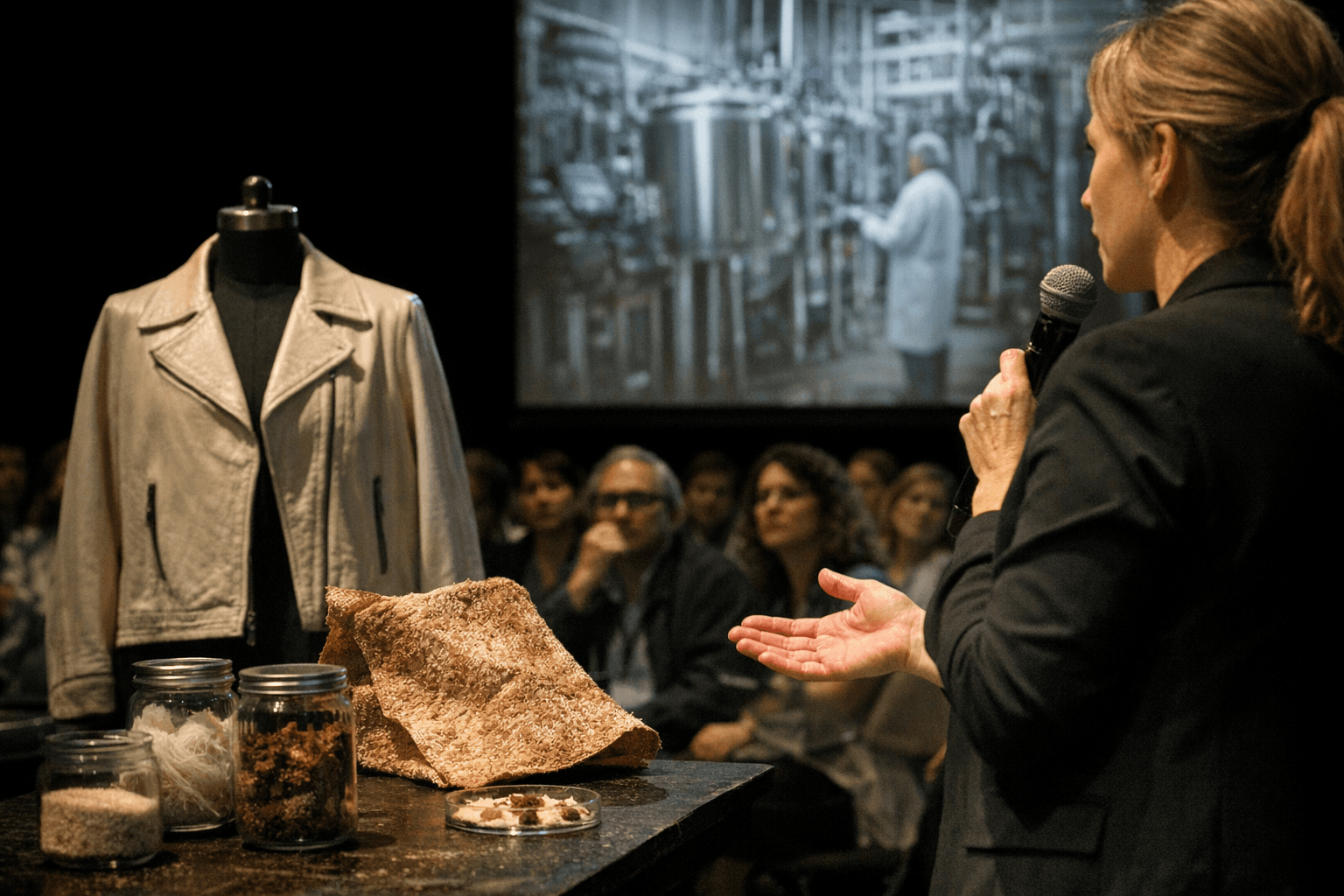
Evrnu’s NuCycl platform offered the clearest example of where the category is headed in the near term. The system turns cotton-rich waste from discarded clothing and production scraps into regenerated fiber, which is a more convincing proposition for fashion’s daily business than a miracle fabric with no industrial pathway. The H&M Foundation has said Evrnu’s first commercial manufacturing facility is underway and expected to be completed in 2026, with capacity for 18,000 metric tonnes of fiber a year. That is the kind of scale that can start to matter, though it is still a long way from replacing the bulk of fashion’s raw material needs.
BCG’s warning that scaling next-generation materials still runs into financial, technical and operational obstacles only sharpened the point. Stacy Flynn, the closing speaker on April 9, brought the discussion back to lived experience, tracing her own shift to a 2010 trip to China that redirected her career toward fashion’s waste and pollution problems. The most useful takeaway from FIT was not that biofabricated fashion is imminent, but that its first real test will be the unglamorous one: whether it can move from disruptive promise to dependable material in the clothes people actually wear.
Know something we missed? Have a correction or additional information?
Submit a Tip