Paris couture dreams, Schiaparelli, Balenciaga and Gaultier lead the season
Schiaparelli, Balenciaga and Gaultier turned couture into a live laboratory for volume, structure and fantasy, and the ideas are already readying eveningwear for the next season.
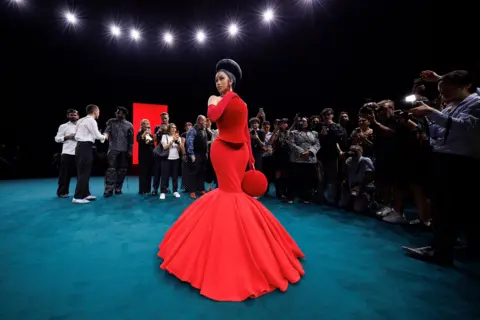
Schiaparelli, Balenciaga and Jean Paul Gaultier used the July 6 to 9 couture week to test how far a dress can push body, surface and silhouette before it stops being clothing and becomes image. Paris couture is leaning hard into drama, but the ideas worth watching are the ones that can be distilled, not copied. Around them, Maria Grazia Chiuri’s Fendi moment kept Rome in the frame, widening a season that now feels like a conversation between cities as much as houses.
The week that set the tone
Around 30 shows were on the calendar for Paris Haute Couture Week Fall/Winter 2026-2027. Schiaparelli opened the week on July 6, while Balenciaga and Jean Paul Gaultier were both placed on July 8, a scheduling choice that put the two most charged debuts right at the center of the conversation.
The mood this season was not quiet refinement. It was fantasy sharpened into craft, and craft stretched until it looked almost theatrical.
Schiaparelli and the return of predatory glamour
Schiaparelli set the emotional temperature with a spring 2026 collection titled “The Agony and the Ecstasy,” a title that already tells you this is not a house chasing ease. Daniel Roseberry drew on reptilian and arachnid imagery, and the collection’s language, from “stingers and snake teeth” to hard-edged, creature-like references, pushed the house deeper into fantasy with a deliberate bite.
At Schiaparelli, ornament functions as anatomy. The strongest shapes feel like they have grown from the body rather than been added to it, which is why the collection reads less like novelty and more like a system of dress codes for women who want their evening clothes to project power. The full reptilian fantasy will stay on the couture side of the line, but the ideas beneath it, a hard corseted waist, a neckline with tension, a surface that catches light in an aggressive way, are exactly the kinds of details that move into special-occasion dressing.
Balenciaga and sculptural volume with history behind it
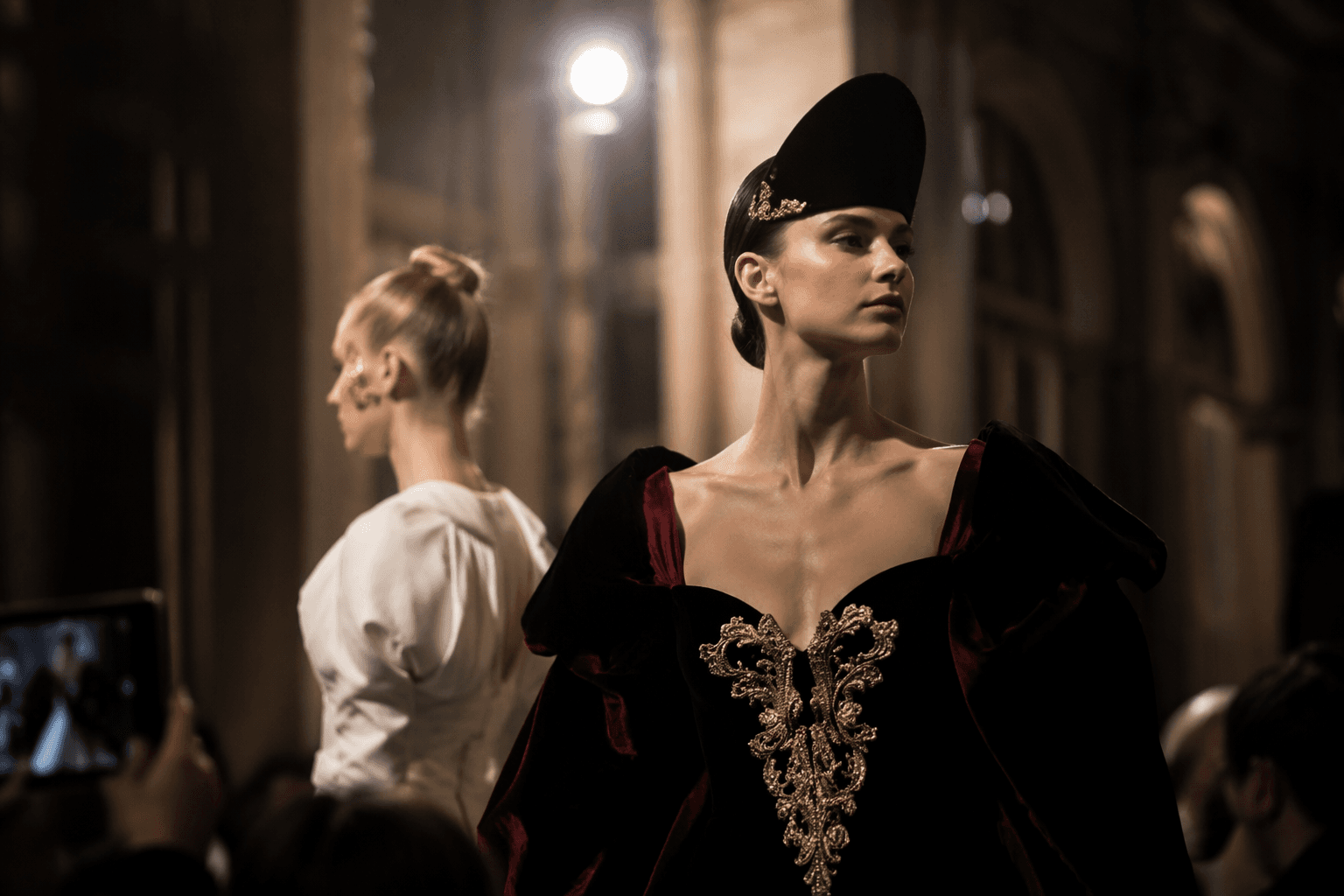
Pierpaolo Piccioli’s Balenciaga debut was staged in the courtyard of the Cité Internationale Universitaire de Paris, and the setting matched the scale of the clothes. The collection brought ballooning gowns, voluminous capes and pants embroidered with ostrich feathers, a trio of gestures that make the body look larger, softer and more ceremonial at once. It was also Balenciaga’s 55th couture collection.
Piccioli is recasting one of fashion’s most exacting houses through volume that feels emotionally generous instead of severe. The couture fantasy is the full sweep of those gowns and the feather-lift of those trousers; the part that will travel is more restrained, a cape sleeve on an evening coat, a rounded skirt that moves away from the hip, a proportion that makes a black dress feel newly architectural.
Jean Paul Gaultier’s tech couture reset
Jean Paul Gaultier’s first couture outing under guest designer Duran Lantink was framed as a reset, and the title “Tech Couture” made the intention plain. The collection referenced 3D-printed exoskeletons, archival fabrics and court dress, a combination that placed old-world ceremony beside a future-facing vocabulary of engineering.
3D-printed exoskeletons will remain couture spectacle, too literal and too radical for most wardrobes, but the underlying idea of visible structure is already familiar in evening dressing. Expect the influence to arrive as exposed boning, shaped seams, metallic hardware, or a jacket that looks as though it has been engineered around the torso rather than tailored over it. The court dress references point to another likely direction too, a return to longer, more formal lines that let a gown feel ceremonious without becoming stiff.
What will actually shape the next season
The season’s most extreme ideas will not land on every rack, but their outlines are easy to trace. Sculptural volume, exposed structure and concentrated hyper-decoration are the three directions most likely to filter through, each in a more wearable register.
- Sculptural volume will soften into rounded sleeves, controlled capes and skirts that swing away from the body instead of clinging to it.
- Exposed structure will show up in visible corsetry, shaped seams, and dresses that reveal their internal architecture through sheer layers or cutaway panels.
- Hyper-decoration will shrink from full fantasy into one concentrated hit, a feather trim, a crystal cluster, a hard-sheen appliqué, rather than head-to-toe embellishment.
What will stay firmly in the realm of couture fantasy are the most literal creature references, the arachnid and reptilian surfaces, the 3D-printed exoskeletons and the more extravagant feathered or armored constructions. In real wardrobes, the discipline inside those gestures will carry over: the sharper shoulder, the more dramatic cape, the waist that is cinched into definition, the dress that carries its own architecture.
Rome’s quieter signal
Maria Grazia Chiuri’s Fendi moment kept the Italian thread alive alongside Paris, a reminder that couture influence is rarely confined to one city or one house.
This article was produced by Prism’s automated news system from verified source data, official records, and press releases, then run through automated quality and moderation checks before publishing. The system is built and supervised by the people who set the standards it runs under. Read our full AI policy.
Did this article answer your question?


